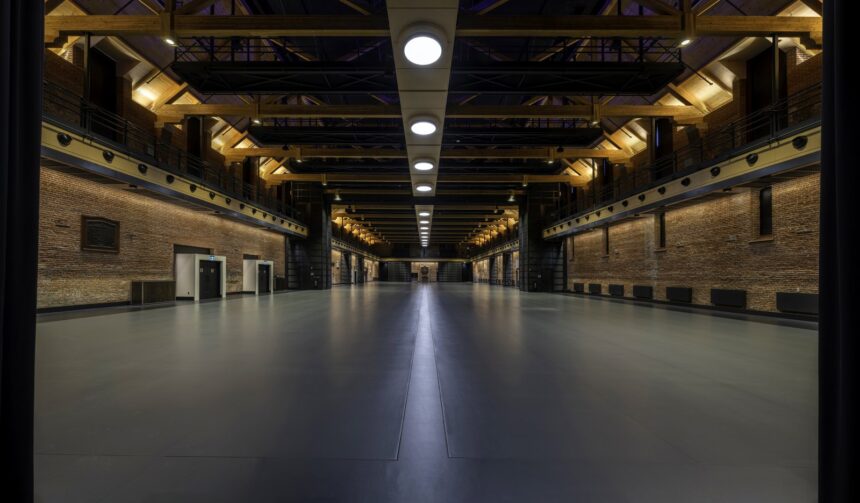
For one hour on Tuesday morning, the 44th president of the United States stood in a drill hall on Grande Allée and talked to Quebec car dealers about tariffs, about Canada, and about how easily a democracy can be taken for granted. The rest of the city did not hear a word of it.
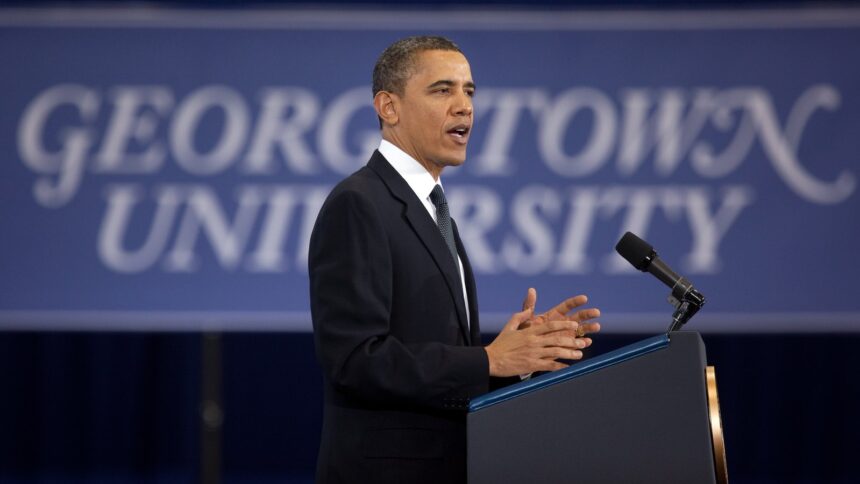
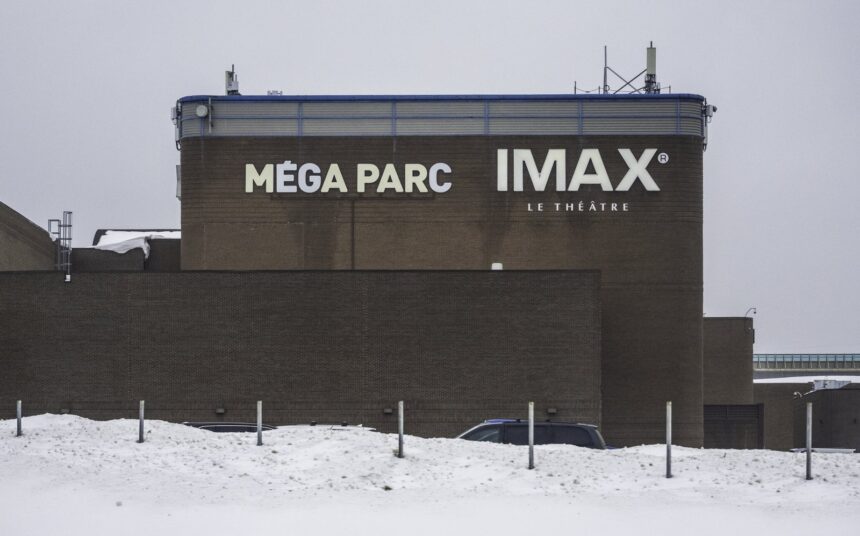
Barack Obama closed the Rencontre au Sommet 2026, the annual conference of the Corporation des concessionnaires automobiles du Québec, at the Manège militaire Voltigeurs de Québec on 10 November. We wrote about the visit before it happened, when the organiser had published one line of programme and no start time. This is what came out of it, and how we know.
How any of this reached the public
The session was closed. It began at 11 a.m. before a little over 750 people, by the count published by Le Soleil; Le Journal de Québec put the room at 800. The hall was open only to ticket-holders and a few invited guests. There was no press conference inside, no official transcript and no recording. This newsroom was not in the hall, and neither were most of the reporters who have written about it.
What exists instead are three accounts, and it is worth keeping them apart. Le Journal de Québec published passages of the speech in French translation, describing them as information it had obtained. Ian P. Sam Yue Chi, who runs the CCAQ, spoke to reporters afterwards and to two radio programmes. Joël Lightbound, the federal minister, was in the audience and described what he heard. The lines below are each attributed to one of those three.
One further remove is worth naming. Obama spoke in English. The accounts that carry his words are in French. Where his remarks appear here in French, they are as Le Journal printed them, with an English rendering beside them. That is a translation of a translation, not a transcript, and it is the honest limit of what anyone outside the room can say.
On Canada and the United States
He opened warmly. He has a great deal of affection for Canada and Canadians, he said, and part of his own family comes from here. Canadians are like the kindest sibling the Americans have, while the Americans themselves can be clumsier and behave badly. The partnership had contributed a great deal to the success of both countries. There had been difficult periods, he said, but rien qui ne peut être réparé — nothing that cannot be repaired.
He put the same thought in longer terms a moment later: the esteem Americans hold for Canada is sincere and lasting, and he is confident about where the relationship goes over time.
Lightbound, listening from the floor, came away with the same impression. He said the former president had expressed confidence in the future of the Canada–United States relationship, and had returned to a speech he gave in Ottawa a decade ago. That was his address to the Parliament of Canada, delivered in the House of Commons Chamber in Ottawa on 29 June 2016. Its argument, as Lightbound recalled it, was that the ties between pluralist liberal democracies have to be fed and must not be taken for granted, and he judged the point at least as pressing now.
On tariffs
This was the part of the hour the room had money riding on. The car trade is among the sectors worst hit by the dispute with the United States.
Obama drew a line between his own use of tariffs and the present one. He had imposed tariffs himself across his two terms, from 2009 to 2017, generally in answer to specific problems, and most of them were aimed at China. In the words Le Journal published, the president a utilisé les tarifs comme une arme — has used tariffs as a weapon.
The more interesting half of the argument was procedural. Congress has a say over tariffs, he said, and the current administration has stepped around that process. He does not believe even Republicans accept a president using tariff powers on his own. From there he offered a forecast rather than a promise: there will now be more structured discussions on trade, certainly between the United States and Canada and beyond them too. The administration is in place for two more years. He can promise nothing, but Congress will react.
He read the midterm elections held the week before as Americans voicing their worry about the way power is currently used in the United States. Le Soleil noted that the result had given Democrats more room in the institutions where decisions are made, which is the ground his forecast stands on.
On democracy
The longest reach of the hour had nothing to do with cars. Obama spoke about how fragile a democracy is, tracing a line from the prosperity that followed the Second World War — imperfect, as he put it — to the indifference that settled in after the Cold War.
We had partly underestimated, he said, that la démocratie libérale n’est pas un acquis, that liberal democracy is not a settled possession or a natural state of affairs. It has existed for very little time in human history. It therefore has to be preserved and made to grow, so that it can be handed on to the generations that follow.
What the organiser says he heard
Sam Yue Chi was candid that the invitation was never about cars. He told the closing session that Obama had been asked to help the industry understand the world it now works in, one marked by economic change, international tension, faster technology and the need to decide when certainties disappear.
What he took from it was about unpopular decisions. He pointed to the manufacturers Obama rescued on entering the Oval Office, and said leaders sometimes have to make hard choices and should make them when they serve the common good. He noted that people were losing their jobs at the time, and that the decisions had to be taken anyway. That, to him, was the leadership lesson.
On the radio programme À vos affaires, in remarks carried by 24 heures, he was warmer about the trade fight itself. He sees light at the end of the tunnel. The relationship with the American neighbours runs deep enough that no one has reason to break it, and the two sides will be able to mend it when the moment comes. The present situation is temporary, he said, and Obama was the right person to lend some perspective on it.
When reporters asked what the visit had cost, he would not say, because he cannot discuss contractual matters. He added that the people of Québec City had lived through an exceptional moment. On FM93 he described the summit as an investment of roughly 600,000 dollars. That is a figure for the whole two-day event, not a speaking fee. What Obama himself was paid has not been disclosed, and this newsroom has not estimated it.
Outside the hall
The morning was far more visible than the hour inside it. A police deployment formed near the main entrance on rue Wilfrid-Laurier around 9 a.m. Le Soleil counted about six police cars, marksmen on a roof nearby and a dog handler working the perimeter all morning. A convoy of about six black vehicles came down Grande Allée shortly after 10.30 and closed Wilfrid-Laurier. Obama stepped out near a side door and walked to the entrance with his back to the crowd. The United States Secret Service worked with the RCMP and the Québec City police, and private security filled the building.
He left around 12.15, less than two hours after arriving, raised a hand to the thirty or so people who had waited for it, and went down the steps to the sound of his own name. He had landed at Jean-Lesage just after 7 p.m. the night before on a flight from Los Angeles. Radio-Canada reports that it was his first visit to the Québec City region, and that the CCAQ commissioned the Québec City painter and sculptor Jean Gaudreau to make him a piece standing for the city.
More of the province’s political class was in the room than the programme suggested. The Quebec government was represented by the labour minister, Mathieu Lebrun. Yves-François Blanchet was there for the Bloc Québécois, with the mayors of Québec and Lévis, Bruno Marchand and Steven Blaney. Charles Milliard, who leads the Quebec Liberal Party, used the occasion to mark an absence instead: he said he regretted that Premier Paul St-Pierre Plamondon had not come, and noted that the hall stands a short walk from the National Assembly.
Why a car dealers’ association
The link is older than the present quarrel over tariffs. In 2009, at the depth of the financial crisis, the Obama administration financed the restructuring of General Motors and Chrysler through bankruptcy court rather than keeping them out of it. The United States Treasury’s own account of the Automotive Industry Financing Program says the programme began in December 2008, to stop the two companies from being wound up in an uncontrolled way. GM filed on 1 June 2009 and emerged forty days later. Chrysler filed for bankruptcy protection in April 2009, and Treasury lent it 1.9 billion dollars as debtor in possession the following month. That page names Chrysler and General Motors as the firms the programme was created for, and lists no assistance to Ford. Yan Cimon, who teaches management at Université Laval, told Radio-Canada that Obama is probably the president to credit with saving the industry and rebuilding it to last, at a moment when opinion was inclined to let the manufacturers fall.
That is the room he was speaking to seventeen years later: an association whose members sell the vehicles those companies still build, at a moment when the tariffs on them are set by the United States administration. The dealers got an hour of perspective. The rest of Grande Allée got a motorcade and a wave from the steps.
Correction, 14 November 2026: an earlier version of this article said the Obama administration’s 2009 rescue kept General Motors, Ford and Chrysler out of bankruptcy. It did not. The United States Treasury records that General Motors and Chrysler were restructured through bankruptcy court with federal financing, and lists no assistance to Ford. The passage has been rewritten and the Treasury source added. Nothing else in the article changed.