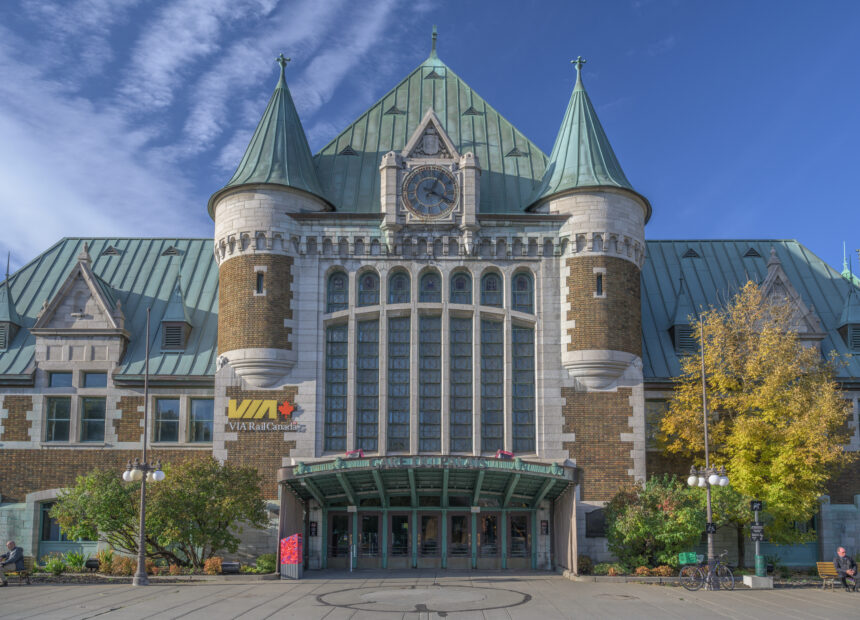
Quebec City’s urban form ( a dense historic core within walkable distances, surrounded by car-oriented suburbs ) creates different transportation dynamics depending on where you’re going. Within the Old City, Montcalm, and Saint-Roch, walking is the most efficient option for most trips. Beyond these neighbourhoods, the Réseau de transport de la Capitale (RTC) bus network and personal vehicles are the primary options, with cycling infrastructure growing year by year.
Walking
The Old City (Upper and Lower Town combined) is approximately 2 kilometres across at its widest point a 25-minute walk. The funicular (operating since 1879, fare approximately CAD $4) connects the Dufferin Terrace to the Quartier du Petit-Champlain. The Escalier Casse-Cou (Breakneck Stairs) provides a free alternative descent. Most tourist attractions in the historic core are within 15 minutes’ walk of each other, making a car unnecessary for visitors based in the Old City.
RTC Bus Network
The Réseau de transport de la Capitale (RTC) operates bus service throughout the city. The Métrobus routes (designated with the prefix 8) are the most frequent the 800 and 801 are the most useful for visitors, connecting the Old City to Sainte-Foy (where Université Laval and major shopping are located) and to the broader network. A single fare costs approximately CAD $3.75; a monthly pass approximately $100. The RTC Réseau Express network complements local service. Note: significant service modifications are in place during construction of the Quebec City tramway project.
The Tramway
Quebec City’s tramway project ( approved after years of political debate ) is under construction as of 2025-2026. The planned route runs approximately 22 kilometres from the Université Laval campus through the city centre to D’Estimauville in the east end. The project has involved significant disruption to bus routes in the central corridor and extensive street construction in the Old City adjacent areas. Completion is planned for 2028; verify current timelines and service modifications at rtcquebec.ca.
Cycling
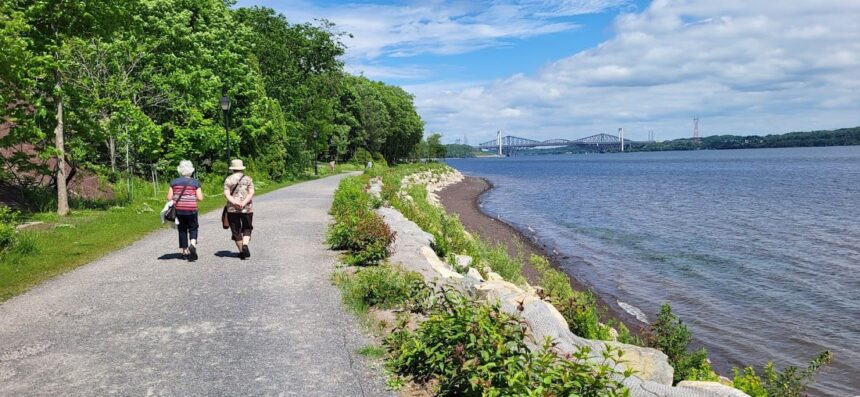
Cycling infrastructure has expanded significantly, with the Promenade Samuel-de-Champlain (8 km, separated path along the St. Lawrence) as the flagship. The Àllo! Stop bike-share system provides electric-assist bikes at stations throughout the central neighbourhoods. The Route Verte network connects the city to Île d’Orléans and beyond. The Old City’s hills and cobblestones limit cycling in some areas, but the Lower Town and Saint-Roch are accessible and well-served.
Car & Parking
Within the Old City, driving is frustrating and parking is expensive surface lots charge CAD $5-15/hour; the few underground structures are similarly priced. Street parking in the historic core is largely time-restricted. For day trips to Montmorency Falls, Île d’Orléans, and Charlevoix, a rental car is the most practical option. Car rental desks are available at the Jean Lesage Airport and at major downtown hotels. Taxi and rideshare services (Téo Taxi, Uber) operate throughout the city.