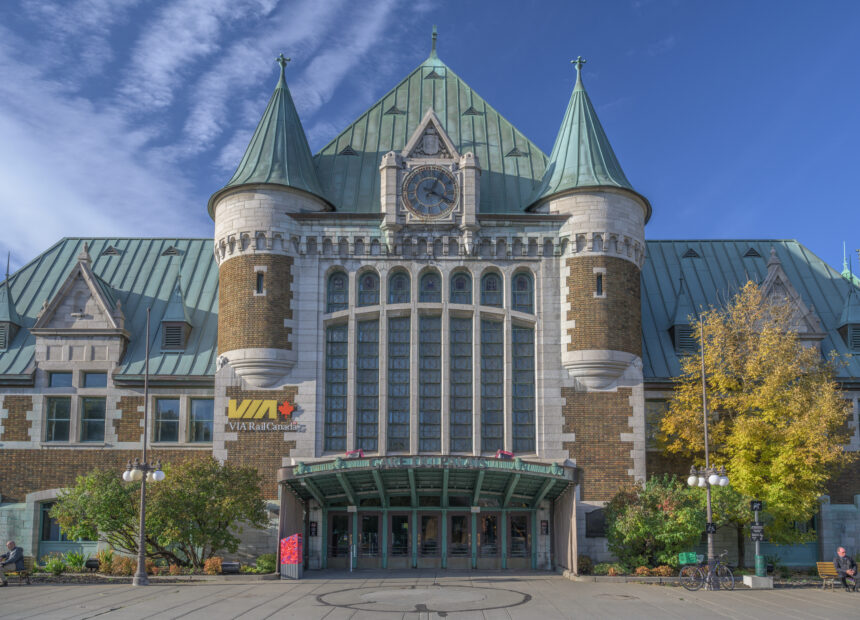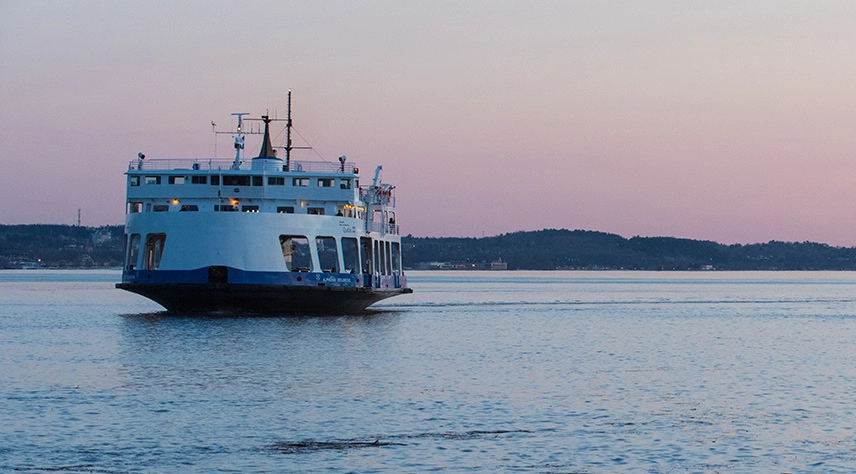
The ferry crossing between Quebec City and Lévis (the 10-minute passage across the St. Lawrence narrowing that gave Quebec City its name) is one of the world’s oldest continuously operating urban ferry services and one of its finest. Operating since 1812 (with predecessor crossings by rowboat and sailcraft going back to the founding of the colony), the Société des traversiers du Québec’s Quebec-Lévis ferry carries approximately 5 million passengers annually across a crossing that costs $4.25 one-way for adults as of 2025 (making it among the best-value scenic experiences in any Canadian city. The views of Quebec City from the Lévis shore during the crossing) the cliff face of Cap Diamant, the Château Frontenac, and the Dufferin Terrace rising above the Lower Town’s historic buildings (constitute one of the most dramatically composed urban panoramas in North America.
The Crossing
The ferry runs year-round, 365 days, with service from approximately 6:00 AM to 2:00 AM daily (extended hours on weekends; reduced schedule on statutory holidays) check traversiers.com for exact schedules). Departures from the Quebec City terminal (at the Old Port, Quai Chouinard, foot of Rue Dalhousie) run every 30 minutes during off-peak hours and every 15-20 minutes during morning and evening peak commuting periods. The crossing takes 10-12 minutes depending on current and wind. Passengers board on foot (no vehicle ferry service on this crossing (vehicles use the bridges); bicycles are accommodated. The ferry is not heated on the exterior decks, so appropriate clothing is essential for the winter crossing, when the St. Lawrence ice conditions can be spectacular (the river rarely freezes completely at Quebec City, but ice pans and partial freezing create extraordinary winter landscapes).
The Lévis Side: A City Worth Visiting
Lévis) the city of 145,000 on the south shore directly across from Quebec City (is worth the crossing for its own merits beyond the ferry ride. The Old Town of Lévis (Vieux-Lévis), on the heights above the ferry terminal, provides the finest elevated view of Quebec City available from any ground-level vantage point: the panorama from the Terrasse de Lévis takes in the entire cliff face, both bridges, and the full sweep of the Old City skyline in a single unobstructed composition. The Fortifications of Lévis (three forts built by the British between 1865 and 1872 to defend against American invasion) are Parks Canada national historic sites providing an unexpected military heritage experience on the south shore. Desjardins Group) the cooperative financial institution founded in Lévis in 1900 by Alphonse Desjardins, now Canada’s largest cooperative financial institution with $450+ billion in assets (has its headquarters in Lévis.
The Ice Canoe Race Connection
The Quebec City–Lévis crossing is the setting for one of the Carnaval de Québec’s most dramatic events) the Ice Canoe Race (Course en canot à glace), in which teams of five paddle canoes across the partially frozen St. Lawrence, dragging their boats over ice pans and paddling through open water channels in a feat of strength and navigation skill that tests both physical condition and ice-reading technique. The race (held annually since 1955 as part of the Carnaval’s programming) is a direct descendant of the traditional crossing technique used by indigenous peoples and early colonists who navigated the ice-filled St. Lawrence before bridge and ferry services were available. Watching the ice canoe race from the Dufferin Terrace or the Old Port is one of the most authentically Quebec winter experiences available to visitors during February.
The fare is published by the Société des traversiers du Québec: $4.25 one way for an adult aged 16 to 64, $3.60 for a senior, $2.95 for a child aged 6 to 15, and free under 6. A bicycle travels on the foot-passenger fare.