The Monastère des Augustines ( the former convent of the Augustinian Sisters of Mercy adjacent to the Hôtel-Dieu de Québec hospital in Quebec City’s Old City, opened as a heritage wellness retreat in 2015 ) represents one of the most creative responses to the demographic challenge facing the Catholic women’s religious orders of North America: the aging and declining membership that has made the full operation of historic convents impossible for the small surviving communities of sisters. Rather than selling the historic property to a developer or converting it to conventional hotel use, the Augustinian community created a social enterprise specifically designed to maintain the wellness and contemplative mission of the congregation within a format accessible to a secular public that has significant appetite for quiet, heritage-rich, slow-travel experiences.
The Wellness Program
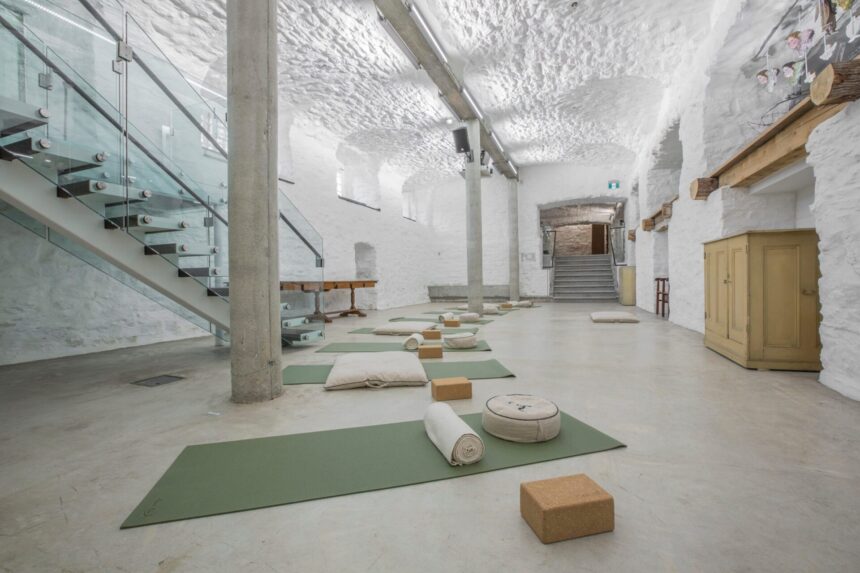
The Monastère’s wellness programming draws on the Augustinian Sisters’ 385-year tradition of care for the whole person ( the physical, psychological, and spiritual wellbeing that the congregation’s healthcare mission has addressed since 1639. The contemporary expression of this tradition: a spa program (using natural and plant-based therapies informed by the herbal medicine traditions of the Sisters’ centuries of apothecary practice), yoga and meditation programming (drawing on the contemplative practices of the monastic tradition without religious exclusivity), dietary programming (simple, seasonal food prepared from Quebec regional ingredients with an emphasis on the moderation and quality that the monastic table tradition embodied), and the architecture of silence (the Monastère’s spaces are designed for quiet reflection ) the corridors, the chapel access, and the garden spaces all provide the acoustic environment of a contemplative house rather than a conventional hotel).
The Museum
The Musée des Augustines ( housed within the Monastère complex ) holds the most complete collection of Augustinian material culture in North America: medical instruments from three centuries of the Hôtel-Dieu’s operation (lancets, cauterising irons, pharmacy equipment, and the 19th-century surgical instruments that document the evolution of medicine from humoral theory to germ theory to antiseptic surgery), paintings and portraits of the sisters and their benefactors (including works attributed to Frère Luc, the finest portrait painter working in New France during the 17th century), liturgical objects, furniture, and the extraordinary archival record of the congregation’s 385 years of continuous service. Guided tours are available in French and English; the museum is open to day visitors without a stay reservation.
The International Movement
The Monastère des Augustines has become a model for what hospitality industry analysts call “monastic tourism” ( a global movement in which historic religious properties are converted to public use in ways that preserve the contemplative character of the original institution while providing the amenity infrastructure that contemporary travellers expect. The movement has been growing across Europe (in France, Italy, and Spain, where the largest concentrations of historic religious property provide the supply) and is beginning to develop in North America through projects inspired by the Quebec City example. The Monastère’s founding team has been sought for consultation by religious communities in Canada, the United States, and beyond who are facing the same demographic challenge and seeking the same creative solution ) the transformation of an institutional burden into a heritage asset that funds its own preservation while continuing the congregation’s mission in a contemporary form.