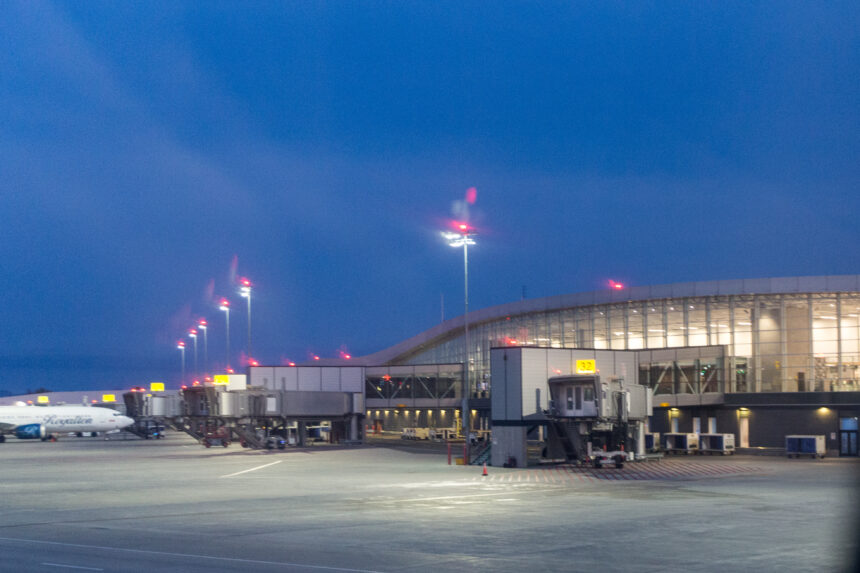
Quebec City’s aviation heritage ( spanning from the earliest heavier-than-air flight demonstrations in the region (1910-1915) through the First and Second World War training programs that made the Quebec City area a major aviation training hub, to the contemporary international airport serving 2 million+ passengers annually ) is less celebrated than the city’s maritime and military land heritage but equally significant in the story of how the capital region connected itself to the 20th century’s transformative technologies. The Jean Lesage International Airport (YQB), the Base des Forces canadiennes Valcartier‘s aviation heritage, and the historical connections to 3 Wing Bagotville (the CF-18 operational base 200 kilometres north in the Saguenay region) together document the Quebec City region’s aviation history.
The Airport’s Evolution
The Jean Lesage International Airport ( renamed in 1993 to honour the former Premier ) developed from the Ancienne-Lorette Airport established in the 1940s on the plateau west of Quebec City, where the flat agricultural terrain provided the landing surface that military and civilian aviation required in the pre-jet era. The airport’s progressive development through the 1950s-1980s (the construction of the current terminal infrastructure, the extension of the runway system to accommodate jet aircraft, and the addition of international service) paralleled the growth of the Quebec City economy and the development of the tourism market that the heritage city’s global reputation was generating. The $280 million terminal expansion of the 2000s-2010s brought the physical infrastructure to contemporary international standards; the continuing growth of direct service routes (to European destinations, to US sun destinations, and within Canada) reflects the airport authority’s success in developing the Quebec City market against the competitive pull of Montreal-Trudeau.
Military Aviation
The Quebec City region’s military aviation heritage is concentrated at CFB Valcartier ( which maintained an aviation component during the Cold War period before the rationalisation of Canadian Forces basing consolidated tactical aviation at 3 Wing Bagotville ) and in the Second World War training programs that used the Ancienne-Lorette Airport and surrounding airspace for the British Commonwealth Air Training Plan (BCATP). The BCATP ( the largest military aviation training program in history, which trained over 130,000 aircrew across Canada between 1939 and 1945 ) established training units at several Quebec locations including the Quebec City area, providing the aircrew for the RCAF, RAF, RAAF, and RNZAF squadrons that flew over Europe. The Aéroclub de Québec, founded in the 1920s, was the primary civilian aviation organisation that provided the initial pilot training from which the BCATP programs drew their first instructors.
3 Wing Bagotville
The operational CF-18 Hornet base for eastern Canada ( 3 Wing Bagotville, located at Canadian Forces Base Bagotville near Saguenay-Lac-Saint-Jean, 200 kilometres north of Quebec City ) is the primary military aviation installation associated with the Quebec City military community. The 3 Wing’s CF-18s (now transitioning to the F-35A as Canada’s next-generation fighter aircraft, with deliveries anticipated from the late 2020s) perform NORAD interception missions for eastern Canada, participation in NATO air policing deployments (including the Baltic Air Policing mission and the Icelandic Air Defence missions), and the training program that produces the RCAF’s French-speaking fighter pilots. Many 3 Wing personnel live in the Quebec City metropolitan area and commute to Bagotville, maintaining the military aviation community’s connection to the capital.