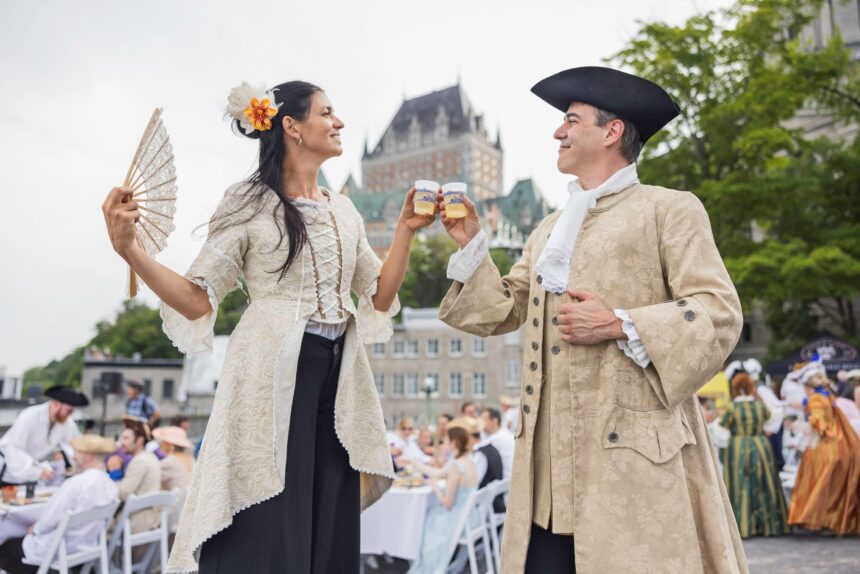
New France’s Quebec City (the colonial capital of a territory stretching from Newfoundland to Louisiana at its peak) was a community of approximately 5,000-8,000 people by the early 18th century, living in conditions of material constraint and cultural richness that neither the romanticised “golden age” narrative of Franco-Canadian heritage memory nor the grimly deterministic colonial critique fully captures. Daily life in 18th-century Quebec City was shaped by the rhythms of the agricultural calendar, the demands of the fur trade economy, the authority of the Church and the seigneurial system, the ever-present risk of epidemic disease and military conflict, and the distinctive social culture of a French colonial community that was simultaneously part of the French Atlantic world and developing its own specifically North American identity.
Food & Subsistence
The habitant diet of New France Quebec City (more varied than the European peasant diet of the same period, supplemented by the extraordinary abundance of North American game, fish, and wild plants that the colonists learned (often from Indigenous neighbours) to exploit) centred on the agricultural staples of the St. Lawrence valley: bread (from the wheat and rye crops that the seigneurial farms produced), peas (the yellow split peas that are still the basis of the soupe aux pois of contemporary Quebec cuisine), corn (adopted from Indigenous cultivation), and salt pork (the preserved pork that provided protein through the winter months when fresh meat was unavailable). The supplementary foods were extraordinary by European standards: passenger pigeons (in numbers that modern ornithology can barely comprehend), Atlantic salmon, striped bass, and the full range of St. Lawrence River fish, moose and white-tailed deer year-round, and the wild berries, roots, and greens of the boreal edge. The habitant ate better than the French peasant; the colonial experience, for all its hardships, was generally nutritionally superior to its European equivalent.
The Social Hierarchy
New France’s social hierarchy (anchored by the tripartite structure of Church (the clergy who controlled education, healthcare, and much of the social welfare function), State (the colonial administration of the Governor General, the Intendant, and the officers of the Compagnie des Indes and its successors), and the seigneurs (the landowners who held the seigneuries from the Crown and collected cens et rentes from their censitaires)) created a social order of considerable rigidity but with more social mobility than the French system of the same period. The fur trade provided the most significant avenue of social advancement: a voyageur or coureur des bois who accumulated sufficient profits from the interior trade could establish himself as a bourgeois merchant of genuine prosperity. The clergy provided the most reliable path to education and social respectability for the talented children of habitant families. The military offered rank advancement through the colonial Troupes de la Marine that garrisoned Quebec City and the other major posts.
Entertainment & Social Life
The social and entertainment life of New France Quebec City was surprisingly rich for a colonial capital of its modest size: the veillée (the evening gathering at a neighbour’s house for music, dancing, and storytelling) was the primary entertainment form of the habitant population, with the fiddle music, the step dancing (gigue), and the oral tradition of songs and tales that are the ancestors of contemporary Quebec trad music culture. The church calendar provided the structured entertainment of the religious year: the saint’s day celebrations, the Christmas réveillon (the post-midnight-mass feast that persists as the contemporary réveillon tradition), and the Mardi Gras celebrations before Lent punctuated the year’s social calendar with communal celebrations of considerable exuberance. The urban elite of Quebec City (the officers, the merchants, the senior clergy, and the colonial administration) maintained a more formal social calendar of dinners, balls, and the theatrical performances that were occasionally presented by traveling companies or by the amateur theatricals that the garrison officers organised.