The Hôtel-Dieu de Québec is the oldest hospital north of Mexico, founded in 1639 by three Augustinian Hospitaller sisters sent from Dieppe at the request of Cardinal Richelieu’s niece. It has continued operating on the same site on Rue Charlevoix for 385 years, making it one of the longest-running medical institutions in the Americas. The surviving convent, chapel, and museum complex on the site is now jointly a working hospital under the CHU de Québec and a publicly accessible heritage museum run by the Monastère des Augustines.
History and origins
The hospital was founded in a two-room wooden building on the Côte du Palais site in August 1639. The three founding nuns, Marie Guenet de Saint-Ignace, Anne Le Cointre de Saint-Bernard, and Marie Forestier de Saint-Bonaventure, had sailed from France aboard a ship that also carried the Ursuline founders, Marie de l’Incarnation and her companions. The Augustinians took the medical mission; the Ursulines took education. Within six months the Augustines had admitted their first patients, mostly sick and wounded French soldiers and a growing number of Indigenous patients from the surrounding Wendat and Algonquin communities.
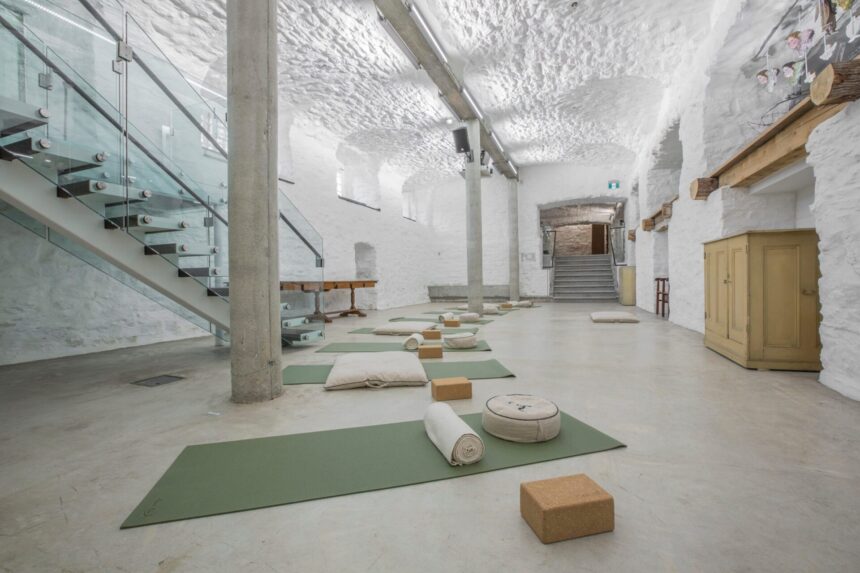
The move to the current Rue Charlevoix site happened in 1644, when the founding sisters purchased the land from the Jesuit Company of One Hundred Associates. Construction of the first stone hospital building began in 1690 and continued in phases through the eighteenth century, interrupted several times by fires and by the 1759 Conquest bombardment. The oldest surviving structure, the 1695 vaulted cellar, still sits below the current hospital and was used as a shelter during bombardments through the late eighteenth century.
Where things stand today
The medical practice evolved alongside European medicine. The Augustines were responsible for importing and cultivating the first medicinal herb gardens in New France, some of which are preserved in the cloister garden today. They operated an apothecary on-site from 1680 onward and trained their own sisters as surgeon-apothecaries; several of those early sisters produced pharmacopoeia manuscripts that survive in the archives. The apothecary continued producing medications in-house until 1968.
The British conquest of 1759 did not interrupt the hospital’s operation. General James Murray, the first British military governor, specifically protected the Augustinian community and continued to subsidise the hospital from the military budget. Patients treated at the Hôtel-Dieu between 1760 and 1860 included British soldiers, French-Canadian civilians, American prisoners from the 1775 invasion, and Irish immigrants arriving through the Port of Québec during the typhus and cholera epidemics of the 1830s and 1840s.
The hospital was secularised in phases during the Quiet Revolution of the 1960s. Lay nursing staff were first admitted in the 1930s, but the Augustines retained full administrative control until 1962, when the hospital was formally integrated into the public health system of Québec. The last sister-nurse retired from clinical duties in 1977. Administrative continuity transferred to the provincial Ministry of Health, and the physical site was merged with the broader CHU de Québec hospital network in the 1995 reorganisation.
What to order
Today the Hôtel-Dieu operates as one of the five hospital sites of the CHU de Québec-Université Laval. It holds about 400 beds, runs specialty services in dermatology, ophthalmology, and oncology, and houses the primary teaching hospital for the Université Laval faculty of medicine residency programmes in those disciplines. The 1695 vaulted cellar survives below the current emergency department. The 1800 chapel continues to function as a hospital chapel and is open to visitors.
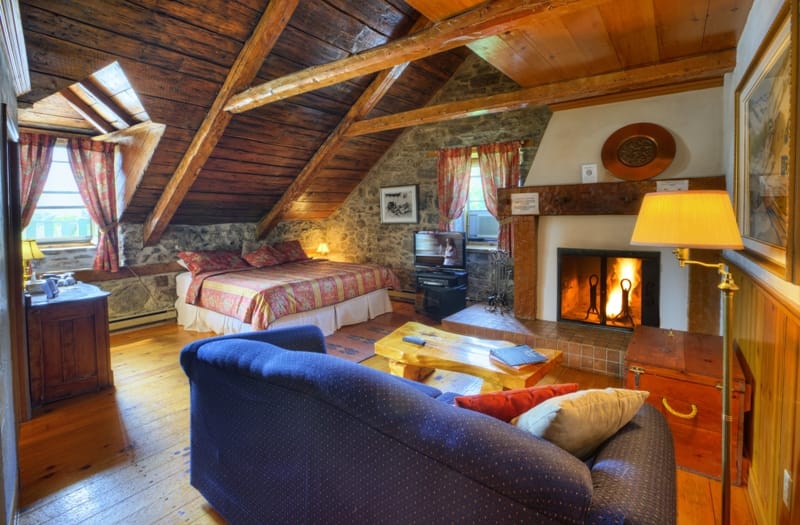
The Monastère des Augustines, adjacent to the hospital at 77 Rue des Remparts, operates both as a hotel (45 rooms priced $195 to $290 a night) and as a museum of the Augustinian medical tradition. Admission to the museum is $15. The museum holds approximately 40,000 artifacts including original surgical instruments, apothecary equipment, manuscripts, and religious objects. A short guided tour runs three times daily. The cloister garden, replanted with medicinal herbs following original seventeenth-century patterns, is accessible to museum visitors.
What sets it apart
The contemporary relevance of the hospital continues to draw research interest. The Augustines maintained continuous clinical records from 1639 onward, and those records now form one of the most complete historical medical archives in North America. Université Laval research projects have used them to trace disease patterns in New France, study the 1700s smallpox epidemics, and reconstruct Indigenous-European patient populations. The archive is open to researchers by appointment.
For a visitor, the combination of a working 385-year-old hospital and an accessible heritage site is unusual globally, and the Hôtel-Dieu is probably the single most historically layered institution in Québec City. A morning tour at the Monastère des Augustines (90 minutes including the cloister and apothecary), followed by a walk past the hospital’s Rue Charlevoix entrance, gives a reasonable sense of the continuity. The museum is closed Mondays.