Quebec produces roughly 73 percent of the world’s maple syrup by volume, and within that the Beauce region south of Québec City is the volume leader. Less celebrated but more interesting to the attentive palate is the product from the Capitale-Nationale’s Portneuf, Charlevoix and Jacques-Cartier subregions, where cooler spring nights, higher-elevation sugar bushes and a preference for wood-fired evaporation among smaller producers yield a syrup with a tighter, woodier profile than the commodity-grade output of the Fédération des producteurs acéricoles du Québec.
Seasonal character
The 2026 season has been solid but not exceptional. Cold April nights and mild daytime temperatures through early March produced an extended sap flow; total regional production will likely land in the upper range of recent five-year averages. Small producers in Sainte-Christine-d’Auvergne, Saint-Raymond, and along the Route de la Rivière-à-Pierre have reported higher-than-average sugar content in their early-run sap, which translates to syrup with distinctive forward caramel notes and a cleaner finish than mid-season output.
What to order
For visitors, the cabane à sucre experience remains the entry point to regional production. The Érablière du Cap, in Saint-Nicolas on the Lévis side, operates traditional sugar-shack meals through mid-April and runs guided tours of its evaporator; the Cabane à sucre Chabot in Sainte-Famille-de-l’Île-d’Orléans remains small-batch and family-run; the Domaine de la Forêt Perdue outside Saint-Raymond serves sugar-shack classics in an architecturally interesting forested setting. The classic menu sequence (pea soup, ham, baked beans, eggs, sausages, grand-père au sirop, and tire sur la neige) varies less between establishments than some marketing suggests; quality differences show up most clearly in the syrup itself, the doneness of the beans, and the smoke character of the ham.
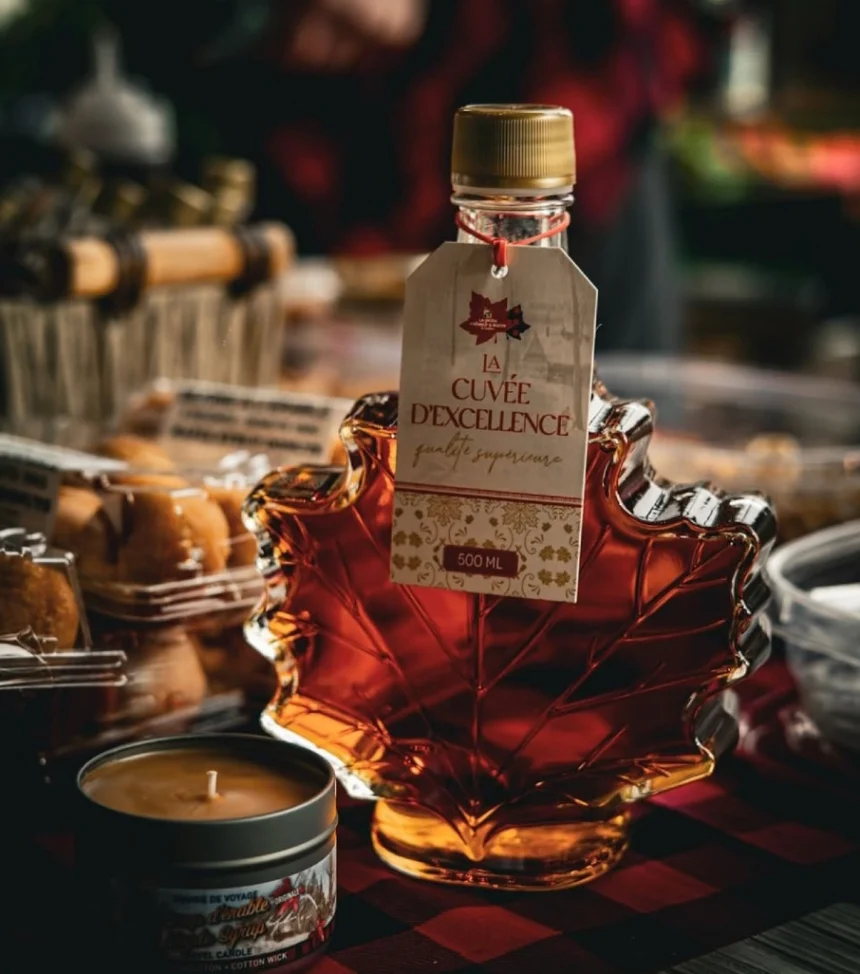
For visitors buying syrup to take home, three points are worth knowing. The category system used by the Fédération (Golden, Amber, Dark, Very Dark) describes production timing and colour, not quality. Small-producer “sirop de cabane” labels without federation grading are often the most distinctive. And wood-evaporated syrup, harder to find and somewhat more expensive, has a demonstrable sensory difference from commodity syrup that is worth paying the premium to experience at least once. The Marché du Vieux-Port and Marché public de Sainte-Foy both carry Capitale-Nationale small-producer syrup through the year.