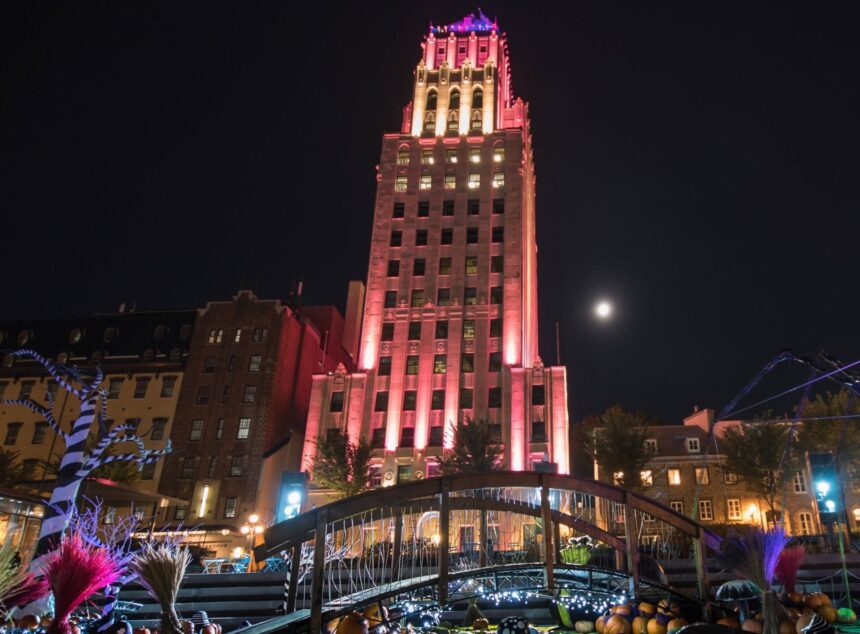
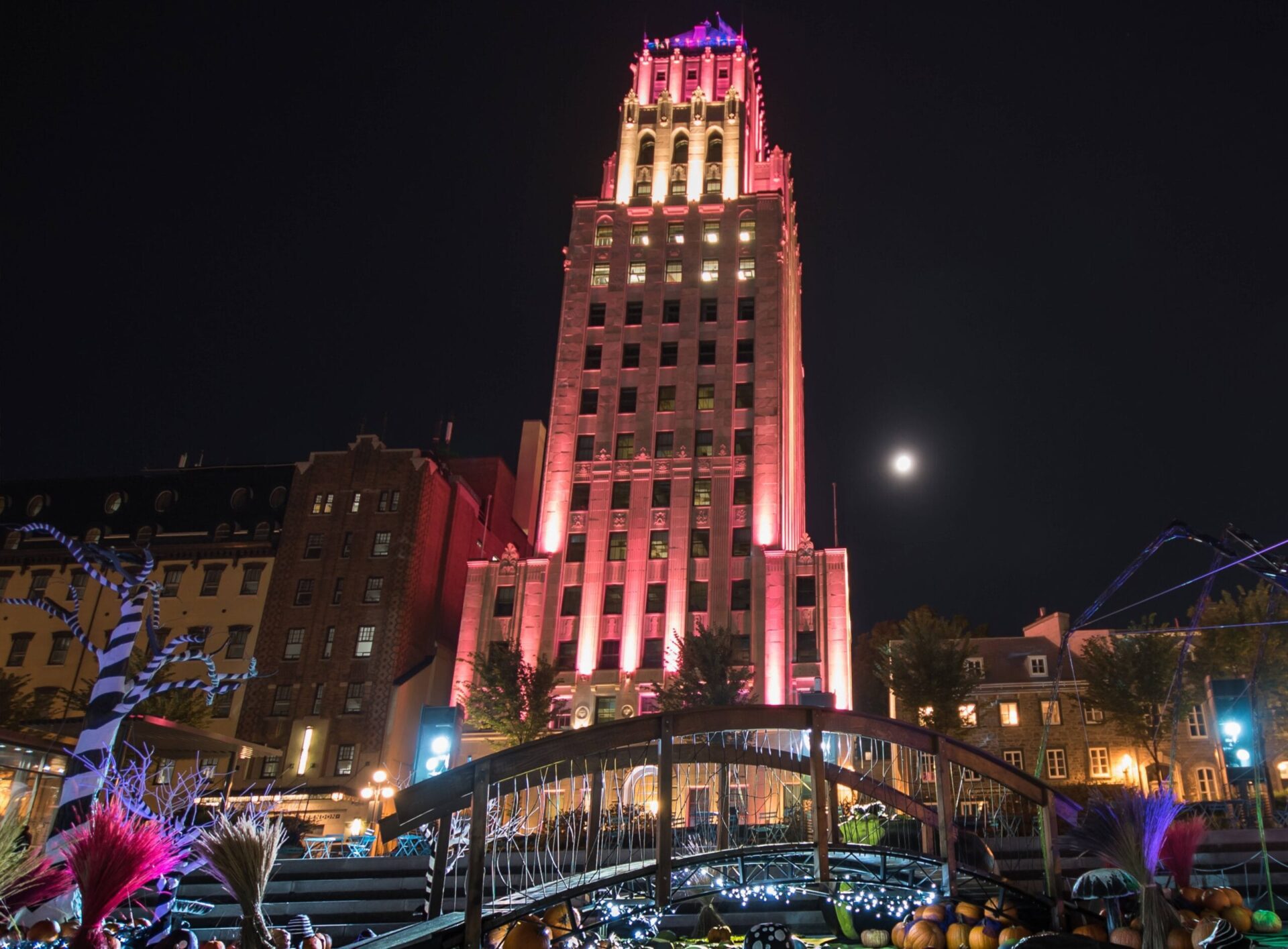
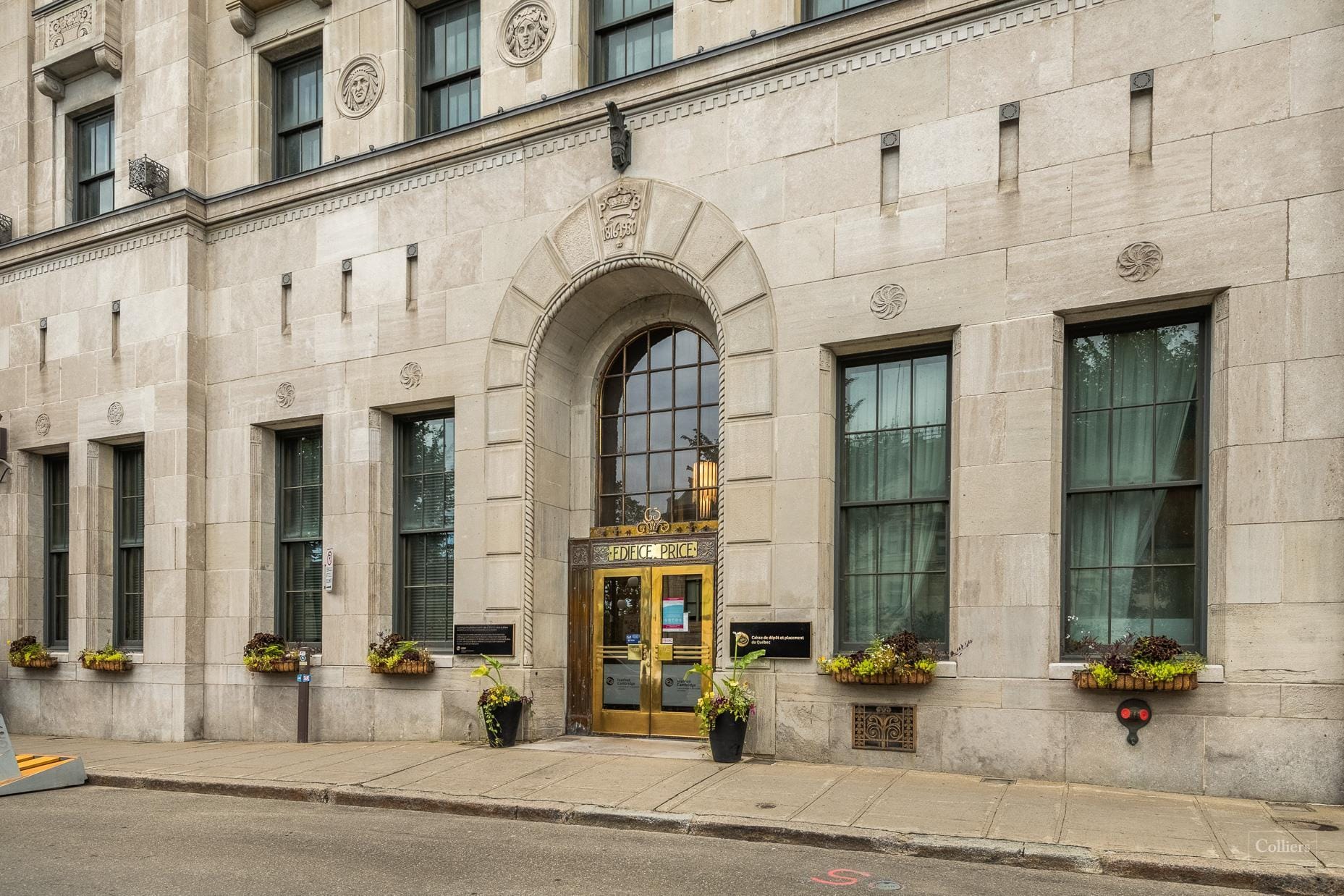
The Édifice Price at 65 Rue Sainte-Anne opened in 1930 as the headquarters of Price Brothers and Company, then one of the largest lumber firms in eastern Canada. Designed by the Montreal firm Ross and Macdonald, the 18-storey, 82-metre tower was the first skyscraper ever built in Quebec City and one of the earliest Art Deco high-rises in Canada. Its construction on the Upper Town plateau, in the sightline of the Château Frontenac, provoked one of the first heritage preservation controversies in Quebec City.
What it costs
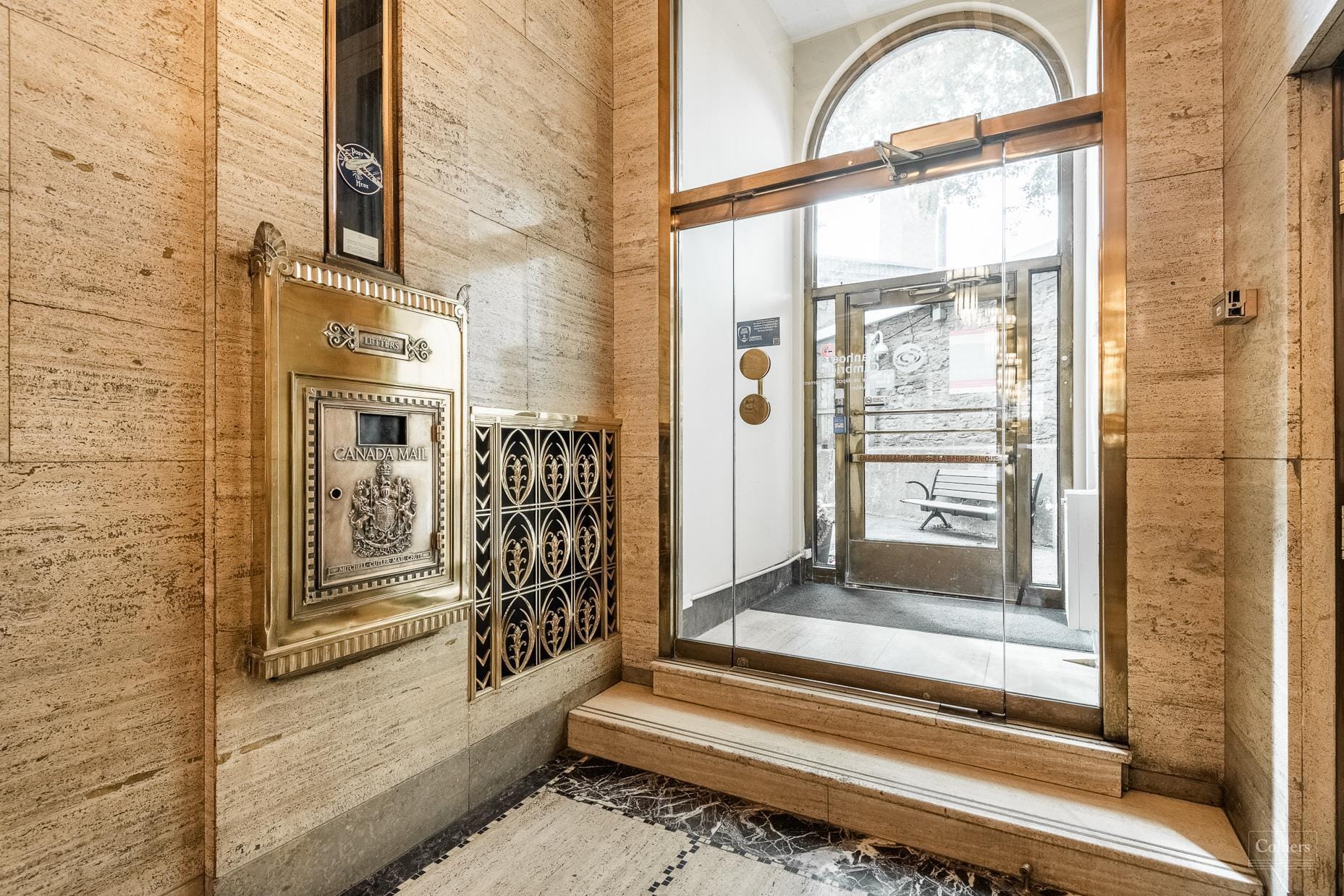
The tower’s Art Deco vocabulary is unmistakable: the setback massing, the copper-clad pyramidal cap, the bronze ornamental lobby and the stylized bas-reliefs representing the lumber industry that flanked Price Brothers’ operations across Saguenay-Lac-Saint-Jean. The building cost approximately $2 million at the time, equivalent to roughly $38 million in 2026 dollars, a figure that sounds modest against contemporary office tower construction until one considers that the structure was built during the onset of the Great Depression, in a city whose entire population was under 130,000.
After Price Brothers exited the Upper Town in the 1970s, the building’s role evolved. The Quebec provincial government took over portions of the building in the 1980s. In 2001, the upper floors were adapted to serve as the Quebec Premier’s official Quebec City residence; every premier since Bernard Landry has maintained an apartment on the top floors. Christine Fréchette, sworn in April 15, 2026, occupies the same residence. The decision to use a private-sector heritage tower rather than a government-owned building for premier accommodation is unusual in Canadian provincial practice.
History and origins
The lobby remains open to the public during business hours. Visitors can enter through the Rue Sainte-Anne entrance and walk the restored 1930 lobby free of charge; the bronze and marble finishes are among the finest interwar lobby interiors surviving in Canada. The upper floors (including the premier’s residence) are not accessible. Guided tours were offered sporadically for many years but have been curtailed since 2020 on security grounds. The adjacent Holy Trinity Cathedral and Morrin Centre fill out the immediate area with other high-priority heritage stops.
The Édifice Price’s continuing influence on Quebec City’s skyline policy is worth noting. The building’s construction in 1929-30 directly prompted the 1930s-era height restrictions that kept the Old City’s profile dominated by the Château Frontenac and religious towers. No skyscraper has been built in the Upper Town since. The more recent tower construction (the Fresk hotel project, the Jardins Mérici towers, the L’Hôtel at PVM) has been pushed outside the walled city into adjacent quartiers. The Édifice Price thus marks both the beginning and effectively the end of an era of downtown high-rise construction.