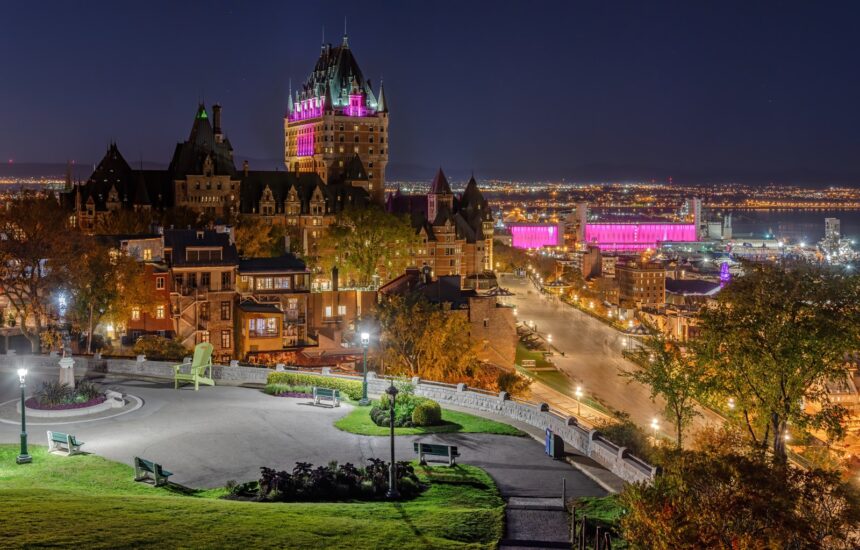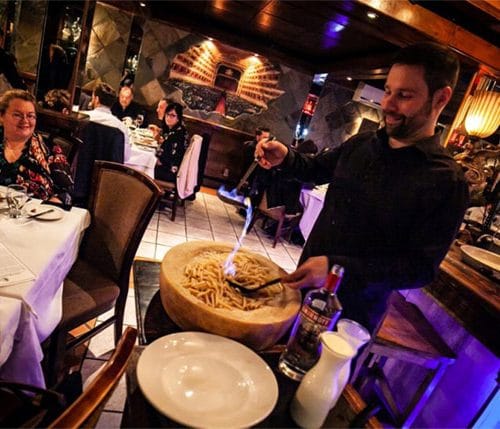
Québec City’s restaurant scene runs deeper than its tourist reputation suggests. The city holds roughly the density of serious rooms you would expect from Lyon or Ghent: not the headline density of Montréal or Toronto, but a serious middle class of kitchens that cook from the regional terroir without making a performance of it. This is the list I send friends.
The first booking: Battuto
Battuto, in the Saint-Sacrement neighbourhood, is a twenty-seat Italian-leaning room that has been the most consistently excellent dinner reservation in Québec City for close to a decade. Chef Guillaume St-Pierre’s pasta programme alone justifies the trip: hand-rolled shapes, careful sauces, vegetables treated as primary ingredients rather than garnish.
Reservations open a month out and fill within hours. Plan accordingly.
Arvi and the Limoilou tasting menus
Arvi, on 3e Avenue in Limoilou, runs a fifteen-seat tasting menu from Chef Julien Masia. The format is a fixed progression of eight to ten courses at a set price, around 140 dollars at time of writing, with an optional wine pairing. The cooking draws from Québec’s producers without the farm-to-table sermon that often accompanies such menus elsewhere.
Kirin, a few blocks away, is the Japanese sibling on 3e Avenue that opened more recently. Both deserve reservations; Kirin is easier to book on short notice.
Saint-Roch institutions
Le Clocher Penché has anchored the neighbourhood since 2001 and remains the first address I send visitors to for a serious lunch or weekend brunch. The kitchen cooks market ingredients in straightforward compositions; the wine list leans natural without being doctrinaire.
Chez Boulay, on Rue Saint-Jean just inside the walls but operating with a Saint-Roch sensibility, runs chef Jean-Luc Boulay’s boreal-cuisine programme. The menu is built around northern Québec ingredients, cold-climate game, foraged produce, preserved elements. The room is formal; the prices reflect it.
Le Patriarche, at the corner of Rue Saint-Stanislas, is the other serious Vieux-Québec dining room. Chef Stéphane Roth cooks French technique on Québec product; the cellar is among the best in the city.
The neighbourhood bistros
Bistro B, on Cartier, is the Jean-François Roberge neighbourhood bistro that became a Québec City classic. Market menu, small bar, consistent kitchen, reservations required.
Le Renard et la Chouette, in Saint-Roch, and La Planque, in Limoilou, round out the mid-tier bistro set. Both are the sort of dinner reservations where a visitor will sit next to locals and not be obviously a visitor. Restaurant Kraken Cru, a small seafood-focused room in the Vieux-Port, has developed a cult following for its crudos, tartares, and oysters; portion sizes are small and the bill is easy to underestimate.
The Vieux-Québec exceptions
Most restaurants inside the walls cook for tourists, and most of them cook for tourists well enough that no one complains. A handful cook as if the tourists were not there.
Coteau, inside the Auberge Saint-Antoine, runs one of the most ambitious hotel-restaurant programmes in the country. Légende, on the Côte de la Fabrique, is the boreal-cuisine counterpart to Chez Boulay and sources aggressively from the region. Restaurant Champlain at the Fairmont Le Château Frontenac is a tasting-menu room whose view of the St. Lawrence is, on the right evening, worth the price of dinner on its own.
Casual and fast
Chic Shack, on the Place d’Armes inside the walls, is a burger room that punches well above its tourist-corridor address. Le Bureau de Poste, in Saint-Jean-Baptiste, runs bargain pub food that locals use as a weekday default. For poutine, skip Chez Ashton (the drive-thru chain that visitors somehow default to) and go to Le Chic Shack or La Buche. Ashton’s poutine is not bad; it is just not the best poutine in the city by a long distance.
Reservations and timing
The serious rooms require reservations, often weeks out for Saturday dinner. Use the restaurants’ own online booking systems rather than the third-party aggregators; inventory on the former is more current.
Lunch is easier than dinner for walk-ins. Many of the bistros run a cheaper weekday lunch menu with similar kitchens and a much easier door policy. The city’s food festivals (Le Grand Marché’s summer tastings, the Carnaval caribou programme, the August Fêtes de la Nouvelle-France food streets) are informal parallel economies and do not require booking.
Tipping
Tip fifteen to twenty percent on the pre-tax total. Service is not included anywhere unless explicitly stated. Canadian cards usually prompt you through a percentage at the terminal; round up rather than down on small tabs.
By occasion and by neighbourhood
- Inside the walls — what is genuinely good in Vieux-Québec, and what is priced for visitors.
- Saint-Roch, where most of the city’s best cooking is.
- Brunch and poutine.
- Tanière³ and Chez Boulay for the serious end.
- Québécois classics explained, if you want to know what you are ordering.