



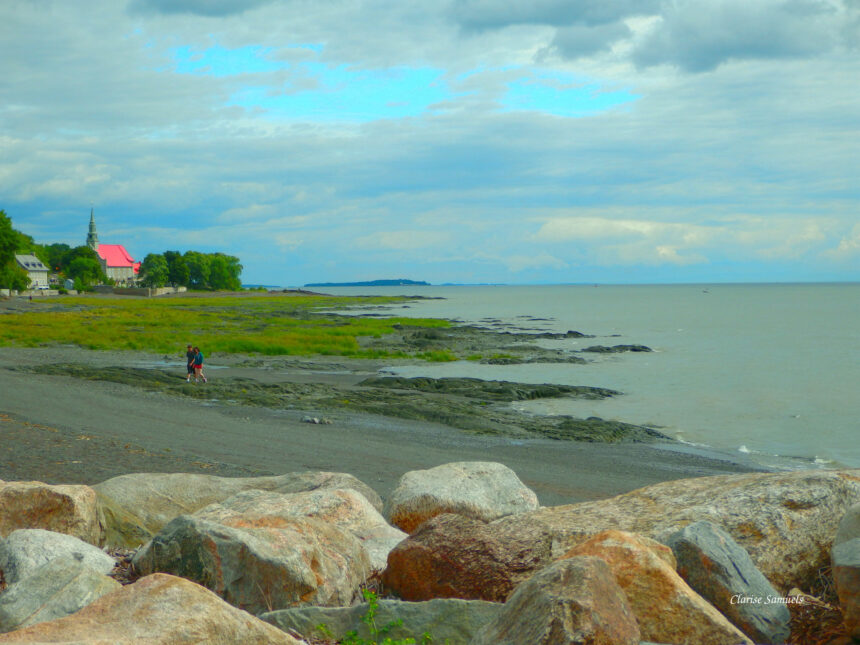
The St. Lawrence River is the reason Quebec City exists. Champlain chose this site in 1608 precisely because the river narrows here ( the Algonquin word “Kebec” means exactly this ) creating a natural choke point that controlled access to the interior of the continent and made the location both militarily and commercially strategic. For 400 years, the river has defined the city: its economy (the fur trade, the timber trade, the shipping industry), its climate (the moderating influence of water mass that distinguishes the city’s weather from the surrounding continental interior), and its visual identity (the cliff above the river, the view of the south shore, the ships and ferry moving through).
The River’s Scale
At Quebec City, the St. Lawrence is approximately 1.2 kilometres wide between the Lower Town waterfront and the south shore town of Lévis ( narrow enough to be crossed by the Lévis ferry in 12 minutes, wide enough to carry ocean-going vessels. The river at this point is tidal ) the daily rise and fall of tidal waters creates a freshwater-saltwater mixing zone that produces the extraordinary marine ecology of the estuary downstream. Beluga whales from the St. Lawrence population have been sighted as far upriver as Quebec City on rare occasions; the primary beluga habitat is in the estuary, 200+ kilometres downstream near Tadoussac.
The Ice
The freezing of the St. Lawrence ( which typically produces floating ice pans from December through March, with occasional years of solid freezing near the shores ) defines winter in Quebec City as profoundly as the snowfall does. The ice canoe race of the Winter Carnival, crossing the river amid floating ice pans, is the most dramatic expression of a relationship with ice that the city has maintained since its founding. Before the Lévis ferry, the frozen river was the most direct winter crossing; the traditions of ice navigation, ice fishing, and the reading of ice conditions for safety remain active in communities along the lower river.
The Lévis Ferry Experience
The Société des traversiers du Québec operates the Quebec City-Lévis ferry service 24 hours a day, 365 days a year one of the oldest continuous ferry services in North America. The 12-minute crossing provides the finest view of Old Quebec City available from any position: the cliff-face elevation of the fortifications, the Château Frontenac, the cathedral spires, and the Lower Town buildings are simultaneously visible in the panorama that opens as the ferry clears the dock. At approximately CAD $4.50 each way, it is among the greatest value transportation experiences in Canada.








