Quebec City provides exceptional panoramic photography opportunities at every elevation, in every season, and at every time of day. The cliff-face topography, the river, the historic buildings, and the quality of northern light combine to create a photographic environment that rewards serious attention to timing and position. This is a checklist for the photographer who wants to cover the city’s visual range systematically.
The Lévis Ferry: The Essential Shot
The ferry crossing to Lévis provides the single most comprehensive view of Old Quebec City the cliff-face elevation showing the fortifications, the Château Frontenac, the cathedral spires, and the Lower Town simultaneously. Best light: the late afternoon golden hour in summer and fall, when the setting sun illuminates the west-facing facade of the Château directly. The ferry operates every 20-30 minutes; the crossing takes 12 minutes. Position: upper deck, bow-facing position as the ferry clears the dock. Season: any, but autumn fog at dawn creates extraordinary atmospheric effects.
Terrasse Dufferin: Dawn & Dusk
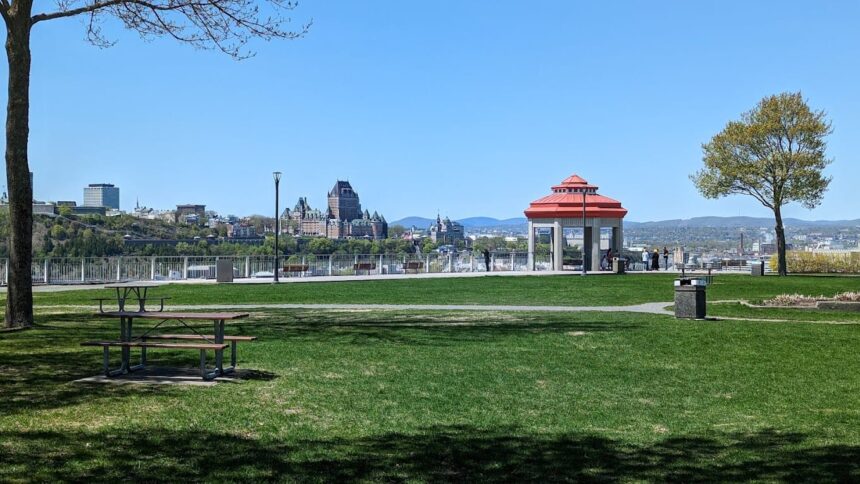
The Dufferin Terrace at dawn ( empty, lit by the first light reflecting off the St. Lawrence ) produces the cleanest compositions of the Château and Lower Town. In winter, the blue hour just after sunset, with the Château illuminated against a dark cobalt sky and the river below still faintly reflecting the fading light, creates images of the city at its most cinematic. The terrace at peak tourist hours (10am-5pm in summer) is crowded and the light is harsh; serious photography here requires early morning or late evening access.
Observatoire de la Capitale (31st Floor)
The observation deck at the 31st floor of the Marie-Guyart Building (1037 rue de la Chevrotière) provides the only 360-degree elevated view available in Quebec City at 221 metres above sea level, the entire Greater Quebec City region is visible. Best for: aerial city planning photography, river-to-Laurentians panoramas, autumn foliage from above. The observation deck admission is modest; check capitalequebec.gouv.qc.ca for current hours. Bring a wide-angle lens and a clear day.
The Sugarloaf at Montmorency (Winter Only)
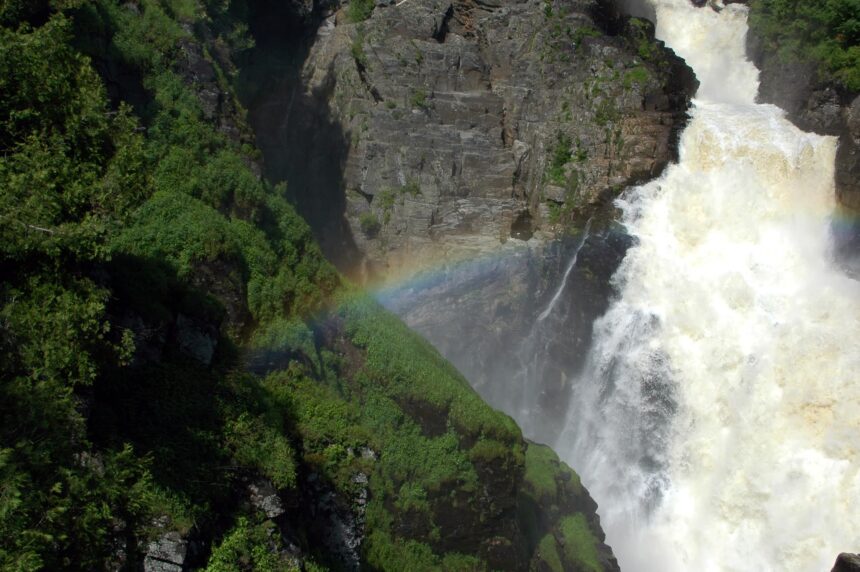
The pain de sucre (sugarloaf ice cone) at the base of Montmorency Falls ( which builds from December through February through the freezing spray of the 83-metre falls ) is the most photographically distinctive winter natural phenomenon accessible from Quebec City. Morning light on a clear day, with the falls partially frozen behind the cone and the St. Lawrence visible in the background, creates landscape images that have no equivalent in the Canadian winter photography canon. Access: the panoramic staircase platform midway down the cliff at Parc de la Chute-Montmorency (15 minutes from the city).