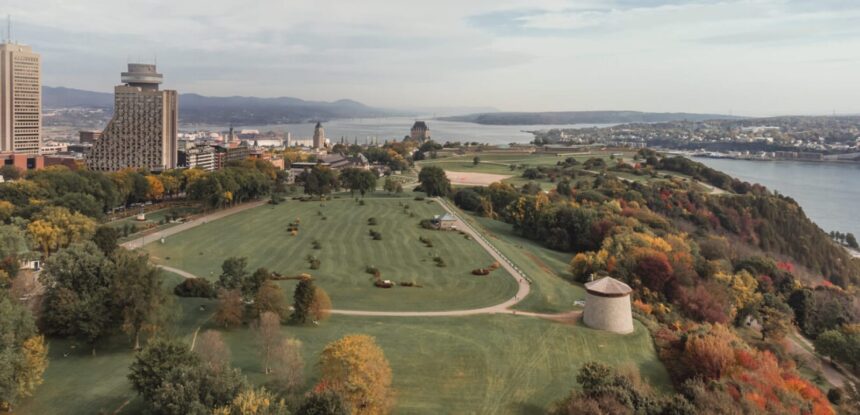
The Battle of the Plains of Abraham, fought on September 13, 1759, was one of the most consequential military engagements in North American history 15 minutes of combat whose outcome determined the political character of the continent for the following 265 years. The battle was the culmination of the Siege of Quebec (June 26 to September 18, 1759), in which British forces under General James Wolfe besieged the French colonial capital defended by the Marquis de Montcalm. Wolfe’s audacious decision to scale the cliffs from the St. Lawrence at night and deploy his forces on the plateau above the city caught the French forces at a tactical disadvantage that 15 minutes of fighting converted into a decisive British victory. Both Wolfe and Montcalm died of wounds sustained in the battle.
The Battle
The British advance up the cliffs at Anse au Foulon (Wolfe’s Cove) in the early hours of September 13, 1759 was made possible by the tactical error of the French sentinels and the extraordinary physical feat of climbing the 53-metre escarpment in darkness with full military equipment. By dawn, approximately 4,500 British troops were deployed on the plateau. Montcalm, faced with this unexpected situation, chose to engage immediately rather than wait for reinforcements from Bougainville’s force to the west a decision whose strategic wisdom has been debated by historians ever since. The battle lasted approximately 15 minutes before the French lines broke. The capitulation of Quebec City followed five days later, on September 18, 1759.
Historical Significance
The British conquest of Quebec City effectively ended French imperial control of North America north of Louisiana ( the Treaty of Paris (1763) formalised the transfer of New France to Britain, creating the constitutional situation that has shaped Quebec’s political and cultural experience ever since: a French-speaking society under British and then Canadian political authority, maintaining its language, religion, and civil law through the Quebec Act (1774) and the subsequent evolution of Canadian federalism. The battle is not simply a historical event but a living political reference point in Quebec’s collective memory ) the moment when the project of building an autonomous French nation in North America was interrupted, and from which all subsequent Quebec political culture takes its essential problematic.
The Site Today
The Parc des Champs-de-Bataille (Battlefields Park) ( 103 hectares managed by the National Battlefields Commission, established by the federal government in 1908 ) preserves the site of the battle as a public park that combines historical interpretation with the outdoor recreation functions described elsewhere. The Musée des plaines d’Abraham, within the park, presents the battle and its context through a multimedia interpretive program. The Joan of Arc Garden, the Martello towers, and the monuments to Wolfe and Montcalm provide orientation within the historic landscape. Parks Canada’s Fortifications of Quebec National Historic Site provides interpretation of the defensive context that made Quebec City the strategic prize it was.