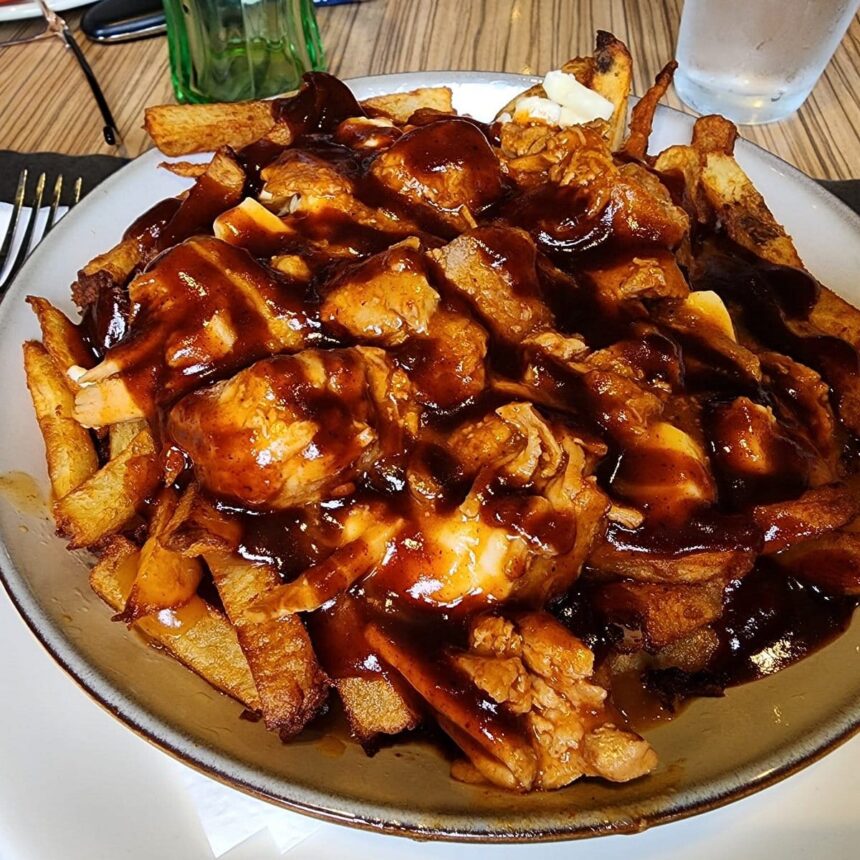
Poutine is simple on paper and surprisingly hard to get right: French fries, fresh cheese curds, brown gravy. That’s the whole recipe. The differences between a transcendent poutine and a depressing one come down to three things — the quality of the fries, the freshness of the curds, and the depth of the gravy. Miss any of them and you have a sad plate of soggy fries with cheese on top.
Québec City is one of the best places on the planet to learn what poutine is supposed to taste like. Here’s how to eat it well here, and how to avoid the tourist-trap versions that have unfortunately multiplied inside the walls.
Where Poutine Actually Comes From
Contrary to what a lot of Québec City merchandise suggests, poutine was not invented in the provincial capital. Its origins are in rural central Québec — the Centre-du-Québec and Bois-Francs regions, roughly halfway between Montréal and Québec City — in the late 1950s. Several small-town snack bars claim the invention, and the historical record is genuinely murky. Warwick, Drummondville, and Victoriaville all have candidates.
What’s clear is that poutine spread slowly through Québec in the 1960s and 1970s, hit mainstream status in the 1980s, and achieved international recognition only in the last 20 years. For decades it was considered a humble rural food, even embarrassing in urban Québec. The current global enthusiasm for it would have been unthinkable in 1985.
What Makes a Good Poutine
The three elements, broken down:
The Fries
Hand-cut, double-fried, still crisp when they hit the plate. Factory-frozen fries will always produce mediocre poutine no matter what you put on top. The best versions use mature potatoes (not new potatoes) with lower moisture content. Frying in beef tallow or a blend, rather than pure vegetable oil, adds depth — though most modern places use neutral oil for practical reasons.
The Cheese Curds
This is where most North American poutines outside Québec fail. Real poutine requires fresh white cheddar curds — within 24 hours of production, ideally — because only fresh curds squeak between your teeth. That squeak is the defining textural signature of poutine. Refrigerated, aged, or shredded mozzarella (a common substitute) destroys it.
A good Québec poutine place buys curds daily from a local dairy. Fromagerie Boivin, Fromagerie Victoria, and similar Québec dairies supply the curds most serious poutine kitchens rely on.
The Gravy (Sauce Brune)
Traditional poutine gravy is a light brown sauce — not a thick beef gravy, not a demi-glace. It’s typically a chicken-and-beef blend, loose enough to flow through the fries without turning them to mush. The good versions are made in-house. The bad versions come from a powder or a can.
The gravy should be applied at the moment of service, hot enough to begin melting the curds but not so aggressive it drowns them. A poutine sitting on a counter for ten minutes is already past its peak.
Where to Eat Poutine in Québec City
A working list, from traditionalist to inventive:
- Chez Ashton — The Québec City institution. A chain founded in 1969 by Ashton Leblond, now with locations across the city. The traditional poutine is a reliable benchmark. The “galvaude” (with chicken and peas) is the regional variant worth trying. This is where many locals grew up on poutine.
- Snack-bars in Limoilou and Saint-Roch — Independent casse-croûtes (snack bars) in residential neighbourhoods often produce better poutine than the more visible spots in Vieux-Québec. Ask around.
- Le Chic Shack (Vieux-Québec) — Upscale burger and poutine place near Château Frontenac. Not traditional, but the quality is real, and the building (a beautiful corner location on rue du Fort) is pleasant.
- Paillard (rue Saint-Jean) — Bakery and café with a perfectly executed classic poutine among the offerings. Lunch-focused.
- Modern restaurant takes — Places like Albacore or higher-end bistros occasionally feature duck-confit poutine, foie-gras poutine, lobster poutine. These are more culinary exercises than traditional poutine, but some are excellent.
What to Avoid
The bad news: many restaurants in the most tourist-heavy corridors of Vieux-Québec serve forgettable poutine at inflated prices. Frozen fries, pre-shredded mozzarella, and packaged gravy are common. If the menu is in six languages and the waitstaff looks tired, set expectations low.
A simple test: ask whether the cheese is fresh curds. A real poutine kitchen will say yes enthusiastically. A bad one will hesitate.
Regional Variants Worth Trying
- Poutine galvaude — with shredded chicken and green peas. A Québec City-area specialty.
- Poutine italienne — with meat sauce (sauce à spaghetti) instead of brown gravy. More common in Drummondville and surrounding region than in Québec City itself, but you’ll see it on some menus.
- Poutine smoked meat — Montréal-smoked-meat variant. Common but more associated with Montréal.
- Chef-driven variants — Duck, foie gras, lobster, braised short rib. Good in the right hands; gimmicky in the wrong ones.
FAQ
Was poutine invented in Québec City?
No — it originated in central Québec, likely in Warwick or Drummondville in the late 1950s. Québec City is a great place to eat it, not where it was born.
Why do the cheese curds squeak?
Fresh curds retain elastic proteins that squeak against tooth enamel. After about 24 hours, that property disappears. If your curds don’t squeak, they’re not fresh — and your poutine won’t taste authentic.
Is Chez Ashton the best poutine in Québec City?
It’s the most iconic, and reliably good. “Best” is subjective. Independent neighbourhood snack bars often match or beat Ashton on pure execution. But for first-timers, Ashton is the benchmark.
Should I try chef-driven variants?
Eat a traditional poutine first. Then try the chef variants if you’re curious. Starting with foie-gras poutine is like starting with truffle pizza — you’ll miss what makes the original great.