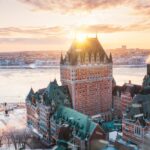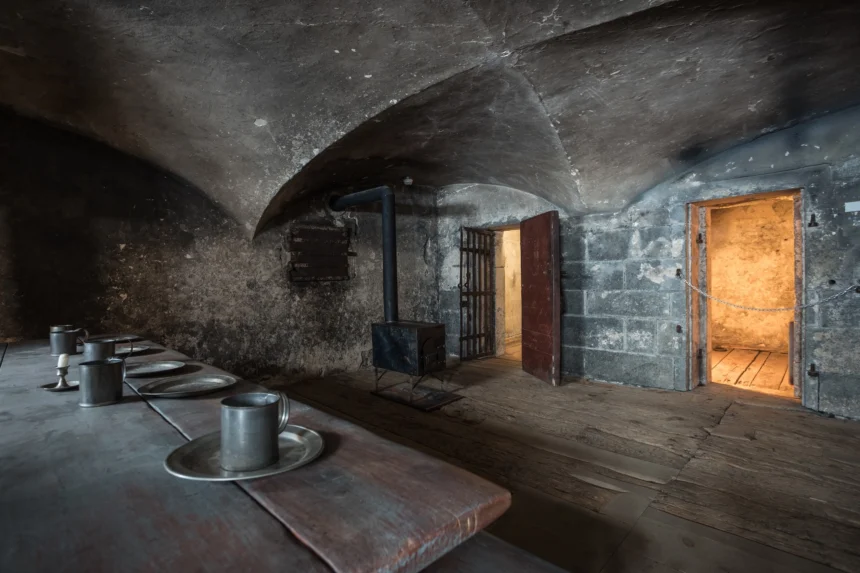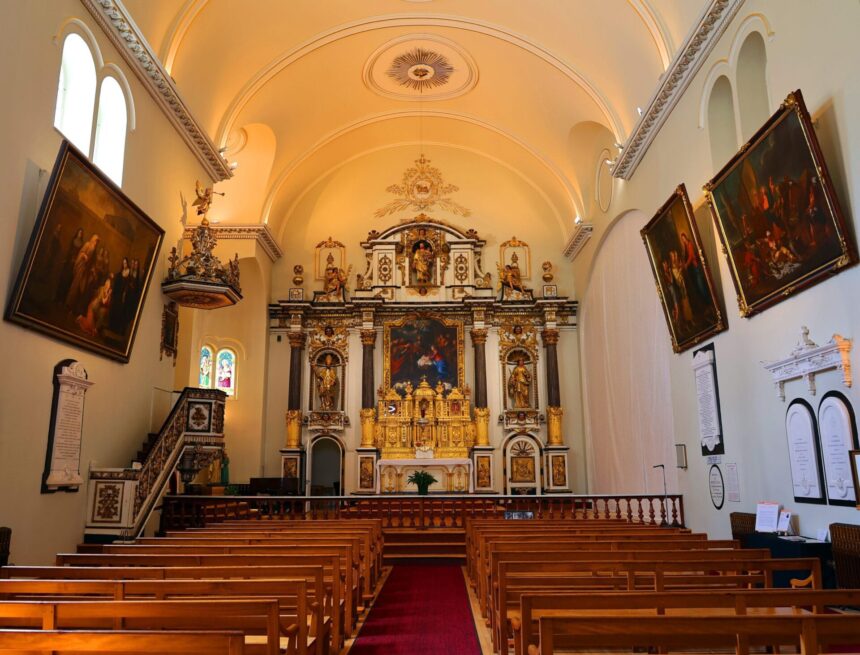
The Séminaire de Québec (founded on March 26, 1663 by François de Laval, then Apostolic Vicar of New France and future first Bishop of Quebec) is among the most historically significant educational institutions in the Americas. Laval created the Seminary of Quebec as a community of diocesan priests charged with forming clergy for the young colony, evangelising Indigenous peoples, and administering the parishes of New France. Confirmed by King Louis XIV weeks after its founding, the Séminaire de Québec became the institutional root of all French-language higher education in North America (through its creation, in 1852, of Université Laval, the first French-language university in the Americas.
The Founding: March 26, 1663
When François de Laval founded the Séminaire de Québec in 1663, he was responding to the structural challenge of colonial Catholic governance: New France stretched from the Gulf of St. Lawrence to the Great Lakes, but the colony had almost no locally trained priests. The Séminaire’s mission was to train diocesan clergy from within the colony itself) men who knew the language, climate, and conditions of New France (rather than depending on priests recruited in France who often returned home after a few years. The institution Laval created was broader in mandate than comparable French seminaries: it combined the training of future priests with the management of parishes throughout the colony, creating a centralized clerical infrastructure unlike anything in metropolitan France.
The Petit Séminaire (1668) & Classical Education
In 1668, Laval added the Petit Séminaire) initially intended to provide elementary religious education to Indigenous children and to prepare boys for the Grand Séminaire’s priestly training. The Petit Séminaire’s educational mandate expanded dramatically after the Conquest of 1759, when British colonial authorities barred the Jesuits from recruiting (ending the Collège des Jésuites’ role as Quebec City’s primary educational institution. The Séminaire de Québec assumed responsibility for general secondary education in 1765, beginning what would be 222 years of unbroken educational service. Alumni of the Petit Séminaire include Jean Lesage (Premier of Quebec, architect of the Quiet Revolution) and Louis-Joseph Papineau (leader of the 1837 Patriote Rebellion). Today the institution operates as Collège François-de-Laval under lay governance.
From Seminary to University: 1852
By the mid-19th century, the absence of a French-language university in North America) while the anglophone population had access to five university-level institutions (had become a critical gap in Quebec’s intellectual infrastructure. In 1852, Queen Victoria granted the Séminaire de Québec a Royal Charter recognising it as a university with the right to confer degrees, creating Université Laval) the first French-language university in the Americas. The Séminaire administered Université Laval for over a century before ceding the institution to a secular corporation in 1970. The Séminaire opened a Montreal branch in 1878 that became the Université de Montréal in 1920. Today, Université Laval has 46,000+ students, 550 programs, and more than $500 million in annual research funding.
The Heritage Buildings
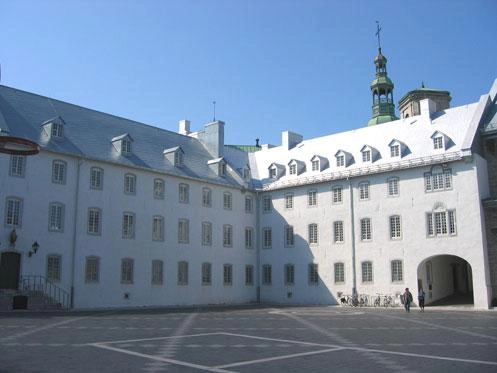
The Vieux Séminaire de Québec (the architectural complex at 1 Rue des Remparts in the Old City) was built in seven phases between 1675 and 1932, producing a layered heritage ensemble of exceptional depth. The Aile de la Procure (the oldest surviving wing, built c. 1680, identifiable by its 1773 sundial), the Aile des Parloirs, and the Aile de la Congrégation (with its distinctive porte cochère bearing the SME monogram, signifying the Seminary’s affiliation with the Paris Foreign Missions Seminary) together constitute one of the finest ensembles of French colonial institutional architecture in North America. The complex was classified a historic monument in 1968 and is now occupied by Université Laval’s School of Architecture.