Québec City’s public market scene is smaller than Montréal’s — you won’t find a Jean-Talon here — but what exists is surprisingly good, genuinely local, and seasonal in ways that shape the cooking of the entire region. If you want to understand the food here, the markets are a better starting point than any restaurant.
Grand Marché de Québec: The New Anchor
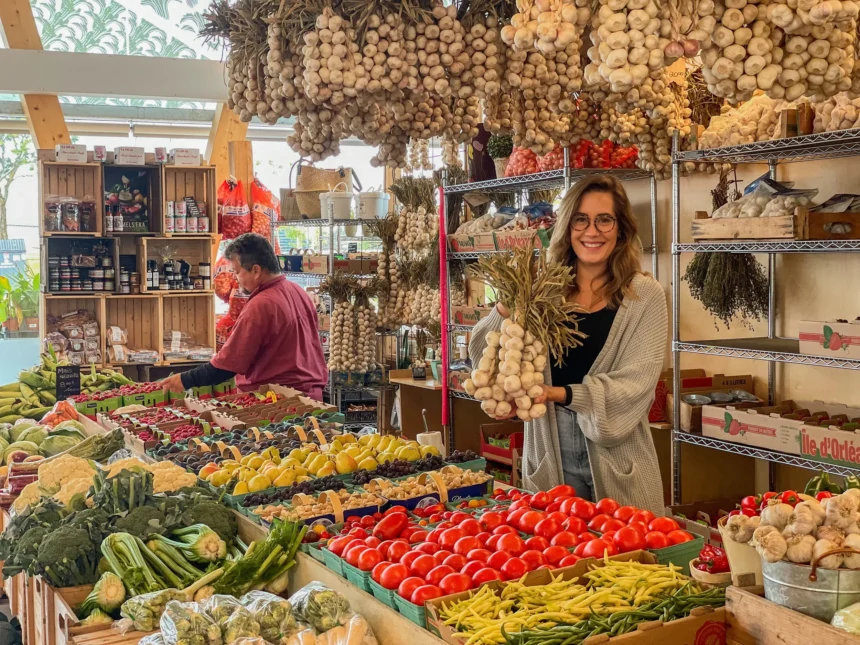
In 2019, Québec City’s main public market moved from its long-time home at the Vieux-Port to a massive new building at ExpoCité, near the Centre Vidéotron. Called the Grand Marché de Québec, it’s a year-round indoor market with roughly 140 vendors — farmers, butchers, cheesemakers, bakers, fishmongers, artisan producers, and a growing cluster of prepared-food kiosks.
The space is bright, modern, and genuinely functional — designed for shopping rather than photographing. Saturdays are the busiest. The ground-floor produce sellers open from early morning, and the prepared-food counters run from mid-morning onward.
What to look for: seasonal Québec produce (fiddleheads in spring, field tomatoes and corn in summer, squashes and apples in fall, root vegetables in winter), Charlevoix and Bas-Saint-Laurent cheeses, duck from Lac-Brome, maple products from regional producers, game terrines, smoked salmon from the Saguenay.
Practical note: the Grand Marché is not downtown. You’ll need a car, a bus (route 801/807), or a short taxi ride from the historic core.
Marché du Vieux-Port: The Old One, Still Operating Seasonally
The original Marché du Vieux-Port — the one that operated for decades in the waterfront area — transitioned after the Grand Marché opened. A seasonal outdoor market still runs there in summer, with a reduced roster of vendors oriented more toward tourists than serious grocery shopping. It’s pleasant to walk through if you’re already in the Vieux-Port, but it’s no longer the main event.
Marché public de Limoilou: The Neighbourhood One
Held seasonally (roughly June through October) in Limoilou, a residential neighbourhood north of the Saint-Charles River. Smaller, more intimate, populated by local vendors who sell at multiple farmers’ markets across the region. The atmosphere is neighbourhood-festive rather than touristic.
If you want to see how Québecers actually shop on a Saturday morning — with dogs, with kids, with reusable bags and conversations that last twenty minutes — this is the place. It’s also an excellent excuse to explore Limoilou itself, which has quietly become one of Québec City’s most interesting residential neighbourhoods.
The Seasonal Food Calendar
Québec cuisine is deeply seasonal, and the markets telegraph this clearly. A rough calendar:
- Early spring (April-May): maple products at peak, the first fiddleheads (têtes de violon) from the forests, ramps (ail des bois), wild mushrooms.
- Late spring / early summer (June): asparagus, rhubarb, strawberries — the first fruits of real warm weather.
- Summer (July-August): field tomatoes, corn, blueberries from Lac-Saint-Jean, field cucumbers, zucchini, raspberries, stone fruits.
- Fall (September-October): apples from Île d’Orléans, squashes, root vegetables, cabbages, game meats, wild mushrooms.
- Winter (November-March): root vegetables, preserved goods, charcuterie, cheeses, cellared apples. The market doesn’t stop — it just rotates to what survives the cold.
What to Actually Buy
If you’re staying somewhere with a kitchen, market shopping is one of the better uses of your time in Québec City. A few things worth buying that are hard to find in equivalent quality elsewhere in North America:
- Cheeses from Charlevoix and Bas-Saint-Laurent. The Fromagerie Migneron, the 1608 from Laiterie Charlevoix, the Louis d’Or, and dozens of others. Québec cheesemaking has reached a level that rivals most of Europe.
- Maple products beyond syrup. Maple butter (beurre d’érable), maple sugar, maple vinegar, maple jellies — all produced within a few hours’ drive.
- Charcuterie and terrines. Duck rillettes, wild boar terrine, game sausages. Small producers with real depth.
- Prepared food for a picnic. Pork pies (tourtière), tarte au sucre, savoury pastries. Grab a baguette from a bakery stall and you have an instant Plains of Abraham picnic.
- Smoked fish. Salmon and Arctic char smoked by small Québec producers.
The Underrated Detail: Alcohol
Québec’s craft beverage scene is remarkable, and much of it is represented at the markets. Ciders from Île d’Orléans, ice ciders (a Québec-invented category), craft beers from microbreweries across the province, and, increasingly, Québec-made gins and whiskies. Many of these products aren’t exported widely, so buying at source is genuinely worthwhile — and market staff will often give you a taste.
FAQ
Is the Grand Marché open year-round?
Yes — the Grand Marché de Québec at ExpoCité operates year-round, with most vendors present most days. Saturday is the busiest day; it’s worth a visit any day the market is open.
Can I get to the Grand Marché without a car?
Yes — RTC city buses serve ExpoCité, and a taxi from Vieux-Québec takes about 10-15 minutes. It’s not walkable from the historic core.
Which market should I visit if I only have time for one?
The Grand Marché. It’s the most complete, year-round, and representative of Québec’s food culture. The others are charming complements, not alternatives.
Are the markets expensive?
Produce and basic groceries are competitive with good grocery stores. Specialty items (artisan cheese, terrines, premium charcuterie) are priced at their quality level but are generally fair for what you’re getting. It’s not Whole Foods pricing.