



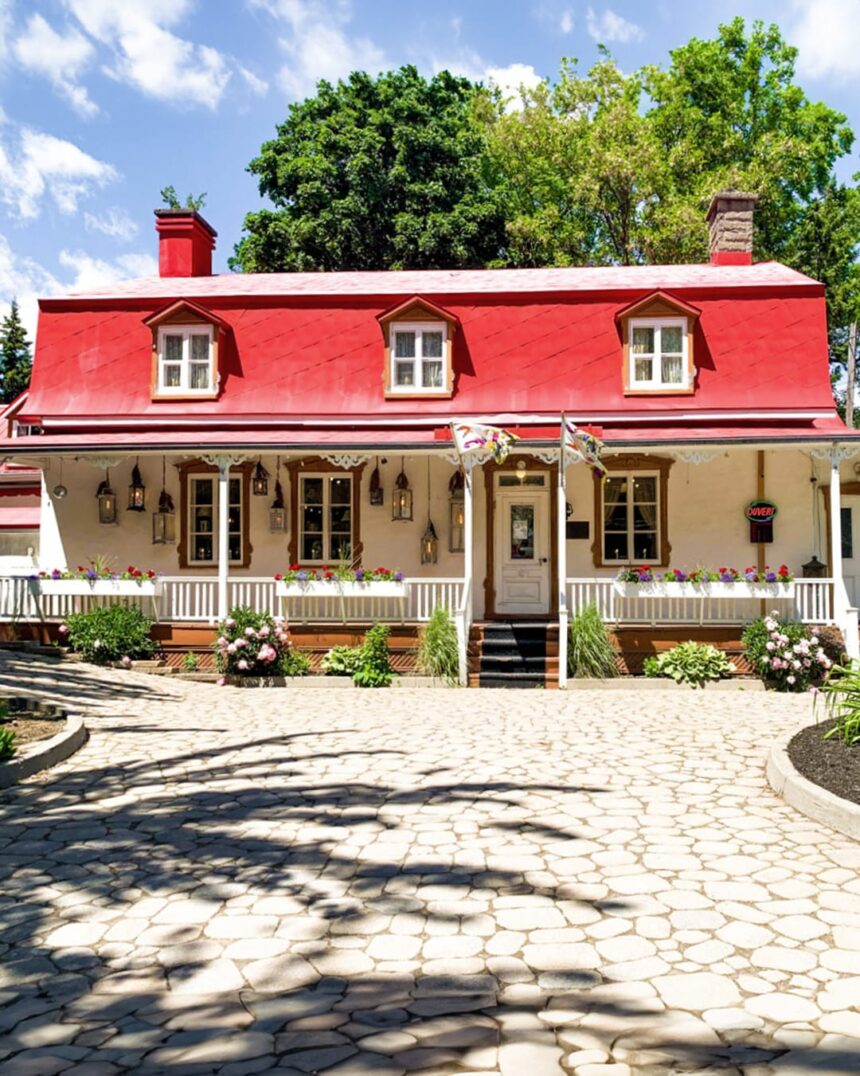
Charlesbourg ( the arrondissement occupying Quebec City’s northeastern plateau, with a population of approximately 170,000 and the historical distinction of having been established as a planned agricultural settlement in 1665 with a unique star-shaped cadastral plan ) is simultaneously one of the oldest continuously settled territories in the Quebec City region and one of the most thoroughly contemporary in its physical character: the heritage core of the 1665 Trait-Carré seigneurie (the star-shaped central lots whose distinctive geometry is still visible in the street plan of the village centre) is surrounded by 60 years of post-war suburban residential development that has grown the original colonial settlement into the city’s second most populous arrondissement. The contrast between the heritage village core and the suburban fabric that surrounds it is the defining visual tension of Charlesbourg’s physical character.
The 1665 Star-Shaped Plan
The Trait-Carré de Charlesbourg ( the radial land division plan established by the Jésuites in 1665 for the settlement that became Charlesbourg ) is unique in the history of North American colonial planning: rather than the strip-farm lots perpendicular to the river that defined the standard seigneurial system, the Charlesbourg settlement organised its agricultural lots in a radial pattern emanating from a central square (the Trait-Carré), with each lot having its road frontage at the central square and its agricultural land extending outward. The logic: settlers’ farmhouses clustered near the central square could form a defensive perimeter against raids while maintaining access to their agricultural lots. The plan’s distinctive geometry ( visible from the air as a star pattern of lot lines ) makes the Trait-Carré de Charlesbourg the most legible surviving example of 17th-century French colonial planning in North America.
The Heritage Core
The Trait-Carré heritage district ( the area immediately surrounding the central square that preserves the 18th and 19th-century buildings of the original seigneurie’s village core ) is one of the finest rural heritage ensembles accessible from Quebec City, though it is largely unknown to visitors who don’t venture beyond the inner-city attractions. The heritage buildings include: the Maison Ephraïm-Bédard (18th century, the finest surviving stone house in the Charlesbourg heritage core), the Moulin des Jésuites (the restored Jesuit mill, now an interpretation site and café), the heritage church of Saint-Charles-Borromée (19th century), and the presbytery complex that anchors the central square’s institutional heritage. The Charlesbourg heritage centre’s interpretation programming provides context for the unique seigneurial history that the Trait-Carré preserves.
Contemporary Charlesbourg
Contemporary Charlesbourg is primarily defined by the post-war suburban expansion that transformed the territory from a rural agricultural community to Quebec City’s most populous outer arrondissement: the single-family houses, semi-detached homes, and the low-rise apartment buildings of the 1950s-2000s development that have absorbed the agricultural land between the 1665 heritage core and the northern boundary with La Haute-Saint-Charles. The arrondissement’s commercial infrastructure (the Lebourgneuf mall zone to the west, the Boulevard Henri-Bourassa corridor to the south, and the Boulevard Clémenceau commercial strip through the residential zone) serves the residential population with the standard Canadian suburban commercial mix. Charlesbourg is connected to the TramCité’s planned route at the Parc des Mélèzes terminus station at the northern end of the 1re Avenue Limoilou corridor the most significant transit investment in the arrondissement’s history when it opens in 2033.








