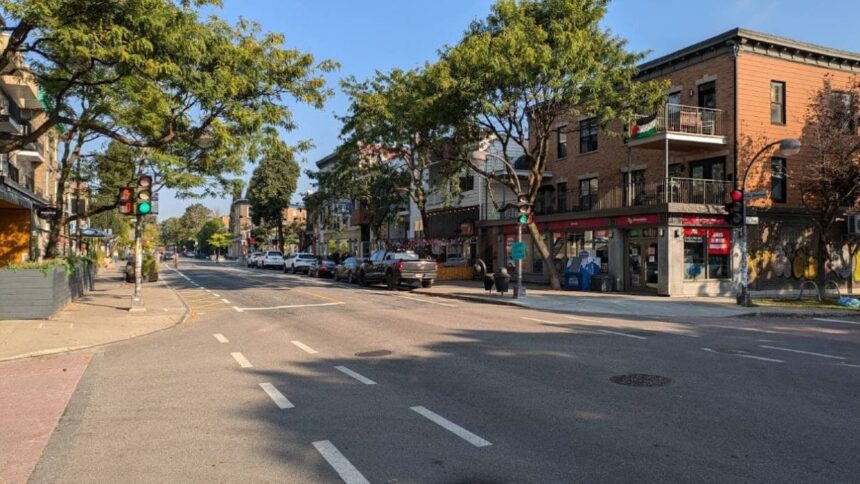
Limoilou ( the three-quartier zone (Vieux-Limoilou, Lairet, and Maizerets) north of the Saint-Charles River, built on the numbered-street grid of the early 20th century ) has undergone the most dramatic neighbourhood transformation in Quebec City since Saint-Roch‘s creative economy revival of the 1990s-2000s. In 2010, Limoilou was primarily known for two things: the lowest average rents of any inner-city quartier in Quebec City, and the nickel smelter dust controversy (airborne particles from the nearby port terminal raised health concerns that mobilised one of the most effective neighbourhood environmental advocacy campaigns in Quebec City’s recent history). By 2025, Limoilou is known for something entirely different: its craft beer scene, its restaurant density, its cycling culture, and the social energy of a neighbourhood in active revitalisation while still maintaining rents that make it the most accessible inner-city address in the capital.
Where Limoilou is, and how to get there
Limoilou sits immediately north of the Saint-Charles River, directly across the water from Saint-Roch and about twenty minutes on foot from the edge of the walled city. It is laid out on a grid of numbered streets and avenues — unusual in Québec City, and the reason it looks more like a North American industrial-era neighbourhood than a French colonial one. 3e Avenue is the commercial spine of Vieux-Limoilou and the street most visitors actually want.
The practical relationship to Old Québec matters: Limoilou is close enough to reach easily and far enough that almost no visitors go. It is flat, which the walled city is emphatically not, and it is the easiest central neighbourhood to cycle. Coming from Vieux-Québec you drop down through Saint-Roch, cross the river, and arrive in a completely different city — lower rents, fewer tourists, and the restaurant and brewery density this guide describes below.
Three quartiers make up the area: Vieux-Limoilou (the grid, the commerce, where you should go), Lairet and Maizerets (residential, with the Domaine de Maizerets green space to the east).
The Food & Beer Scene
Rue 3e Avenue ( the commercial main street of Vieux-Limoilou ) has transformed from a struggling neighbourhood commercial strip to one of Quebec City’s most interesting food and beverage streets in the space of approximately 10 years. The critical mass reached around 2018: an independent boulangerie (Le Balthazar) serving sourdough breads and viennoiseries that drew customers from across the city; a natural wine bar (Limoilou’s first dedicated natural wine establishment); the Vox Populi brewery taproom providing hyperlocal craft beer from a Limoilou-owned and operated production facility; and a rotation of independent restaurants at multiple price points that made the street a genuine dining destination rather than purely a neighbourhood service strip. The Marché Limoilou (Saturday farmers’ market, June through October) anchors the street’s food culture with direct-from-farm produce from the Île d’Orléans and the surrounding region.
Cycling Capital
Limoilou has emerged as Quebec City’s cycling capital the quartier with the highest cycling modal share for daily transportation in the city, the most developed cycling infrastructure (several protected lanes on the numbered avenues and rues), and the most active cycling advocacy community. The Vélo Québec bicycle count data consistently shows Limoilou’s 1re Avenue and 3e Avenue cycling corridors as the highest-volume cycling streets in the city; the combination of the flat terrain (the alluvial plain is the most cyclable terrain in Quebec City), the dense residential fabric (short trip distances to local amenities), and the neighbourhood culture’s active commitment to sustainable transportation has produced a cycling culture that Quebec City’s other quartiers are only beginning to approach. The TramCité project’s 1re Avenue Limoilou corridor stations will significantly enhance the neighbourhood’s transit access when the line opens in 2033.
The Gentrification Question
Limoilou’s transformation ( from working-class neighbourhood with affordable rents and struggling commercial streets to dynamic urban village with rising rents and a thriving independent food scene ) raises the same gentrification questions that have faced revitalising neighbourhoods in cities across North America. The neighbourhood’s community organisations (the conseil de quartier Vieux-Limoilou, the Table de quartier Limoilou, and several tenant advocacy groups) have been among the most active in Quebec City in documenting displacement pressures, advocating for social housing investment, and monitoring the rent increases that the neighbourhood’s increased desirability has produced. The TramCité’s anticipated 2033 impact ( transit-oriented gentrification following a pattern documented in cities across North America where new transit investment drives up property values and rents in previously affordable neighbourhoods ) is the most significant displacement risk on Limoilou’s horizon.
Limoilou is one quartier among several worth knowing. The comparison is in our guide to Québec City’s neighbourhoods.