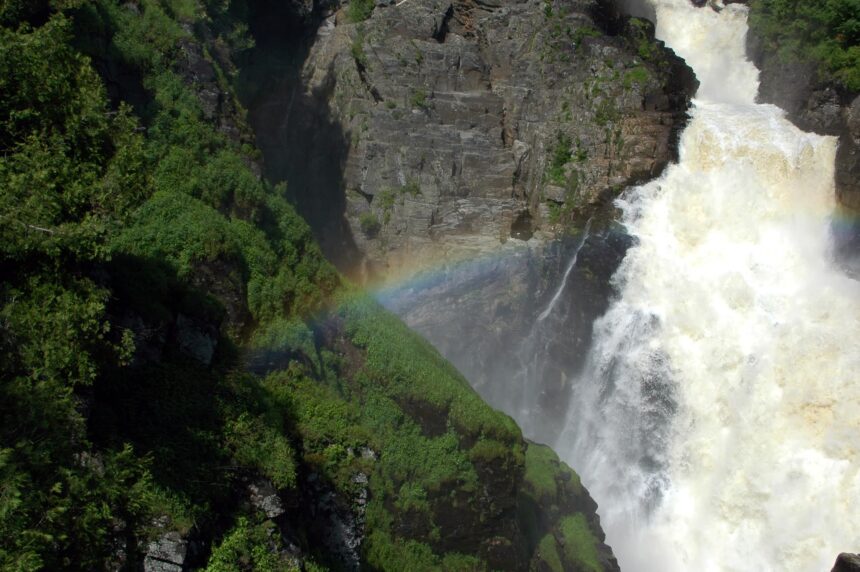
The Parc de la Chute-Montmorency ( the Sépaq-managed provincial park at the Chutes Montmorency, 15 minutes northeast of Quebec City’s Old City at 2490 Avenue Royale in Beauport ) is Quebec City’s most visited natural attraction and the outdoor experience most frequently cited by international visitors as the unexpected highlight of their Quebec City trip: not the Dufferin Terrace or the Château Frontenac, but the 83-metre waterfall (30% higher than Niagara Falls) that crashes onto a flat basalt apron visible from the cable car, the suspension bridge, and the spectacular via ferrata that allows climbers to ascend the cliff face beside the falls at close range. The park’s four-season programming ( cable car (year-round), via ferrata (spring through autumn), the sugarloaf ice cone formation (winter), and the various cultural events held at the falls ) makes it the most consistently rewarding single-site outdoor experience accessible from the city.
Spring: First Flows & Maximum Power
Spring at the Chutes Montmorency ( the period from late March through May when the winter’s accumulated snowpack drains through the Rivière Montmorency’s watershed in the spring melt, producing the maximum annual water flow over the falls ) is the most powerful and most dramatic season for the falls. The spring flow at peak (typically mid-April) can produce falls of extraordinary visual impact: the full 83-metre drop carrying an enormous volume of meltwater, the spray rising high above the falls crest and visible from the Boulevard Sainte-Anne approaching from the west. The sugarloaf ice cone (formed through the winter months by the freezing spray) melts progressively through March and April, creating the transition from the winter’s ice formation to the spring’s unfrozen falls that is one of the most photographed seasonal transitions in Quebec City’s annual nature calendar.
Summer: The Via Ferrata & Cable Car
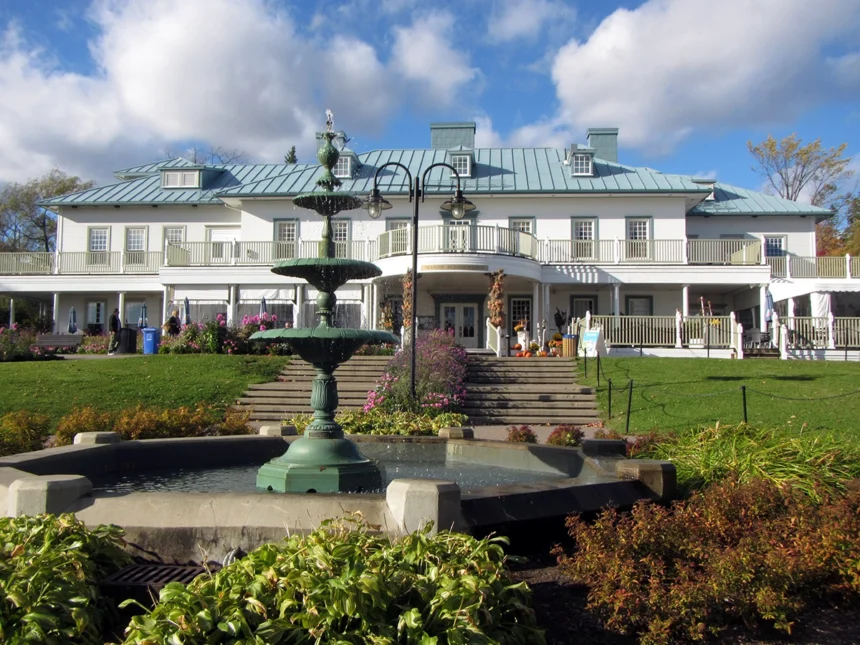
The summer season (May through October) brings the full complement of Montmorency falls activities: the cable car (ascending from the base of the cliff to the upper platform level with the falls’ crest, providing the most dramatic aerial view of the falls and the surrounding landscape), the suspension bridge (crossing the falls gorge at mid-height, where the mist and the roar of the falling water create the most sensory-engaging position in the park), the via ferrata (the fixed-rope rock climbing route ascending the cliff face beside the falls, requiring basic physical fitness and a head for heights but no prior climbing experience harness and helmet provided), and the interpretive trails on both the upper plateau and the lower base zone. The manor house at the upper plateau level (the former summer residence of the governors general, now a restaurant and event space) provides the finest panoramic viewing platform for the falls and the St. Lawrence valley below.
Winter: The Sugarloaf
The winter Chutes Montmorency experience ( the sugarloaf (pain de sucre) ice cone that forms progressively through January and February as the falls’ spray freezes at the base, building a cone of ice that can reach 30 metres in height by late February ) is the most uniquely Quebec City of the park’s seasonal offerings: a natural ice formation available nowhere else in eastern Canada that transforms the falls’ character from a dramatic summer spectacle into something closer to an ice sculptural installation. The via ferrata operates in winter as an ice climbing route (crampons and ice axes required, rental available at the park); the cable car continues operating year-round (the winter trip revealing the sugarloaf’s scale from above). The Parc de la Chute-Montmorency is one of the few natural heritage sites in Quebec City where the winter version is superior to the summer: the ice and the cold, the frozen spray, and the sugarloaf’s gradual accumulation create an experience of genuine winter wonder.