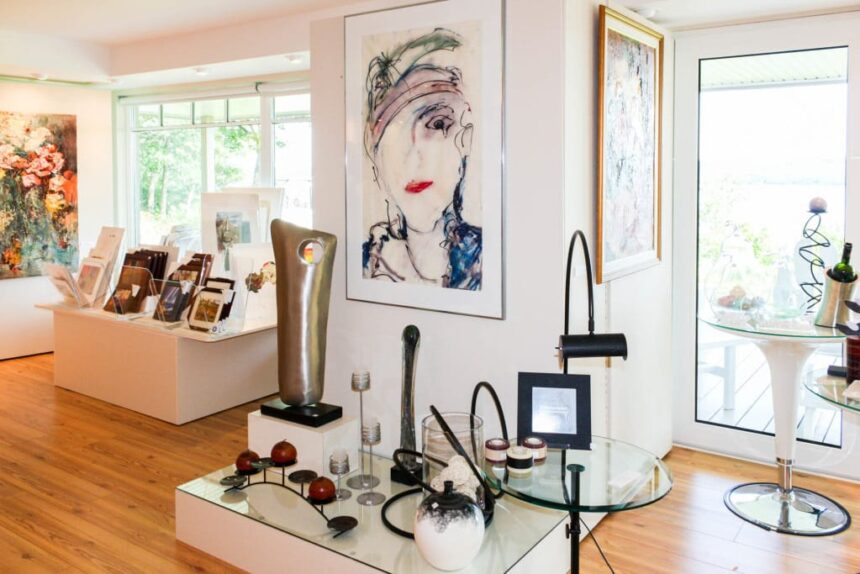
Quebec City’s souvenir market ( like the souvenir market of every major heritage tourism destination ) is populated primarily by mass-produced merchandise of indeterminate geographic origin whose connection to Quebec City is limited to the Château Frontenac image on the front and the Chinese manufacturing address on the back. Navigating through this market to find the genuinely made-in-Québec artisan products that represent a meaningful souvenir of the city and the province requires the knowledge of where to look and what to look for. This guide covers the categories of authentic Quebec artisan production accessible to the visitor, the specific retailers and producers who offer the most rewarding shopping, and the indicators that distinguish genuine artisan production from mass-produced alternatives.
Verrerie La Mailloche: Glass Art
Verrerie La Mailloche ( on the Rue du Petit-Champlain in the Lower Town ) is the most genuine artisan production retail experience accessible in the Old City: a working glass-blowing studio where visitors can observe the glass-blowing process (demonstrations run throughout the day) and a retail space that sells the hand-blown glass objects produced on-site by the studio’s artisans. The glass objects ( bowls, vases, perfume bottles, and the various decorative forms that hot glass-blowing allows ) are made by Quebec artisans using traditional glass-blowing techniques and Quebec design sensibilities (the colour palette, the forms, and the aesthetic decisions that distinguish La Mailloche’s production from generic glass art are specifically Québécois in character). The retail prices reflect the hand-production quality: a La Mailloche object is an investment, not a souvenir impulse purchase.
The Ceinture Fléchée
The ceinture fléchée ( the finger-woven textile sash with its distinctive arrowhead pattern, historically the most significant material culture object of the French-Canadian habitant tradition ) is available in both authentic handwoven form (produced by the surviving practitioners of the finger-weaving tradition, typically displayed in heritage museums and sold at prices that reflect the 20-40 hours of work a full-length sash requires) and in mass-produced form (machine-woven approximations sold at tourist shops throughout the Old City at prices that undercut the handwoven version by 90%). The distinction between the two: the authentic finger-woven sash has a specific drape and texture that the machine-woven version cannot replicate, and the pattern is more complex and more variable (each handwoven sash is unique); the Conseil des métiers d’art du Québec’s Ateliers label identifies products of certified artisan production. Several Old City shops and the Musée de la Civilisation’s boutique carry authenticated artisan production.
Pottery, Textiles & Heritage Foods
The Marché du Vieux-Port and the various artisan markets that punctuate Quebec City’s summer calendar (the Marché de Noël in winter, the various neighbourhood markets through the summer) provide the best access to the range of Quebec artisan production in concentrated form: the ceramics and pottery of Quebec City-area studio potters (whose work ranges from functional everyday ware to sculptural art pieces), the printed and hand-woven textiles of the Quebec weaving tradition (table runners, shawls, and the various textile objects that the Charlevoix and Île-aux-Coudres weaving traditions produce), and the heritage food products (maple syrup from documented Quebec producers, ice cider from the Île d’Orléans and Charlevoix cideries, and the artisan jams and preserves of the regional small food producers) that are the most broadly accessible and most culturally representative Quebec artisan souvenirs. The “Aliments du Québec” certification on food products indicates Quebec origin; the Conseil des métiers d’art label indicates certified artisan production for non-food crafts.