The Musée de la civilisation, which opened on Rue Dalhousie in 1988, remains Moshe Safdie’s most substantial contribution to Québec City’s built environment and one of the most successful museum buildings in Canada. Safdie, born in Haifa in 1938 and trained at McGill, had already become an international figure through Habitat 67 in Montréal and the National Gallery of Canada in Ottawa by the time the Québec commission came to him. The museum combines his habitual formal concerns with an unusually respectful response to a historically sensitive site.
The site
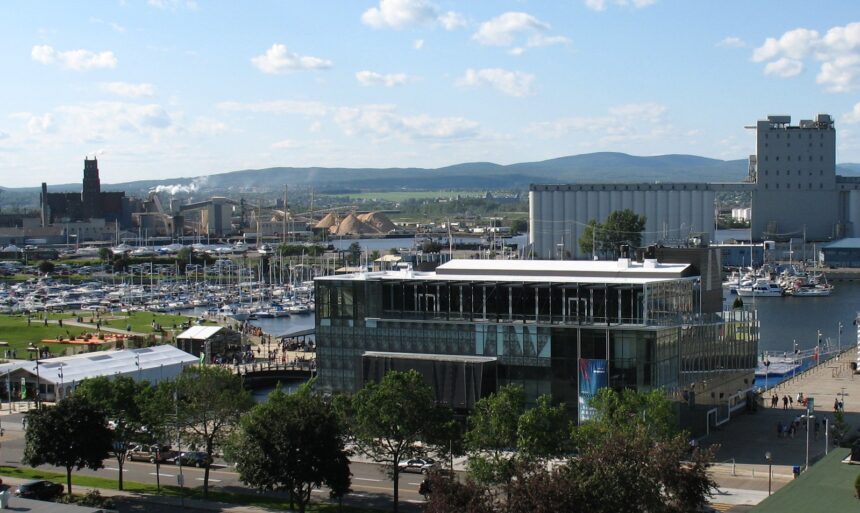
The museum occupies a site at the edge of Place-Royale, directly on the riverfront between the Vieux-Port and the ferry terminal. Before construction, the site held a mix of 1960s commercial buildings and a stretch of parking. The decision to place a major new cultural institution at the heart of the lower town, on a site visible from the Château Frontenac above, required careful attention to scale and to the surrounding heritage fabric.
The 1981 competition brief was specific: the new museum had to defer to the scale of the seventeenth- and eighteenth-century buildings around Place-Royale while providing roughly 10,000 square metres of exhibition space, collection storage, administrative offices and public circulation. Safdie’s winning submission, developed with the Québec City firm Belzile Brassard Gallienne Lavoie as executive architects, proposed a solution that stacked the programme vertically, set the building back from the water, and broke the mass into legible component volumes.
The design
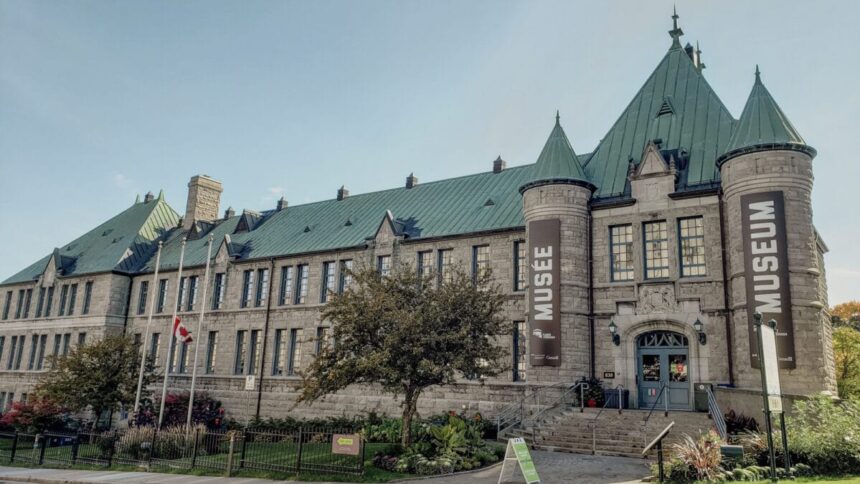
Safdie’s building reads from the river as a series of stepped stone and copper-roofed forms that echo the scale and material palette of the surrounding warehouses without imitating them. The main public entrance, set back from Rue Dalhousie behind a small forecourt, sits under a steel-and-glass canopy that marks the contemporary insertion against the older stone context. The interior circulation turns around a three-storey central atrium with daylighting from a glazed roof.
The museum incorporates remains of a 1750s stone vaulted cellar discovered during excavation. Safdie redesigned the entrance sequence to expose these foundations at the lower level, giving visitors an immediate physical encounter with the archaeological layers beneath the city. The integration of excavated ruins with new construction, a technique Safdie had tested at smaller scale elsewhere, works here with particular clarity.
Reception
Local reception was mixed at opening. Some critics argued that the building’s modernist vocabulary, however sensitively handled, struck a discordant note in the historic lower town. Others praised the restraint of Safdie’s scaling and the building’s refusal to dominate its neighbours. Over three decades, opinion has consolidated toward the latter view. The museum now reads as a successful contemporary insertion and has been cited in international discussions of sensitive heritage-context construction.
The 1989 Massey Medal for architecture and a 1991 Prix d’excellence from the Ordre des architectes du Québec confirmed the professional consensus. International recognition followed, with the building appearing regularly in textbooks on late-twentieth-century museum architecture.
Safdie’s other Québec City work
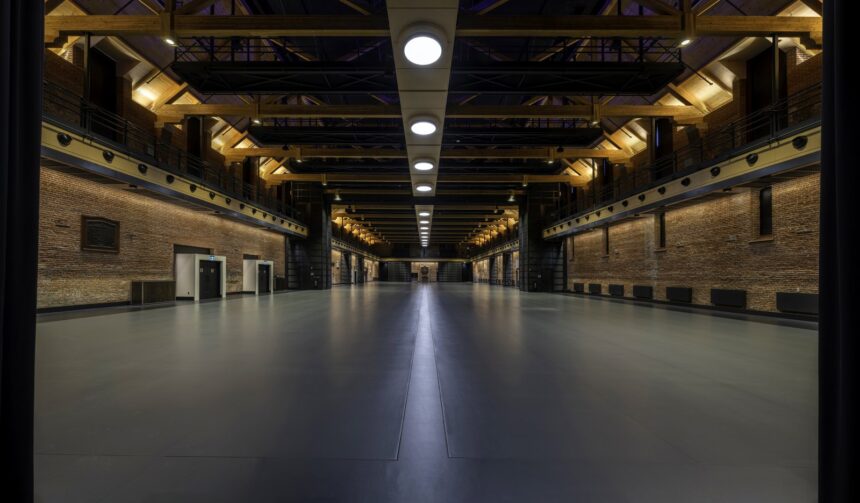
Safdie returned to Québec City for a smaller project in 2002, the renovation of the former Youville Station into the Espace Dalhousie, a flexible event and exhibition space now administered by the museum. The scale of the second project is modest, but the design shows the same attention to material continuity and spatial transparency that characterises his larger buildings. Safdie has not designed other standalone buildings in the city, though his firm has consulted on several projects including the 2008 Parliament Precinct master plan in Ottawa, which touched on capital-region planning broadly.
Visiting as architecture
The Musée de la civilisation rewards attention to the building as well as to its exhibitions. The main atrium, the riverfront terrace, the archaeological vaulted cellar, and the circulation between exhibition floors are all worth an unhurried walk even for visitors not planning to tour the current shows. Entry to the lobby and cellar is free; exhibition tickets run C$22 for adults.
The best exterior view is from the far side of Rue Dalhousie, where the full stepped profile becomes visible. From the cliff top along the Terrasse Dufferin, the copper roofs of the museum read clearly against the river, a deliberate Safdie touch meant to give the building presence from above while keeping it modest at street level.