The 2021 Canadian census recorded Quebec City’s first-language-French population at approximately 94.3 percent, one of the highest ratios in any metropolitan area in Canada. English-first-language residents sit at roughly 1.5 percent. Allophone (neither French nor English as first language) residents account for another 4 percent and are disproportionately concentrated in the Sainte-Foy student corridor near Université Laval. These numbers matter for travelers: Quebec City is substantially more French than Montreal, which sits at roughly 46 percent first-language French.
For first-time visitors
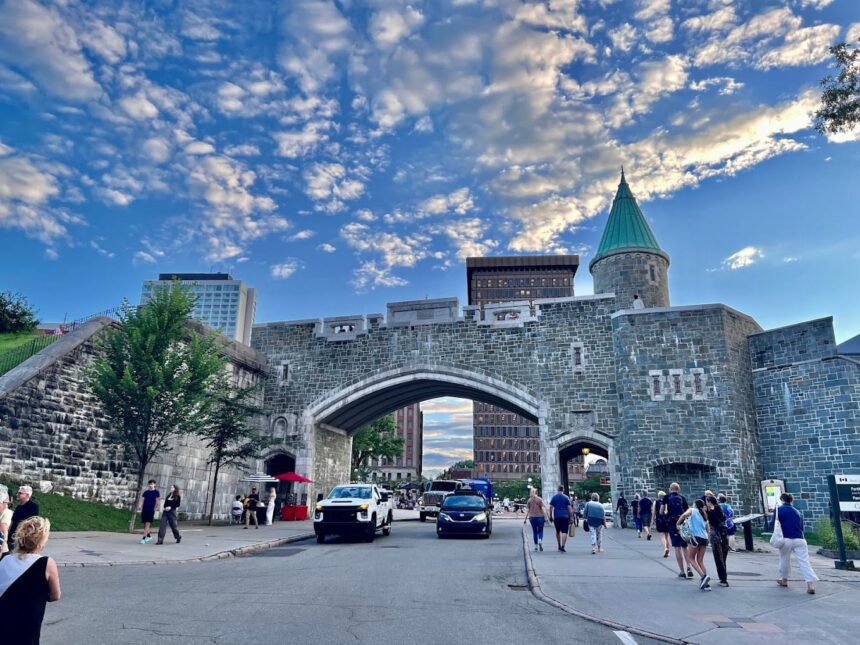
In the tourist core (Old Quebec, Grande Allée, Avenue Cartier), English-speaking visitors will be served in English with no difficulty. Staff in hotels, restaurants and shops in these districts are trained to operate bilingually, and visitors who attempt basic French (“bonjour,” “merci,” “s’il vous plaît”) are generally met with warmth rather than linguistic policing. The perception that Quebec service workers react poorly to English is a largely outdated one, more rooted in 1970s and 1980s tensions than in the 2020s reality.
Seasonal character
Outside the tourist core, the linguistic landscape shifts. A restaurant in Limoilou, Charlesbourg or Beauport is operating for a clientele that speaks French all day; staff may not speak English fluently, menus may be French-only, and conversation at the bar is unlikely to switch. This is not hostility; it is the normal language environment of a French-speaking city. Travelers willing to point at menus, use translation apps (Google Translate works well in offline-cached mode) or attempt basic French will transact successfully. Travelers expecting English-as-default outside the tourist zones will find themselves occasionally frustrated.
The practical preparation that produces the best experience is small but non-zero. Learning 20 to 30 basic French phrases (greetings, numbers 1 to 10, “l’addition s’il vous plaît,” “où est les toilettes,” basic food vocabulary) will dramatically improve outside-the-core interactions and is enough to signal effort without attempting conversation. Google Translate’s camera-based menu translation works offline and solves most restaurant situations. Larger metropolitan hospitals (CHU de Québec at multiple sites) have English-speaking staff; smaller clinics may not. For emergency situations, calling 911 returns an operator capable of handling English.