Quebec’s cider industry dates to early New France but has only become commercially organized since the 1980s. More than 100 producers now operate across the province, with significant concentrations on Île d’Orléans (the apple-growing island 10 minutes east of Quebec City), in the Montérégie region around Rougemont, and in the Eastern Townships. Total production exceeds 8 million litres annually, a figure small by global beer and wine standards but substantial for a sector that did not exist in its current form before the 1988 legalization of small-scale cider production in Quebec.
History and origins
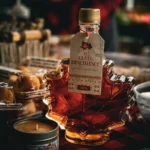
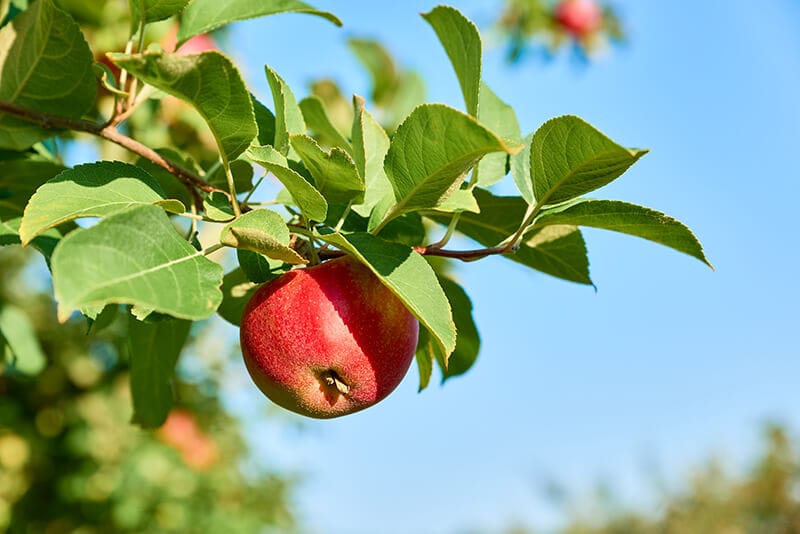
The province’s most distinctive cider category is cidre de glace (ice cider), a protected appellation since 2014 regulating how the product can be produced. Ice cider is made from apples either left on the tree through early winter to freeze on the branch (cryo-extraction) or pressed and frozen in tanks before fermentation (cryo-concentration). The water content is removed via the freezing process, concentrating the sugars, and the remaining juice is fermented into a high-residual-sweetness dessert wine running 7 to 13 percent alcohol. The result has no direct equivalent in other cider-producing countries.
What to order
Île d’Orléans producers worth visiting include Cidrerie Bilodeau in Saint-Pierre (broad product range including ice ciders and traditional sparklings), Cassis Monna et Filles in Saint-Pierre (combining cider with their blackcurrant specialty), and the Cidrerie Verger Bilodeau in Sainte-Pétronille (smaller operation with a focus on traditional sparkling ciders). Most producers offer free tasting visits during the May-through-October season; some extend hours into winter for ice cider specifically. Direct farm purchases run $18 to $45 per 375ml ice cider bottle and $15 to $25 per 750ml standard cider.
For visitors staying in Quebec City, the Île d’Orléans cider circuit is a strong half-day itinerary that can be combined with the Chocolaterie de l’Île and lunch at one of the island’s restaurants. Rental car is the efficient transport; Route 368 loops the island. Those without cars can use the Petit Train de l’Île d’Orléans seasonal tour service, which operates curated cider and chocolate tastings on a scheduled bus route. The SAQ (Quebec’s provincial liquor board) carries roughly 40 Quebec ice cider labels, so visitors who prefer to sample in-town before deciding what to bring home have low-friction access before a farm visit.