The Rebellions of 1837 and 1838 are often remembered as a Montreal story. The main engagements took place in Lower Canada’s rural south: Saint-Denis, Saint-Charles, Saint-Eustache. Quebec City barely fought. Yet the capital mattered, because the colonial government sat here, and because many of the leaders and prisoners the Patriotes produced ended their stories in Quebec City, at the gaol that later became the Morrin Centre, on the gallows on Chaussée des Écossais, or on board the convict ships that left the port bound for Australia.
Seasonal character
The broader political dispute was decades old. Lower Canada’s elected Legislative Assembly, dominated by Louis-Joseph Papineau and the Parti patriote from 1827 onward, argued that the colony should have responsible government, meaning that the executive should answer to the elected chamber rather than to an appointed Legislative Council and a British-named governor. London refused. In March 1837, Lord John Russell introduced a set of ten resolutions in the British Parliament that rejected the main Patriote demands and authorised the colonial government to spend tax revenue without the Assembly’s consent. The Russell Resolutions pushed the constitutional quarrel toward open confrontation.
Through the summer and autumn of 1837, Patriote assemblies across Lower Canada drew large crowds. Quebec City held its own gathering, though the movement in the capital remained more cautious than the one forming south of the Saint Lawrence. The Quebec wing produced moderates like Étienne Parent, editor of Le Canadien, who preferred constitutional pressure to armed confrontation. Parent’s caution reflected the capital’s demographic makeup: a larger British presence, a stronger commercial class tied to the imperial economy, and a Catholic clergy wary of any movement that could spill over into anti-clerical politics.
When fighting broke out in November 1837, the Quebec City region remained quiet. The first major engagement, at Saint-Denis on the Richelieu, was a Patriote victory. The second, at Saint-Charles a few days later, was a decisive British win. In December, British troops and volunteers destroyed the main rebel gathering at Saint-Eustache, killing about seventy Patriotes. Papineau fled to the United States. The 1837 rising collapsed inside three months.
What sets it apart
The 1838 rebellion, led by Robert Nelson from exile in Vermont, was better organised on paper and weaker in the field. Nelson proclaimed an independent Republic of Lower Canada on February 28, 1838. A second armed rising followed in November 1838, concentrated around Napierville and Beauharnois. The British response was quick and much harsher than the previous year. Hundreds of suspected rebels were arrested, and military law replaced civilian courts across the colony.
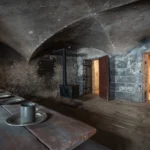
Quebec City entered the story at the punishment phase. Court martials held in Montreal sentenced ninety-nine Patriotes to death, though only twelve hangings took place there. A larger number of convicted rebels were transported to penal colonies in Australia: fifty-eight men shipped from Quebec aboard HMS Buffalo on September 27, 1839, bound for New South Wales and Van Diemen’s Land, now Tasmania. The Quebec gaol, in what is now the Morrin Centre, held several of the Patriote prisoners during the interval between sentencing and transportation. Two Patriotes, Charles Hindenlang and François Nicolas, were hanged in Montreal in 1839; at least one Quebec execution during this period, of François Jalbert for the killing of a loyalist, used the Chaussée des Écossais gallows.
On the ground
The aftermath reshaped Lower Canada. The Durham Report of 1839, written after Lord Durham’s brief investigation of the colony, recommended the forced assimilation of French Canadians and the union of Upper and Lower Canada into a single province. The Act of Union in 1840 implemented the second recommendation. The first, assimilation, failed: the French-speaking population grew steadily, and by the 1850s French was again an official language of the legislature. The Patriote prisoners in Australia were gradually pardoned through the 1840s. Most returned to Canada. Some stayed.
Visitors to Quebec City looking for Patriote traces should start at the Morrin Centre, where the prison cells that held 1838 detainees are part of the standard tour, and continue to the Plains of Abraham Museum, where the rebellions are treated as one stage in the long constitutional argument that produced modern Quebec. The Assemblée nationale website publishes a useful list of the Patriote MNAs from the 1830s Legislative Assembly, including those imprisoned. For a working trip, ninety minutes at the Morrin Centre covers the Quebec angle; the Saint-Denis and Saint-Eustache battlefields, 250 and 310 kilometres south-west respectively, require a day each.