The Duchesses de Carnaval are the young women who, for most of the post-war history of the Quebec Winter Carnival, represented each of seven neighbourhoods of the city and attended the public events of the festival alongside Bonhomme Carnaval. The role combined ceremonial, promotional, and community functions: a Duchesse visited hospitals and schools in her neighbourhood, appeared at the Carnaval’s marquee events, and in the culmination of the programme was a candidate to be crowned Reine du Carnaval at a gala late in the festival. The tradition is inseparable from the twentieth-century identity of the Carnaval itself, and its interruption and subsequent return are a compact case study in how a civic institution adjusts to changing public expectations.
Origins and the mid-century arrangement
The Carnaval de Québec in its modern form was relaunched in 1954 after earlier, intermittent editions going back to the 1890s. The Duchesses were introduced shortly afterward, following a competition in which each of the participating neighbourhoods of the city nominated a candidate, who then raised funds for the Carnaval through tickets, lotteries, and events held under her name. The Reine du Carnaval was crowned at a Saturday evening gala and presided symbolically over the closing weekend. For several generations, a Duchesse’s participation was seen by many participants as a form of community service; for others it was also, plainly, a popularity contest with commercial implications for the nominating neighbourhood.
The 2015 pause
In 2015, the Carnaval’s organising committee announced that the Duchesses tradition would be suspended. The decision followed years of debate about the competition’s model, concerns that the ceremonial framing had not aged well, and a practical difficulty in recruiting candidates willing to commit the time required under the older rules. The organisers described the pause as an opportunity to rethink the role and to design something compatible with a contemporary public event. Reactions were mixed: long-time participants regretted the loss of a programme that had meant a great deal to their families, while critics welcomed the chance to rebuild from a different starting point.
The pause was not a cancellation of the Carnaval itself, which continued in its usual form around Bonhomme, the Plains of Abraham grounds, and the downtown parade. The seven neighbourhood associations that had provided the Duchesses adjusted their winter programming, and the festival’s public image shifted toward a slightly less ceremonial, more event-centred identity.
The return, in a new form
The tradition returned in a modernised framework in the years following the pause. The new programme, organised with the involvement of the Carnaval and the neighbourhood associations, reframes the role around community outreach rather than around a single gala competition. The selected representatives continue to be associated with specific districts of the city, and they appear at festival events and at community activities across the winter season. The language around the programme is more inclusive, the expectations of the time commitment are better defined, and the event that closes the festival is less centred on the selection of a single figure.
Opinions about the redesigned tradition vary. Some long-time residents consider the changes a careful and appropriate refit that preserves the community-oriented substance of the earlier programme without its dated framing. Others feel that something irreducible has been lost in the adjustment, and that the Duchesses in the older sense are not quite the same institution. Both positions are available at any Carnaval-week dinner table, and both are represented in coverage in the local francophone press each winter.
Visiting the Carnaval today
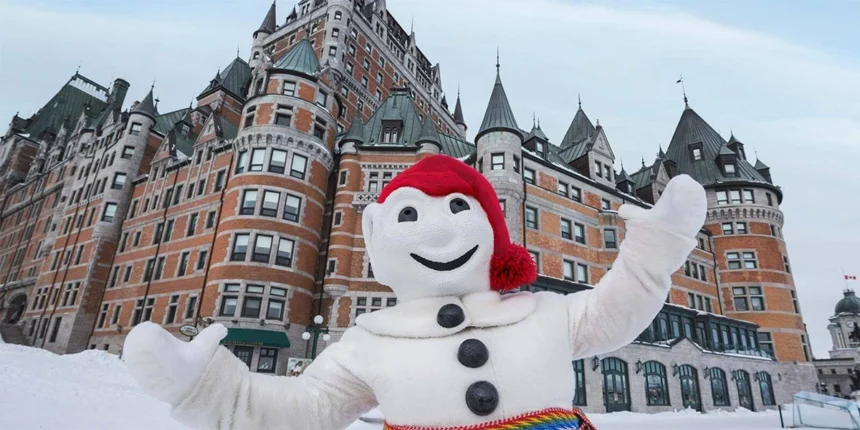
For a visitor attending the Carnaval in its current form, the Duchesses appear at the major public events and at a set of smaller neighbourhood gatherings published in advance on the festival’s website. Meeting one, or watching one preside over a short segment of a parade, is a modest pleasure rather than a central attraction. The Carnaval’s principal draws remain Bonhomme, the ice palace on Place D’Youville or the Plains, the night parade, the canoe race on the St. Lawrence, and the programme of outdoor activities at the Plains site.
A visitor curious about the older form of the tradition can consult the Carnaval’s archive materials, which are exhibited in rotating selections at the festival’s information pavilion during the event. Photographs, posters, and short written histories are available and make the chronology legible even to someone who did not grow up in the city.