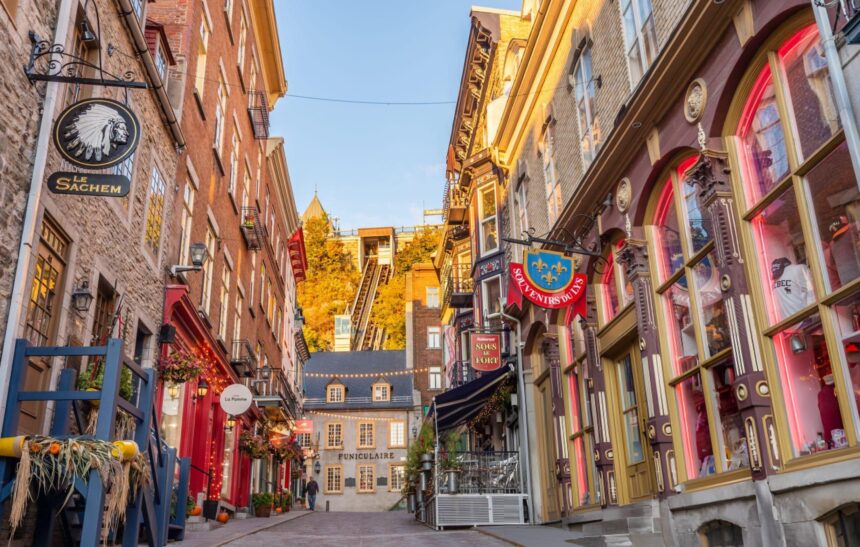
Quebec City’s relationship with the French language is unlike any other city in North America ( a relationship of identity, survival, legal protection, and cultural pride that has shaped every aspect of urban life since Samuel de Champlain’s settlement of 1608. Approximately 95% of Quebec City residents speak French as their first language; the city is the capital of a province whose 1977 Charter of the French Language (Bill 101) established French as the sole official language of Quebec government, education, and commerce. Understanding this linguistic reality is essential to understanding the city ) not as a constraint on visitors but as the foundation of the culture that makes Quebec City extraordinary.
The Historical Stakes
The survival of the French language in Quebec has never been guaranteed. The British Conquest of 1759 placed a francophone population of approximately 60,000 under English colonial administration. The Act of Union of 1840 ( which united Upper and Lower Canada and made English the sole language of official government ) represented an explicit attempt to assimilate the French-Canadian population. The resistance of this assimilation, and the eventual strengthening of French-language rights through the Quiet Revolution of the 1960s and the legislative protections of the 1970s, is one of the most remarkable stories of cultural survival in the modern world.
Bill 101 and Its Legacy
The Charter of the French Language (Bill 101), adopted by the Parti Québécois government of René Lévesque in 1977, established French as the language of instruction in public schools (with exceptions for children of anglophone parents), the language of the workplace for businesses with 50+ employees, and the language of all commercial signage and public communications. The law has been amended and contested repeatedly over the decades ( most recently strengthened by Bill 96 in 2022 ) but its basic architecture has reshaped the demographic and linguistic profile of Quebec, and of Quebec City in particular, in ways that are now irreversible.
For Visitors & Newcomers
Quebec City’s linguistic culture is not hostile to non-French speakers who make the effort to engage in French. The effort itself ( imperfect French, clearly sincere ) opens doors that remaining in English keeps closed. Most Quebec City residents switch to English readily when communication requires it, but the French-first culture means that the choice of language carries cultural weight. For visitors, the payoff of attempting French is immediate and tangible: a more genuine engagement with the city’s culture, more authentic exchanges with its residents, and a deeper understanding of the place that no amount of English-language tourism can provide.