For a city founded in 1608 as a French trading post specifically because of the existing Indigenous trade networks that made Québec’s riverfront economically strategic, Québec City’s visible Indigenous heritage for visitors has historically been surprisingly limited. That’s been changing over the past 15-20 years, as Indigenous communities, cultural institutions, and tourism operators have invested significantly in making Indigenous experiences more accessible — and more accurately represented — to travellers.
Today, a visitor interested in Indigenous culture in the Québec City region has substantive options that didn’t exist a generation ago. Here’s a thoughtful guide to the main experiences, how to approach them respectfully, and what to know before you go.
The Essential Context
The Québec City region sits in the traditional territory of the Huron-Wendat Nation and, earlier in history, various nations of the Iroquoian linguistic family. Indigenous people have been here continuously for thousands of years. The current Huron-Wendat community in Wendake (about 15 minutes north of downtown) is the most visible organized Indigenous presence in the region.
It’s important to note that the specific history of Indigenous peoples in the Québec region is complex and sometimes painful. The Huron-Wendat Confederacy was devastated by 17th-century epidemics and warfare, scattering survivors who eventually settled in the Québec area. French colonial policy, while sometimes more accommodating than British or American approaches, was still fundamentally extractive. Modern Indigenous tourism in Québec operates with full awareness of this historical context — and visitors who engage thoughtfully will have better, more meaningful experiences than those who don’t.
The Main Destinations
Wendake and the Hôtel-Musée Premières Nations
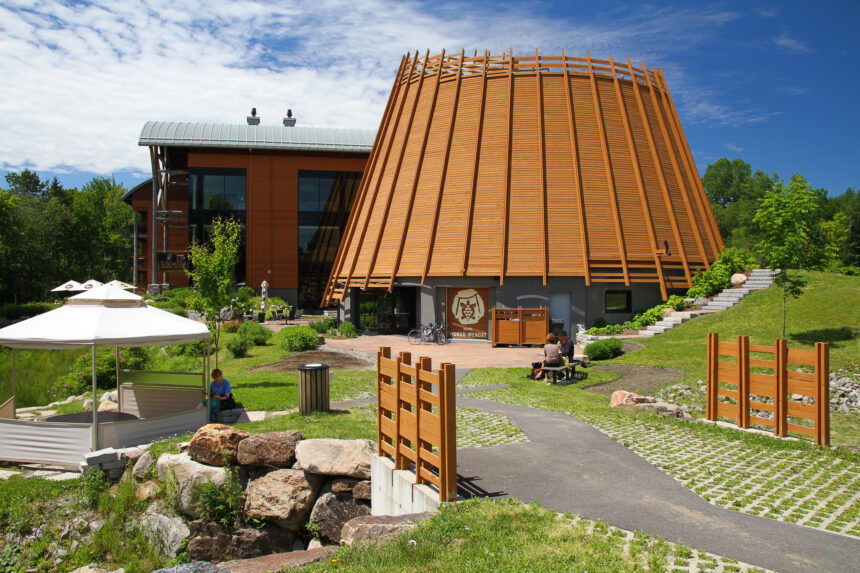
The centerpiece of Indigenous tourism in the region. A modern hotel and museum complex, entirely owned and operated by the Huron-Wendat Nation, located on their reserve 15 minutes north of downtown.
The Hôtel-Musée includes:
- A substantive museum focused on Huron-Wendat history and culture
- A traditional longhouse reconstruction with guided tours
- La Traite restaurant, serving contemporary Indigenous-inspired cuisine
- A 55-room hotel with Indigenous design elements
- Walking trails along the Saint-Charles River
Day visitors can tour the museum and longhouse, eat at La Traite, and browse the on-site shop. Overnight visits offer a deeper experience. This is the essential Indigenous cultural stop in the Québec region.
For a complete guide to Wendake specifically, see our dedicated article.
Onhwa Lumina: The Nighttime Walk
Launched in recent years, Onhwa Lumina is an evening multimedia walking experience along trails in Wendake, produced by the Huron-Wendat Nation in partnership with the production company Moment Factory. It uses light projections, soundscapes, and narrative audio to tell stories drawn from Huron-Wendat traditional knowledge.
The 1.2-kilometre trail features several zones, each presenting a different story or theme, lit through projection mapping on trees, rock formations, and ground surfaces. The experience is primarily visual and musical rather than text-heavy, making it accessible to visitors who don’t speak French.
When it runs: Evening hours, typically from roughly one hour after sunset. Usually operates from May through October, with some seasonal variation. Tickets required and sell out during peak periods.
Practical note: This is a walking experience in rural settings after dark. Wear comfortable shoes. Dress for evening temperatures. Check weather conditions — some events are weather-dependent.
Musée Huron-Wendat
A smaller museum in Wendake focused specifically on Huron-Wendat material culture — traditional crafts, archaeological artifacts, ceremonial objects. Complementary to the larger museum in the Hôtel-Musée complex.
Onhoüa Chetek8e Traditional Huron Site
Also in Wendake, a reconstructed traditional village with demonstrations of traditional life, crafts, and customs. More folkloric than the Hôtel-Musée’s approach, and well-suited to families with young children. Guided tours, cultural demonstrations, and seasonal programming.
Chapelle Notre-Dame-de-Lorette
The small parish church in Wendake, built in 1730. Contains significant Indigenous religious art from the colonial era. Active Catholic congregation with distinctly Huron-Wendat elements in worship. Open for quiet visits during the day outside of service times.
Indigenous Experiences in Downtown Québec
Beyond Wendake, Indigenous content in downtown Québec City is present but less concentrated:
Musée de la Civilisation: First Peoples Exhibition
The permanent “This Is Our Story: First Peoples” exhibition at the Musée de la Civilisation covers the eleven First Nations and the Inuit nation recognized in Québec. Developed with extensive Indigenous consultation, it’s thoughtful, substantive, and one of the best Indigenous-focused museum exhibits in Eastern Canada.
Musée de l’Amérique francophone
Less specifically Indigenous-focused but covers Indigenous-French relations during the colonial period with more nuance than you’d expect. A good pairing with the Musée de la Civilisation for visitors interested in understanding the colonial dynamics.
Art Galleries and Shops
Several galleries in Old Québec and Saint-Roch regularly exhibit contemporary Indigenous art from Québec and other provinces. Check the Québec City Art Gallery and various commercial galleries for current exhibitions.
Indigenous Food Experiences
Beyond La Traite at the Hôtel-Musée, Indigenous-influenced food in Québec City is still developing:
- Chez Boulay Bistro Boréal incorporates some Québec Indigenous ingredients (foraged plants, game meats, traditional preservation techniques) into its menu.
- Certain fine-dining restaurants including Légende occasionally feature Indigenous ingredients as part of broader Québec-terroir menus.
- Seasonal pop-ups and special events sometimes feature Indigenous chefs; check local event listings.
How to Approach These Experiences Respectfully
A few principles matter when visiting Indigenous cultural sites:
You are a guest. Treat guides, community members, and sacred or ceremonial objects with appropriate respect. Don’t treat the experience like an ethnic theme park.
Listen more than you talk. Ask questions, but don’t monopolize time with your own observations or opinions, especially on difficult topics.
Understand photography limits. Public areas and designated tourist zones are photographable. Ceremonial spaces, some exhibits, and community members (without permission) are not. Err on the side of asking.
Buy Indigenous-made goods from Indigenous businesses. Your tourism dollars go directly to community economic development when spent at Indigenous-owned shops and experiences.
Don’t pretend to expertise you don’t have. It’s better to say “I don’t know much about this but I’d like to understand” than to perform half-informed commentary about Indigenous issues.
Avoid asking guides to settle political or religious debates. Guides are there to share their community’s story, not to referee contemporary politics.
What These Experiences Won’t Give You
It’s worth being clear about what Indigenous tourism in Québec City is and isn’t:
- It’s not a complete education on Indigenous peoples in Canada. That requires reading, lifelong learning, and direct relationships rather than tourism.
- It’s not universally representative. Experiences in Wendake reflect Huron-Wendat perspectives, which may differ from those of other First Nations in Québec.
- It’s not activism. The tourism operations are economic and educational initiatives; political advocacy happens through other channels.
- It’s not therapy or redemption for settler visitors. Approaching it as an opportunity to feel better about colonial history rather than to learn something specific is a mistake.
A Suggested Indigenous-Focused Itinerary
Day 1 Morning: Musée de la Civilisation’s “This Is Our Story: First Peoples” exhibition.
Day 1 Afternoon: Drive to Wendake. Visit the Hôtel-Musée (museum + longhouse tour).
Day 1 Evening: Dinner at La Traite restaurant. Then Onhwa Lumina nighttime walk (seasonal, book ahead).
Day 2 Morning: Return to Wendake for the Onhoüa Chetek8e site (more family-oriented) or additional museum time.
Day 2 Afternoon: Traditional shops and artisans in Wendake. Kabir Kouba Falls walk.
Two days gives you a meaningful entry point. A deeper engagement requires longer stays, community involvement, or return visits.
FAQ
Is Wendake safe for tourists?
Completely. The community has been welcoming tourists for 30+ years and operates its tourism infrastructure at professional standards.
Do I need French?
Most Indigenous tourism operations are trilingual. English service is standard.
Can I visit Indigenous communities outside of Wendake?
Some, but not all, and not without invitation for many. Wendake is the primary community set up for visitor tourism in the immediate Québec City region.
What if I feel uncomfortable engaging with Indigenous history?
A certain amount of discomfort is probably appropriate given the history. Engaging thoughtfully anyway, despite discomfort, is often where real learning happens.
Are there Indigenous events in Québec City itself (not Wendake)?
Occasionally — art exhibitions, festivals, National Indigenous Peoples Day (June 21) events. Check Québec City tourism boards for current programming.
Final Word
Indigenous culture in the Québec City region is neither hidden nor impossible to access — it’s just not located in the places most tourism focuses on. A short drive to Wendake, or a thoughtful visit to the First Peoples exhibition at the Musée de la Civilisation, will open up chapters of Québec’s story that the Old City’s French-colonial focus doesn’t fully capture. Approach respectfully, pay attention, and you’ll leave with a more complete picture of where you’ve been.
Wendake is a Huron-Wendat community, not a museum district, and its visitor sites are run by the Nation itself. Opening times, guided visits and the Onhwa’ Lumina night walk are published by Tourisme Wendake.