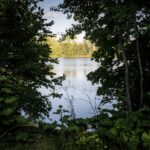
The Jardin Zoologique du Québec occupied a sloped forest site in the Orsainville sector of Charlesbourg, about fifteen minutes by car north of downtown Quebec City, from 1931 until its closure in 2006. For most of the second half of the twentieth century it was a familiar destination for schoolchildren from across the province, and it shared its catchment area with the Village Vacances Valcartier water park and the Parc de la Chute-Montmorency to the east. The site still exists, now as a public park without the animal collection, and it remains worth knowing about for anyone researching the changing landscape of attractions around Quebec City.
Origins and early years
The zoo opened as a modest installation attached to a fish hatchery operated by the provincial government on the Rivière du Berger. Early additions included native Canadian species, and the site grew by stages through the 1950s and 1960s into a full regional zoo with hundreds of animals and a recognisable set of habitats for hoofed mammals, large cats, and primates. The location in a mature forest on a ridge above the river gave the grounds a distinctive feel: the paths wound between tall trees, and many enclosures backed onto natural ravines. A tramway and a miniature train carried visitors between the main entrance and the further reaches of the site.
Expansion and the final years
Through the 1990s the zoo was modernised in several phases, culminating in a large-scale reopening in 2002 after a multi-year renovation. The new installations emphasised themed geographic zones and indoor pavilions that could operate year-round, including a tropical pavilion, an Asian-themed pavilion, and an ambitious indoor rainforest feature. Attendance initially rose but did not reach the projections used to justify the investment. Operating costs proved higher than forecast, animal welfare standards were tightening provincially and nationally, and maintenance demands on the older parts of the site continued.
In 2005 and 2006 the provincial government, which owned and operated the zoo through SÉPAQ, reviewed the long-term financial outlook and concluded that a sustained public subsidy would be required to keep the institution open. The decision to close was announced, the animals were transferred to accredited zoos elsewhere in Canada and the United States over the following months, and the site closed its gates as a zoological park in the autumn of 2006.
What is on the site now
Since closure, the buildings have been partially demolished, partially repurposed, and partially left as they stood. The grounds have been reopened as the Parc de la Rivière-du-Berger, a public park managed by the city of Quebec and SÉPAQ-related partners. The principal pedestrian paths remain, as do several interpretation points that describe the geology of the ravine and the ecology of the surrounding forest. A network of cycling and walking trails connects the park to the wider Vallée-de-la-Rivière-du-Berger linear park to the south and to the Base de plein air de Sainte-Foy catchment to the west.
The tropical pavilion and some of the smaller exhibit buildings have been repurposed for events, public gatherings, and occasional botanical displays. The former tram and train routes are now walking paths. The parking lot of the old main entrance doubles today as a trailhead, and the signage at the entrance explains the history of the zoo for visitors who remember it or who are curious about what they are seeing.
Should it be on your itinerary?
For a first-time visitor to Quebec City on a short trip, probably not; the park is pleasant but offers fewer specific sights than the Parc de la Chute-Montmorency or the Île d’Orléans. For a longer stay, and particularly for someone with children who enjoy walking in the woods close to the urban edge, the grounds are rewarding. The forest is well maintained, the paths are relatively flat along the ridge and steeper along the river, and the area is a good place to see what a large institutional site in suburban Quebec has become after reinvention.
Opening hours and seasonal access can change year to year as the city adjusts the programme. The SÉPAQ and the Ville de Québec websites both publish current information, and a telephone call to the tourist information centre downtown is usually the fastest way to confirm whether a particular feature, such as the tropical pavilion, is open on the day you intend to visit.