At the western edge of the Plains of Abraham, a set of interconnected buildings houses the Musée National des Beaux-Arts du Québec — universally known as MNBAQ. It’s the province’s largest art museum, home to Canada’s most substantial collection of Québec art, and one of the most ambitious art institutions in Eastern Canada.
Despite its scale and significance, MNBAQ doesn’t get the international recognition of the National Gallery of Canada in Ottawa or the Art Gallery of Ontario in Toronto. That’s an odd gap, because for anyone interested in Québec’s distinct artistic traditions — or anyone who appreciates a well-curated museum in striking architecture — MNBAQ rewards the visit.
The Basics
MNBAQ consists of five connected buildings representing different architectural eras:
- Pavillon Gérard-Morisset — the original 1933 Beaux-Arts museum building
- Pavillon Charles-Baillairgé — a 1871 former prison, converted to museum use
- Pavillon Pierre Lassonde — the striking modern 2016 addition
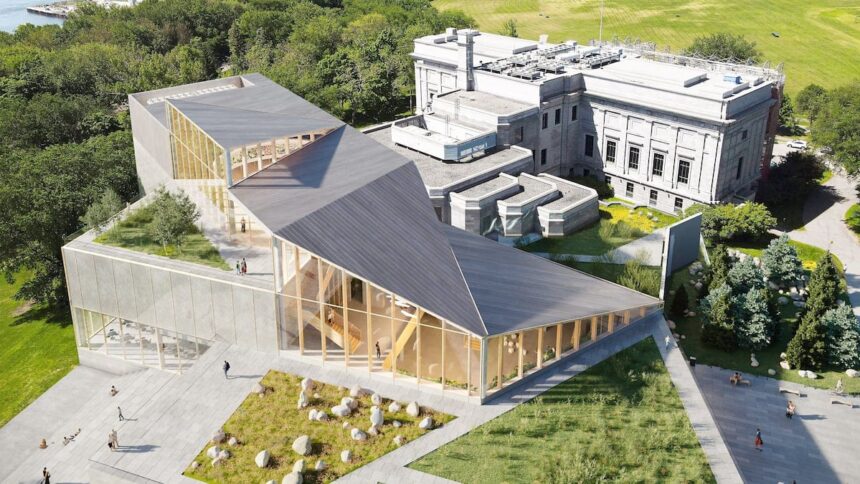
- Espace Riopelle — Pavillon Michael Audain — the newest building, by Les architectes fabg, which opened on 22 October 2026 with four inaugural exhibitions, dedicated to Jean Paul Riopelle and overlooking the Plains and the river
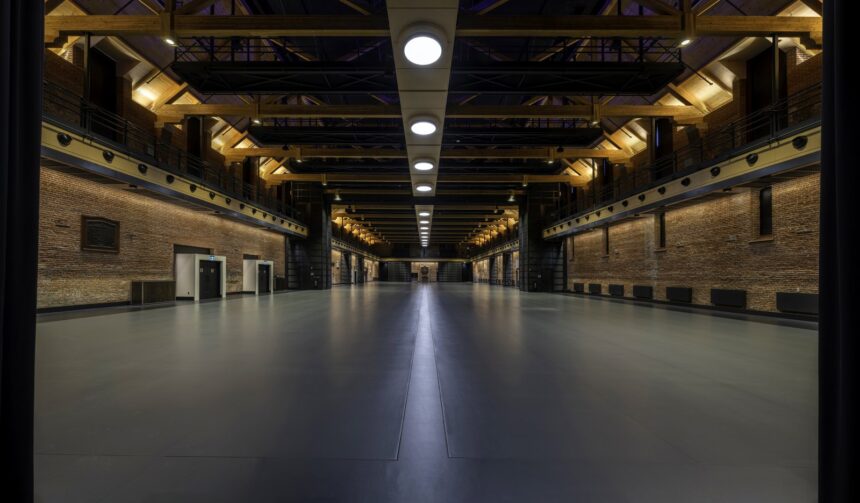
- Grand Hall — connecting atrium between the pavillions
Each pavilion has different character and houses different collections. Walking between them is part of the experience.
The Collections
Québec Art (Permanent)
The heart of MNBAQ. The museum holds approximately 40,000 works focused primarily on Québec artists from the 17th century to today. You can trace the development of Québec visual culture — from religious colonial painting through 19th-century academic work, the Automatistes and Paul-Émile Borduas in the mid-20th century, and contemporary Québec artists working today.
This is the single largest collection of Québec art anywhere in the world and is genuinely significant.
Indigenous Art
The museum has been expanding its collection of Indigenous art from Québec and broader Canada, including both historical and contemporary works. The collection is substantial and thoughtfully curated.
Modern and Contemporary Art
Beyond Québec-specific work, the museum has broader modern and contemporary holdings, including works from Canadian, European, and international artists.
Special Exhibitions
MNBAQ hosts 3-5 major temporary exhibitions per year, often including international tours, major retrospectives, or themed collections. Recent exhibitions have covered everything from Dior fashion to Québec landscape painting to contemporary Indigenous artists.
How to Use Your Time
Budget: 2-3 hours minimum; 4-5 hours for a thorough visit.
Best approach: Start with whatever temporary exhibition is on (usually in the Pierre Lassonde Pavilion), then work through the permanent Québec collection chronologically in the Gérard-Morisset Pavilion.
Tickets: Admission is banded by age, not by status — there is no student rate, and the bands diverge enough to matter. General admission is $18 from 18 to 30, $25 from 31 to 64 and $24 at 65 and over, with $8 from 13 to 17, free entry for children 12 and under accompanied by an adult, and $54 for a family. When a major temporary exhibition is running, the ticket that includes it costs a few dollars more in every band. Buying online saves up to $3 a ticket. The grid is published on the museum’s own practical information page.
Free admission: The free Sunday is real, and it is narrower than it is usually described. It is the first Sunday of every month, all year — not a November-to-May season, and not mornings only. But it is reserved: the museum states that admission that day is free for Québec residents aged 19 and under, and that ID may be asked for. Until March 2025 the provincial measure covered every Québec resident of any age; it was then cut back to people under 20. So an adult visitor does not qualify, resident or not, and there is no point timing a visit around it unless you are travelling with teenagers who live in Québec.
A separate measure runs year-round and is worth knowing: admission is free for members of the First Nations, Inuit and Métis peoples, and for Accès-Musée participants and their companions, excluding the ticket that includes a major temporary exhibition.
What’s Worth Specifically Focusing On
The Automatistes Section
The Refus global manifesto of 1948, signed by Paul-Émile Borduas and other Québec abstract artists, is one of the most important documents in Canadian intellectual history. MNBAQ holds significant works by the Automatistes and related Québec modernists. If you understand this movement, much of what followed in 20th-century Québec art and politics becomes clearer.
Jean-Paul Riopelle
Internationally famous Québec painter with a substantial MNBAQ collection, including rotating temporary exhibits focused specifically on his work.
The Colonial and Religious Art Section
Less visually exciting than modern work, but historically important. These pieces tell you what Québec looked like to itself during the colonial and early Canadian periods.
The Contemporary Gallery
Often the liveliest part of the museum. Current Québec artists working in various media. Changing installations that reward repeated visits.
The Building Itself
The Pierre Lassonde Pavilion (opened 2016) is worth paying attention to as architecture, not just container. Designed by OMA (the firm founded by Rem Koolhaas), it features a striking glass-and-concrete facade overlooking the Plains of Abraham. The interior creates dramatic sight lines and unusual exhibition spaces.
The Charles-Baillairgé Pavilion (former prison) retains its original cellblock-era architecture, which creates an interesting tension with modern art displayed inside.
The Gérard-Morisset Pavilion is a classical Beaux-Arts building of the kind that defined early 20th-century museum architecture.
Practical Logistics
Location: 179 Grande Allée Ouest, at the western end of the Plains of Abraham.
Getting there: 20-minute walk from Old Québec through the Plains, or a short taxi/bus ride.
Parking: Paid parking at the museum and nearby lots.
Restaurant: Café Muse, the museum’s on-site café, serves decent light meals and coffee. Better than average for museum cafés.
Accessibility: Fully wheelchair accessible.
Photography: Permitted without flash in permanent galleries. Temporary exhibitions may have restrictions.
Combining With Other Plains of Abraham Activities
The MNBAQ’s location on the Plains makes it natural to combine with:
- Plains of Abraham walk — the 2-3 km park is worth walking either before or after the museum
- Plains of Abraham Museum — the 1759 battle history museum at the eastern end of the Plains
- Joan of Arc Garden — the formal French garden just off the Plains
- Grande Allée restaurants for lunch or dinner
A complete Plains-focused day: morning at MNBAQ → lunch on Grande Allée → afternoon walking the Plains and visiting the Plains of Abraham Museum → dinner near the Old City.
FAQ
Is MNBAQ kid-friendly?
Yes, surprisingly. Kids’ programming, family workshops, and interactive elements throughout. Best for kids 7+.
Do I need French?
No. All major interpretation is bilingual. Guided tours available in both languages.
Is one visit enough?
For casual visitors, yes. For art enthusiasts, MNBAQ rewards multiple visits as temporary exhibitions rotate.
How does it compare to other Canadian art museums?
Strong for Québec-specific art (best in the world). Less comprehensive than the National Gallery of Canada for international work.
What’s the single must-see item?
Varies by current exhibitions. The Automatistes permanent collection is consistently excellent for those interested in 20th-century art.
Final Word
MNBAQ is the kind of museum that rewards the visitor who commits to it seriously. A rushed 90-minute pass-through covers the surface; a genuine 3-hour visit lets you engage with specific artists, understand the arc of Québec’s art history, and appreciate the building itself as a cultural artifact. For anyone interested in art, it’s one of the essential Québec City stops. For anyone broadly curious, it’s a better use of an afternoon than a third Old City walking tour.
The museum spans four linked pavilions, and its exhibition programme rotates several times a year. Current exhibitions, opening hours and admission are published by the Musée national des beaux-arts du Québec.