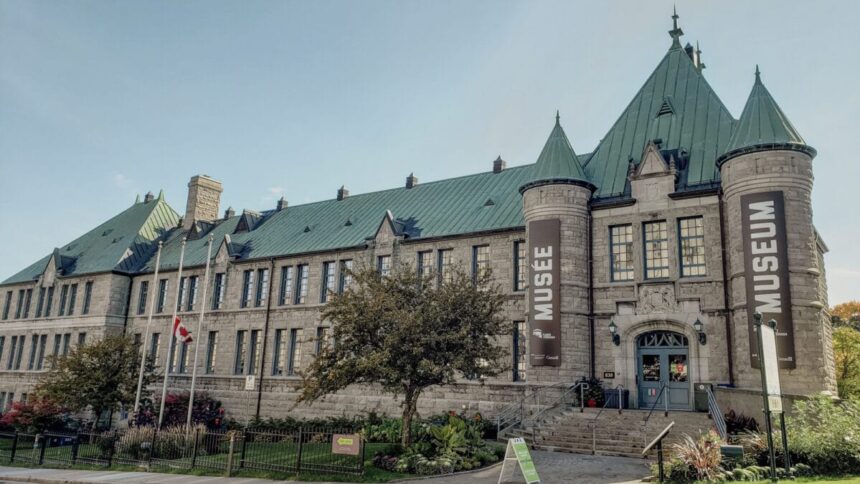
The Musée de l’Amérique francophone (MAF) (located within the historic buildings of the Séminaire de Québec in the Old City, operated as a satellite institution of the Musée de la Civilisation) holds the most extensive collection of French-language cultural heritage in the Americas and provides the most complete institutional presentation of the history, culture, and geography of French-speaking North America available at any single site. The museum’s mandate (the history and culture of francophone communities throughout the Americas, from Quebec to Louisiana, from Acadia to the Franco-Ontarian communities of Ontario, from the Métis of the Prairie provinces to the French Creole cultures of the Caribbean) gives it a scope that no other institution in Canada or the United States addresses with comparable depth.
The Collections
The Musée de l’Amérique francophone’s collections (accumulated by the Séminaire de Québec over 360 years and now managed by the Musée de la Civilisation network) include objects from the natural sciences (a remarkable collection of geological specimens, botanical illustrations, and zoological specimens that documents the Séminaire’s role as the primary scientific institution in New France), fine arts (paintings by Frère Luc and other New France artists, 19th-century Quebec landscape paintings, and works acquired by the Séminaire through its educational mission), numismatics (the Séminaire’s coin collection, one of the largest in eastern Canada), and the documentary heritage of the francophone Americas (maps, manuscripts, and printed books from the colonial period). The collection’s breadth (spanning natural history, art history, numismatics, and documentary heritage) reflects the Séminaire’s centuries-long role as the primary repository of knowledge and culture in francophone North America.
The Francophone Americas Scope
The museum’s interpretive programming (which addresses the history and culture of francophone communities across the entire Americas rather than focusing exclusively on Quebec) provides context for understanding the diversity of French-language cultural expressions that developed from the shared colonial heritage of New France. The Acadian community (whose dispersal through the 1755 Deportation created francophone populations in New Brunswick, Nova Scotia, Louisiana, and the Caribbean), the Franco-Ontarian community (whose French-language institutions and cultural life have developed in the shadow of Ontario’s anglophone majority), and the Louisiana Creole and Cajun communities (whose French-language traditions are among the oldest continuously French-speaking communities in the Americas) are all represented in the museum’s interpretive programming alongside the Quebec history that constitutes the dominant narrative of the francophone Americas.
Visiting
The Musée de l’Amérique francophone is located at 2 Côte de la Fabrique in the Old City, within the Séminaire de Québec complex (accessible on foot from the Place de l’Hôtel-de-Ville and the Basilique Notre-Dame de Québec. The museum shares an admission regime with the other Musée de la Civilisation network institutions; a combination ticket covering the MAF, the Musée de la Civilisation at the Vieux-Port, and the Centre d’interprétation de Place-Royale provides the most economical access to all three institutions. The museum is open year-round (closed on certain statutory holidays) check mcq.org for current schedules); guided tours in French and English are available on a scheduled basis and provide interpretive context that substantially enriches the self-guided visit experience.