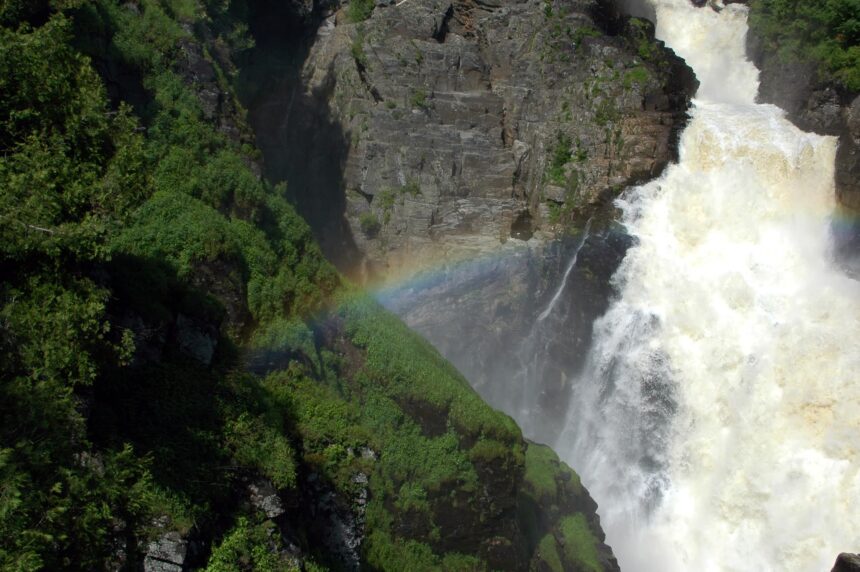
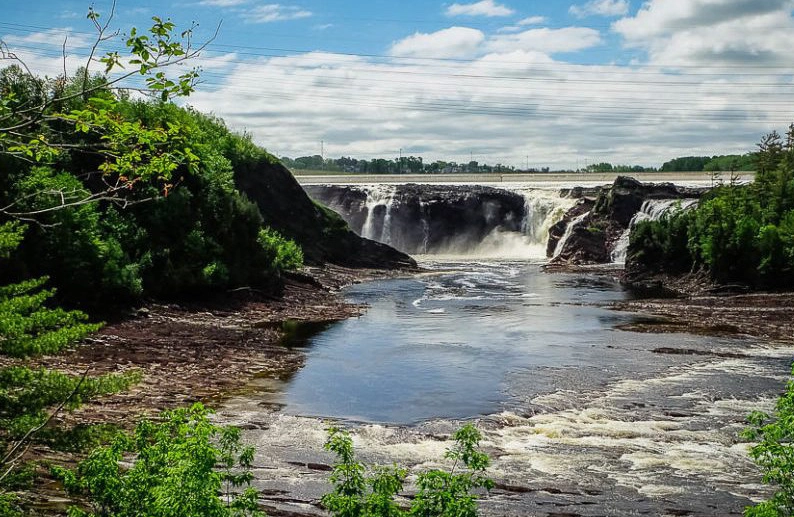
Portneuf is the regional county municipality immediately west of Québec City, a rural-agricultural belt running along the Saint-Laurent from Donnacona to Grondines. The county is sparsely populated, with eighteen municipalities and a total population under fifty thousand spread across more than four thousand square kilometres. For visitors based in the city, it offers three specific reasons to drive west: a cluster of small wineries and cideries, a well-built cycling network, and the quieter fringes of the Laurentians.
The wine corridor
Québec wine is a young industry, and Portneuf sits at its northern limit. A handful of vineyards along the Route des Vins de Portneuf produce cold-climate hybrid varieties: Frontenac, Marquette, and Vidal dominate, with a few producers experimenting with Riesling and Pinot Noir under careful site selection. Yields are modest, production small. The wines carry a distinctive minerality that reflects the limestone and sandy loam soils along the Saint-Laurent, and the best bottles from recent vintages have started appearing on serious wine lists in central Québec City.
Vignoble Sainte-Angélique, near Saint-Raymond, is visitor-friendly: tasting room open weekends from May to October. Cidrerie La Galante in Saint-Casimir produces ciders from heritage apple varieties. Smaller producers change hours year to year. Call ahead.
Cycling
Portneuf is one of the best cycling destinations within an hour of Québec City. The Véloroute de Portneuf, a 67-kilometre gravel-and-paved path built on the former Québec Central railway right-of-way, runs east-west through the county from Rivière-à-Pierre to the Saint-Laurent at Saint-Alban. The grade is gentle, the surface is well-maintained, and the route passes through forest, farmland, and several village cores with cafés and bike-friendly services.
Rental bikes are available in Saint-Raymond and Rivière-à-Pierre, each of which has a small outfitter. A full traverse of the véloroute takes most riders a single day; a weekend allows for side trips to the Parc régional de Portneuf and to the wineries along the corridor.
The Parc national de la Jacques-Cartier connection
Portneuf borders the Parc national de la Jacques-Cartier to the north, and several small park extensions lie within the county itself. The Parc naturel régional de Portneuf, administered by the MRC, covers more than two hundred square kilometres of boreal forest and lake country accessible from Rivière-à-Pierre. It is used primarily by hunters and fishers in season and by hikers and paddlers in summer. Backcountry lodges and rustic cabins are bookable through the MRC’s reservation system.
The villages
The village cores along Route 138 are worth a stop in their own right. Deschambault-Grondines, classified among the most beautiful villages in Québec, has an eighteenth-century church and a restored old mill. Cap-Santé preserves a rare surviving seigneurial streetscape. Pont-Rouge and Saint-Raymond are the functional centres of the county, with grocery stores, pharmacies, and gas stations for anyone planning an extended cycling trip or a backcountry visit.
Getting there
Portneuf is 30 to 75 minutes west of Québec City depending on destination, via Autoroute 40 for the southern villages and Route 367 north for Saint-Raymond and Rivière-à-Pierre. Public transit is not a realistic option; the county is car-dependent, and most visitors combine multiple stops into a full-day or weekend trip.
Accommodations are mostly bed-and-breakfasts and small inns. Auberge Couleurs de France in Sainte-Anne-de-la-Pérade and several gîtes along Route 138 offer the kind of mid-range rural hospitality that suits the pace of a Portneuf visit. Chains are largely absent.
When to go
Late May through early October is the useful window for most visitors. The wineries open in May. The véloroute is rideable from mid-May until snow falls, typically late October. Autumn foliage peaks in the third and fourth weeks of September in the inland sections of the county; the riverside villages peak a week or two later.