The Salon international du livre de Québec is the spring book fair of the provincial capital, held each April at the ExpoCité complex in Limoilou. It is one of the two largest book fairs in the province, alongside the autumn Salon du livre de Montréal, and it gathers several hundred publishers, thousands of titles, and a broad programme of author events across five days. For a visitor with any interest in francophone publishing, or in the place of the French-language book industry in North America, the Salon is the most accessible entry point into the annual cycle of the trade.
What the Salon is
The Salon is organised by a non-profit association composed of Quebec publishers, authors’ organisations, library networks, and cultural-sector partners. Its mandate is broadly cultural rather than purely commercial: to present the year’s new publications in French, to host public encounters between authors and readers, and to support school and library audiences through a dedicated daytime programme. The event was founded in the late 1980s and has grown through successive editions to its current scale, which draws tens of thousands of visitors over its run.
The main exhibition hall is laid out as a series of publisher stands, arranged loosely by house size and by publishing category. The large Quebec general publishers, the smaller literary imprints, the scholarly presses, the children’s publishers, and the comics and graphic-novel specialists each occupy recognisable zones, and most stands accept cash and card for on-the-spot purchases. Authors are scheduled at specific stands for signing sessions throughout the day, and the schedule is published both in printed form at the entrance and on the Salon’s website.
Programming and events
Alongside the trade-floor activity, the Salon runs several daily programmes of public events. A main auditorium hosts panels and conversations on subjects that have marked the preceding publishing year: memoirs and essays on political questions, the state of translation from English into French, the economics of small-press publishing, and the evolution of the francophone literary prize landscape. Smaller venues within the complex host more intimate readings, workshops, and book launches by specific authors or houses.
A dedicated schools programme runs during the weekday mornings, in which groups of students from the region attend the Salon as part of their school year and meet with authors of children’s and young-adult books. This programme is foundational to the Salon’s educational mission and accounts for a meaningful share of the total attendance figures. Weekend programming is oriented more toward general public audiences, with book launches, larger panels, and several signing sessions with the season’s best-selling authors.
Getting there and practical notes
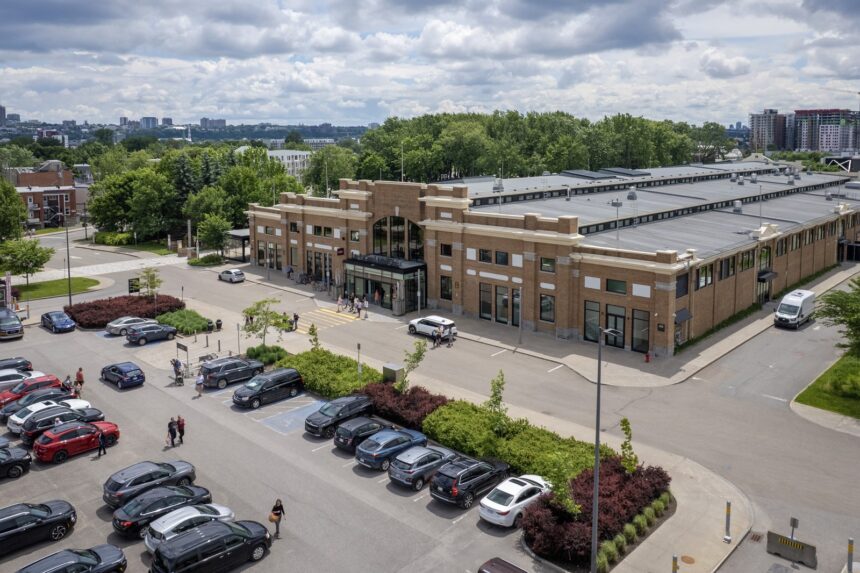
ExpoCité is in the Limoilou district, about a ten-minute drive or a fifteen-minute bus ride from downtown Quebec City. The site has ample parking, and the RTC bus network includes a stop at the entrance. During the Salon, shuttle service may be added from certain downtown hotels; information is published in advance on the Salon’s website and at the Quebec City tourism office. A single admission ticket is valid for the day of purchase; a multi-day pass is available at modest savings for visitors who plan to attend several editions of the event.
Food and drink inside the complex are available through a modest set of on-site concessions, and the area around ExpoCité includes several restaurants, a few coffee shops, and a public park suitable for a break between the morning and afternoon programmes. Most of the site is step-free, and accessible parking is provided near the main entrance. Photography of stands and events is generally permitted; photographing an author’s signing queue without asking is considered impolite, and the Salon’s volunteers will gently redirect visitors who ask at the information desk.
Who should go
The Salon is most useful for francophone readers who want to survey the year’s output, for visitors with family members who read in French and who are shopping for gifts, and for English-speaking visitors with a professional or academic interest in the Quebec publishing industry. Translated editions are available at several stands but are not the Salon’s focus; visitors who do not read French comfortably will find the signing queues harder to use productively than the exhibitions themselves. For an English-speaking traveller spending a long weekend in Quebec City in April, two hours at the Salon is a reasonable way to understand a part of the city’s cultural life that does not reach the usual tourist itineraries.