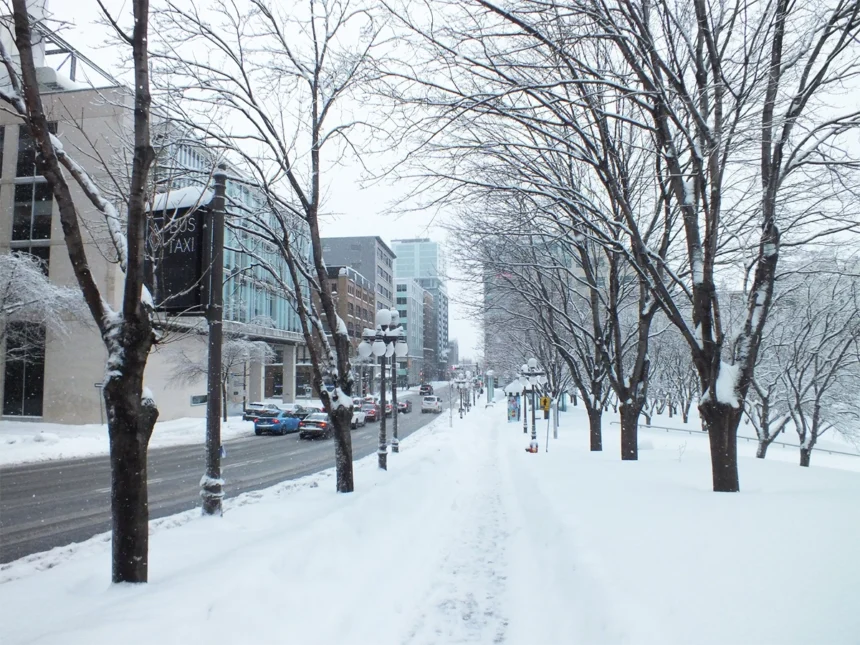
The Québec City real-estate market is smaller, less volatile, and considerably more affordable than Montréal or Toronto, but the internal price spread across neighbourhoods has widened substantially over the past decade. The gap with Montréal is wide, and the gap between Québec City’s own districts has widened with it: Montcalm sits near the top of the local range, Limoilou around the middle, Beauport near the bottom. That ordering is solid. The precise dollar figure for a given street is a question for a broker rather than for a published series, and that distinction matters more here than it looks — the next section explains why. Knowing which neighbourhood fits which profile matters more in Québec than in many Canadian cities, because the physical and cultural differences between districts are sharp.
What it costs
One price figure for this city is actually published, and it covers the whole metropolitan area rather than any one district. For the third quarter of 2026 — July through September — the Quebec Professional Association of Real Estate Brokers reports, from the Centris database, a median of $463,500 for a single-family home in the Québec City census metropolitan area, up 2 percent year over year, alongside $334,900 for a condominium (up 6 percent) and $600,000 for a plex (up 17 percent). Province-wide in the same quarter the single-family median was $500,000, and in the Montréal CMA it was $645,500 — which is the honest measure of how much cheaper this city still is.
Two things about that number matter more than its size. It is a median for the census metropolitan area, which reaches well past the city limits, and it is a quarterly figure that moves every three months. The detailed monthly tables resolve the Québec City CMA into three sectors — the agglomeration of Québec City, the northern periphery and the south shore — and stop there. There is no published median for Montcalm, for Limoilou or for Sillery, and no other series fills that gap. Any dollar range you see quoted for a Québec City neighbourhood, on this site or anywhere else, is somebody’s estimate and not a statistic. So what follows gives you the ordering of the districts and what each is like to live in, and skips the dollar bands that nobody can stand behind.
Prices are still rising, but more slowly than during the 2020-2022 surge, when buyers from outside the region were unusually active and there was very little for sale. Supply has begun to recover: 2,204 properties were listed on Centris across the CMA in the third quarter of 2026, 27 percent more than a year earlier. It is still about 54 percent below its ten-year average, which is why prices have kept climbing even as sales flattened. The frenzy has eased, though — about one sale in five drew multiple offers during the quarter, half the share of a year before, and a single-family home sold in an average of 29 days.
For buyers looking for a walkable, amenity-dense neighbourhood, the Vieux-Québec and Montcalm districts are the natural starting points. Montcalm is the dearest of the walkable central districts apart from the Vieux-Québec itself, and the Vieux-Québec is dearer again with far less ever on the market. Both have excellent public transit, a full range of restaurants and services, and a walk or a short bus ride to the Colline parlementaire, which is a large employer for both.
The central value districts
Saint-Jean-Baptiste, directly north of the Grande Allée, is the value alternative to Montcalm. It costs less than Montcalm, and its stock of late-nineteenth-century row houses gives you more square footage per dollar than Montcalm does at the same walking distance from downtown. The neighbourhood’s character is more artsy, less formally bourgeois, and the walkability to restaurants and bars is arguably better.
Saint-Roch and the adjacent Saint-Sauveur districts in the Lower Town offer the best price-to-urbanity ratio for younger buyers. Houses there cost less than in the Upper Town districts, and the loft conversions in the former industrial buildings are the cheapest way into a central address. The district has gentrified substantially since 2015 but still retains substantial affordable housing stock and a mix of income levels that has prevented the wholesale displacement seen in similar Montréal neighbourhoods.
Limoilou, across the Saint-Charles River from the old city, has gone from cheap to merely reasonable over the past decade, and the change is visible street by street. The 2e Avenue and 3e Avenue core has become a dining destination of its own. The neighbourhood has good bike access to downtown (15 minutes), decent transit, and a demographic mix of long-term working-class families and younger professionals pushed out of Montcalm.
Where families buy
For families wanting larger lots and new construction, Cap-Rouge, Lebourgneuf, and Beauport are the three principal options. Cap-Rouge, at the western edge of the city, is where the larger lots and the newer four-bedroom houses are, priced above the central Lower Town and below Sillery. The community skews professional-family with two cars and a long commute to the Colline parlementaire. Lebourgneuf, to the north, is the suburban commercial core with a similar price structure and a shorter commute. Beauport, to the east, is the cheapest of the three.
Sillery, the old anglophone bourgeois district along the Chemin Saint-Louis west of the Plaines d’Abraham, is a separate category. Large lots and heritage stone houses from the late nineteenth and early twentieth centuries place it well above the rest of the city. The Sillery buyer is usually an established professional in medicine, law, or senior public administration. Inventory is thin.
Sainte-Foy, one of the city’s largest residential districts, offers mid-century bungalows, 1970s split-levels and newer condos in fairly uniform price bands. The bungalows sit on suburban lots of several hundred square metres, and they price between the central districts and Sillery. The neighbourhood is close to Université Laval, the CHU hospitals, and Laurier Québec shopping, which produces a reliable rental market for those buying as investment rather than primary residence.
Buying to rent
The rental market matters for investor buyers, and it has loosened from the extreme tightness of a few years ago. The Canada Mortgage and Housing Corporation’s most recent Rental Market Survey, with an October 2025 reference date, puts the purpose-built vacancy rate in the Québec City CMA at 2.4 percent and the average two-bedroom rent at $1,277; the condominium rental market is tighter still, at 0.6 percent vacancy and $1,377. Both are below the 3 percent usually treated as a balanced market, so a well-located unit still rents — and demand is strongest where it has always been strongest, around Université Laval and the CHU, and in the central Lower Town.
For a buyer with specific priorities, the working guide is this: walkability and restaurant density favour Saint-Jean-Baptiste and Saint-Roch; family-friendly space favours Cap-Rouge and Lebourgneuf; heritage character favours Montcalm and Sillery; best value favours Limoilou and Beauport. The city is small enough that you can drive across it in 25 minutes, so the choice is more about daily character than about geography.