Quebec City in winter ( which runs from late November through mid-March, with January and February as the peak months ) is, by the consensus of those who have experienced it, the finest winter urban experience in Canada and among the finest in the world. The combination of an architecturally extraordinary historic city under snow, a local culture that has embraced winter as a defining identity rather than an inconvenience to be endured, a top-tier winter carnival, and the full range of outdoor winter activities accessible within minutes of the city centre creates a winter destination that has no close Canadian comparison. The 300+ centimetres of annual snowfall that burden many Canadian cities becomes, in Quebec City, the medium through which the city’s most distinctive character is expressed.
The Old City Under Snow
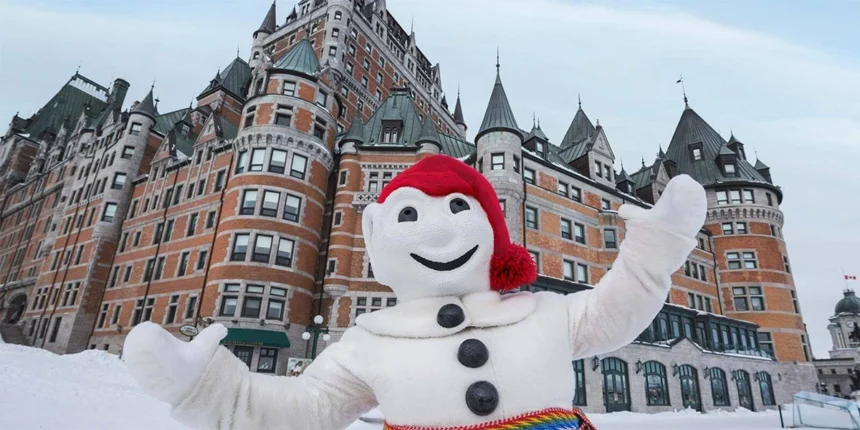
Quebec City’s Old City ( the UNESCO World Heritage Site of the Upper Town and Lower Town, with its stone buildings, cobblestone streets, and fortification walls ) is dramatically transformed by winter snow accumulation. The grey limestone buildings under a white snow mantle, the bare trees silhouetted against the winter sky, and the Château Frontenac‘s copper roofs dusted with snow create a visual landscape that makes the Old City’s already extraordinary aesthetic quality even more concentrated. The absence of peak-season tourist crowds in the Old City’s streets and shops (winter is the off-season for most tourist-oriented businesses) gives the city back to its residents in a way that July’s 100,000-daily FEQ audience cannot. Walking the Rue du Petit-Champlain on a January afternoon, with the Christmas lights still in place and the snow-dusted facades reflecting the late afternoon sun, is an experience that many visitors describe as the finest urban walk they have ever taken.
The Battlefields Park in Winter
The Parc des Champs-de-Bataille (Battlefields Park) ( 103 hectares of urban parkland on the Plains of Abraham plateau ) maintains 11 kilometres of groomed and lit cross-country ski trails free of charge throughout the winter season, making it the only major urban park in Canada offering this level of cross-country skiing infrastructure without cost. The trail network is maintained by the National Battlefields Commission’s dedicated staff and is accessible from multiple entry points along the Grande Allée and the cliff-edge promenades. Skating on the Terrasse Dufferin ( the wooden boardwalk immediately in front of the Château Frontenac, which the Commission floods and grooms as an ice skating surface each winter ) is another free activity that provides a skating experience of extraordinary visual drama: the Château above, the St. Lawrence River 53 metres below the cliff edge, and the Lévis shore across the water.
Practical Winter Visiting
For visitors planning a Quebec City winter visit, the key practical points are: temperature averages -10°C in January and February with frequent periods of -20°C or colder, requiring genuinely warm clothing (thermal base layers, down outerwear, wool socks, insulated boots are non-negotiable); the Carnaval runs February 6-15, 2026 (72nd edition), with the Battlefields Park and the Old City as the primary venues; the Hôtel de Glace at Valcartier Village (30 minutes north) books up months in advance for overnight stays; and the Festi Lumière at the Aquarium du Québec (December-March) provides evening illuminated entertainment for all ages. Hotels in Quebec City offer their lowest rates in January and early February (outside Carnaval weekend); this is the optimal time for those who want the full winter experience without peak-season pricing.