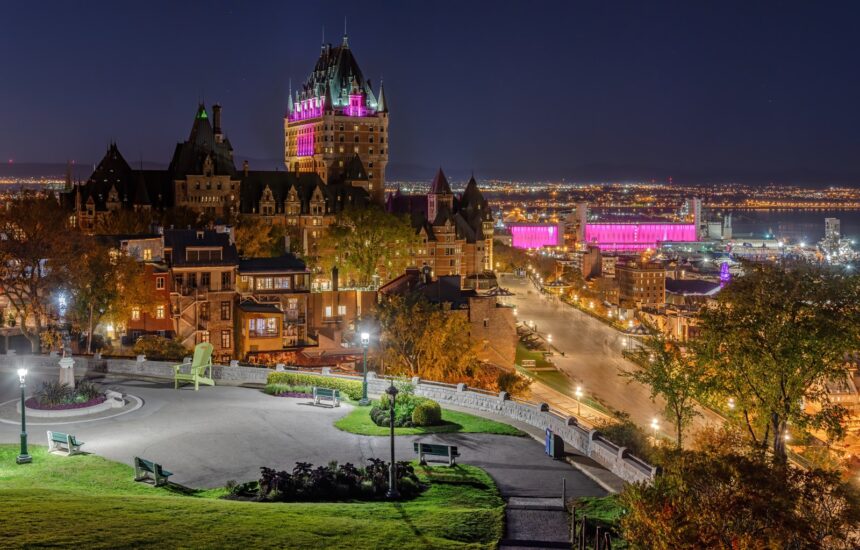
If you only spend time in Old Québec during your visit, you’ll see the most beautiful part of the city. You won’t see the most interesting part. That distinction matters to anyone serious about exploring Québec, and it sends you, inevitably, to Saint-Roch.
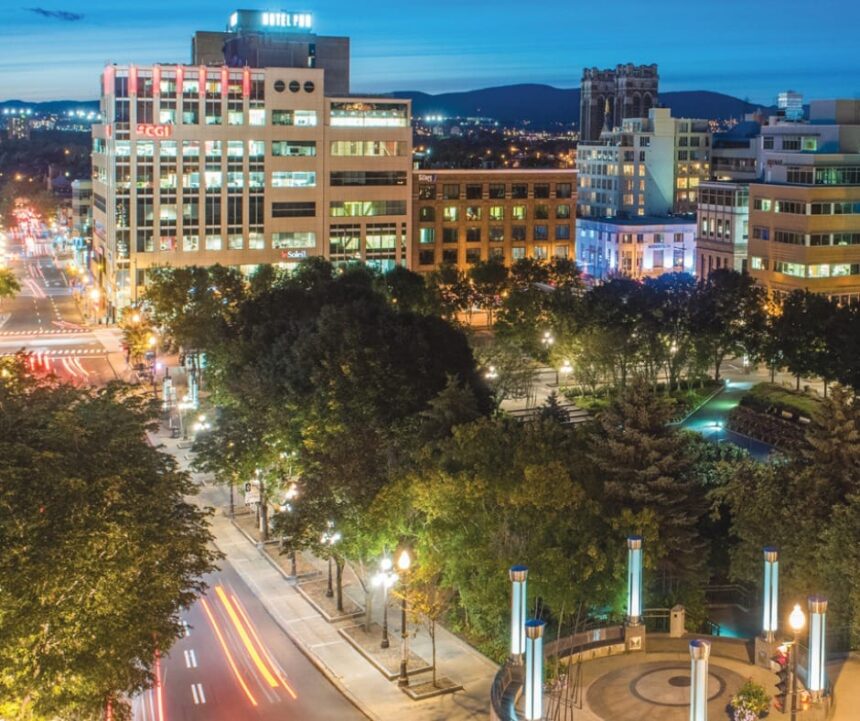
Saint-Roch is a neighbourhood. A real one. It sits below the cliff of Cap Diamant, spreading out on the flat land that runs north from the Saint-Charles River to the old railway tracks. It used to be Québec City’s industrial heart — shoe factories, shipbuilding, warehouses. It fell into deep decline through most of the mid-20th century. And then, starting roughly in the early 2000s, it quietly became something else entirely.
Today, Saint-Roch is where Québec City’s creative class lives and works. Graphic designers, software studios, video game developers (Ubisoft’s Québec office is here), independent restaurants, coffee roasters, third-wave cafés, artist-run galleries, book shops, and a food scene that’s arguably more interesting than anything you’ll find inside the walls of Old Québec. It’s the neighbourhood locals go to when they want to eat well, drink well, and not share the experience with 200 tourists.
Here’s the complete guide.
Getting Oriented
Saint-Roch runs roughly along two main east-west streets — Rue Saint-Joseph and Rue Charest Est — with the spine being Rue Saint-Joseph between about Saint-Anselme and De la Couronne. That’s where most of the restaurants, bars, and shops concentrate.
It’s reachable from Old Québec via:
- Walking — about 15 minutes from Porte Saint-Jean via Rue Saint-Jean to Côte d’Abraham, then down the hill. Steep downhill going, tougher walking uphill back.
- The Escalier des Franciscains or other staircases connecting Upper Town to Saint-Roch — shorter but definitely stairs.
- Taxi or rideshare — about $8-12 from Old Québec, genuinely easier if you’re not an enthusiastic walker.
- Bus — RTC routes from various points downtown, about 10-15 minutes.
You can easily spend a half-day in Saint-Roch. Most first-time visitors who do end up wanting to come back.
The Food Scene
The Serious Restaurants
Légende par la Tanière — One of the most ambitious restaurants in the city. Focus on Québec-sourced ingredients, terroir-driven cooking, tasting menus. Proper reservations required, expect to spend $150-200+ per person with wine. Worth it for special occasions.
Le Clocher Penché — Neighbourhood bistro that has been operating for over 20 years, consistently excellent, with a French-Québécois menu and a strong wine list. Where locals bring out-of-town guests when they want to show off the neighbourhood without the pretension of Légende.
Battuto — Small, focused Italian menu with an emphasis on hand-made pasta. Intimate room, reservations tight, consistently one of the best Italian experiences in the city.
La Planque — Contemporary French-inspired cooking in a relaxed but attentive setting. Strong natural wine program. Popular with the design and tech crowd.
Le Pied Bleu — An offal-focused bistro (yes, it’s what you think — pigs’ feet, head cheese, the whole thing). Genuinely one-of-a-kind in Québec and deeply respected by serious eaters.
The Casual and Middle-Tier Stops
La Planque Express — A quicker version of La Planque, faster service, simpler menu, still good.
Le Bureau (de poste) — Bar-restaurant with an excellent beer selection and reliable pub-style food. Good for a casual dinner with cocktails.
Wafu Izakaya — Japanese izakaya with a serious sake list. A different register than most Saint-Roch offerings but consistently good.
Krieghoff — A classic Québec City café-bistro (multiple locations; the Saint-Roch one is smaller and quieter than the Grande Allée flagship). Breakfast, lunch, all-day menu.
Quick Bites and Takeaway
Tatum — Vietnamese pho and banh mi, fast service, big portions, perfect for lunch.
Nina Pizza Napolitaine — Proper Neapolitan pizza from a wood-fired oven. Tight space, worth the small crowds.
Chez Ashton — The Québec City regional poutine chain. If you want real Québec poutine without drama, this is the honest place.
Tora-Ya Ramen — Ramen shop that takes itself appropriately seriously. Good for a warming winter lunch.
The Coffee Scene
Saint-Roch has Québec City’s best concentration of third-wave coffee:
Brûlerie Saint-Roch — A local roaster with a café setup. Beans roasted on-site, serious baristas, pour-overs and expertly-pulled espressos.
Nektar — Another in-house roaster with multiple locations across Québec City; the Saint-Roch one has particularly good staff and a calmer atmosphere than the downtown flagship.
Café Krieghoff — Solid espressos and casual service, good for a break during the day.
Société Générale — Interior design-y café with strong coffee and excellent pastries. Where the Ubisoft and design-studio crowd goes for mid-morning meetings.
The Bars
Saint-Roch’s drinking culture is one of its strongest features:
Clan Campbell — Whisky bar with a remarkable selection, knowledgeable staff, classic cocktails done right. Intimate setting, good for a pre-dinner drink.
Jules et Jim — Small natural wine bar that feels like someone’s (very cool) living room. Wine list changes weekly, small plates from the kitchen.
Le Sacrilège — On the edge of Saint-Roch and Saint-Jean-Baptiste, a beer-focused bar with an excellent Québec microbrewery selection.
Griendel Brasserie Artisanale — Microbrewery with its own taproom, house-made beers, pub food, a bit of a scene on weekends.
Bistro B — Wine bar with a small-plates menu, intimate room, reservations recommended.
The Shopping
Saint-Roch’s shopping is more idiosyncratic than Old Québec’s:
- Librairie Saint-Jean-Baptiste and other small bookstores (mostly French, some English sections) — real bookshops, not souvenir shops with books.
- Québec-designer boutiques along Saint-Joseph — clothing, accessories, small-label fashion.
- Design and home goods stores — a few genuinely curated ones, reflecting the neighbourhood’s professional design community.
- Record stores — Québec City’s remaining independent music shops are mostly here.
- Antique and vintage shops — scattered along the main streets, good for browsing.
The Cultural Life
Saint-Roch houses several institutions worth visiting:
Bibliothèque Gabrielle-Roy — The main branch of Québec City’s library, an impressive modernist building open to the public with cafés, workspaces, and often art exhibitions.
Le Diamant Theatre — Robert Lepage’s theatre company, on the border of Saint-Roch and the Old City. Major productions throughout the year.
Méduse — An artist-run collective space hosting multiple galleries, studios, performance venues. First Friday of the month is an open art walk.
Église Saint-Roch — The historic church at the heart of the neighbourhood, worth a brief visit.
Why Saint-Roch Matters
There’s a specific reason Saint-Roch developed into what it is. Through the late 1970s and 1980s, the neighbourhood was genuinely rough — high unemployment, vacant industrial buildings, a declining population. The city made a series of targeted investments in the 1990s and 2000s (the library, the Jardin de Saint-Roch, incentives for creative businesses) that, combined with naturally low rents, drew in the kind of small independent businesses that couldn’t afford to operate inside the walls.
The result is a neighbourhood that’s inherited enough 20th-century industrial bones to have real character, while being young enough (in its current iteration) to feel like it’s still actively forming. It’s the neighbourhood in Québec City where you can still open a small restaurant, stay independent, and survive.
When to Visit
Saint-Roch is excellent year-round but at its best:
- Late afternoon through early evening — the light is good, the street energy peaks, the bars are just starting to fill up.
- Weekday evenings — fewer tourists, locals are out, the neighbourhood feels like itself.
- First Fridays — monthly art walk, extra programming, a genuine community atmosphere.
- Saturday afternoons — for shopping and coffee, before the evening dinner rush.
Less ideal: Sundays before 11 AM (many restaurants closed), Mondays (more closures), and very late nights (the neighbourhood winds down earlier than Montréal’s equivalent areas).
A Suggested Saint-Roch Afternoon
3:00 PM: Arrive via taxi. Start at Brûlerie Saint-Roch or Nektar for a coffee.
4:00 PM: Walk Saint-Joseph east toward De la Couronne, stopping at any shop that catches you. Browse Méduse if it’s open.
5:30 PM: Pre-dinner drink at Jules et Jim or Clan Campbell.
7:00 PM: Dinner reservation at Le Clocher Penché, Battuto, or La Planque.
9:30 PM: Nightcap at Le Bureau or back to your hotel.
FAQ
Is it safe at night?
Yes, very. Saint-Roch is well-populated with nightlife until at least 11 PM most nights and is as safe as any part of central Québec City.
Can I do Saint-Roch in a single evening?
Yes, for dinner and drinks. To get the full feel including shops and coffee culture, plan for a half-day.
How does Saint-Roch compare to Montréal’s Mile End or Plateau?
Smaller and more compact. Similar creative-class character but with a stronger restaurant concentration than most Mile End blocks. If you like those neighbourhoods, you’ll like Saint-Roch.
Do I need French?
Most restaurants and bars have English service. The neighbourhood is genuinely bilingual.
What’s the equivalent neighbourhood vibe in other Canadian cities?
Closest comparable might be Hamilton’s James Street North or Halifax’s North End — post-industrial, creative, still affordable-ish, with a strong independent business culture.
Final Word
The single biggest mistake visitors to Québec City make is staying inside the walls of Old Québec for their entire trip. You see the beautiful parts of the city, but you miss the parts where Québec actually lives. Saint-Roch is the easiest correction. Two or three hours here, especially in the late afternoon and evening, will give you a version of Québec that most tourists never see. Come hungry, bring an open mind, and plan to return.