Quebec City’s school system ( operating under the framework established by the Charte de la langue française (Bill 101), which requires that children in Quebec attend French-language schools unless at least one parent received their primary education in English in Canada ) is the most explicitly linguistically regulated school system in Canada. The result is a school landscape that reflects Quebec’s demographic and linguistic realities: the vast majority of Quebec City’s students attend French-language public schools (the Commission scolaire de la Capitale for the inner arrondissements), a small minority attend English-language public schools (the Central Québec School Board), and a significant minority (approximately 20-25% of the metropolitan student population) attend private schools a proportion dramatically higher than in any other Canadian province, reflecting Quebec’s distinctive tradition of tuition-subsidised Catholic private schools that persist as a practical alternative to the public system.
The French Public System
The Commission scolaire de la Capitale (CSCAP) ( the French-language public school board serving the La Cité-Limoilou, Charlesbourg, and Beauport arrondissements ) and the Centre de services scolaires des Découvreurs (serving the Sainte-Foy–Sillery–Cap-Rouge and Les Rivières arrondissements) together operate the primary and secondary schools that serve the vast majority of Quebec City’s student population. The French public system’s curriculum follows the Quebec Education Program (Programme de formation de l’école québécoise), which includes English as a second language from Grade 3 onward and French as the language of instruction for all subjects. The system’s quality is generally considered good by comparative Canadian standards, though achievement gaps between socioeconomically advantaged schools (particularly in Sainte-Foy and Charlesbourg) and disadvantaged schools (particularly in some Saint-Roch and Saint-Sauveur catchment areas) reflect the broader socioeconomic geography of the metropolitan area.
English Schools & Eligibility
The Central Québec School Board (CQSB) ( the English-language public school board serving the Quebec City region ) operates several elementary and secondary schools that are accessible only to students who demonstrate eligibility under Bill 101: typically, children whose parents received their primary education in English in Canada. For families who moved to Quebec City from English Canada (and whose children therefore qualify for English schooling), the CQSB provides English-language primary and secondary education with French as a second language. The system’s enrolment has declined with the anglophone community’s demographic shrinkage; the CQSB operates a small number of schools relative to the French school boards, serving a catchment of several thousand students across the metropolitan area.
Private Schools
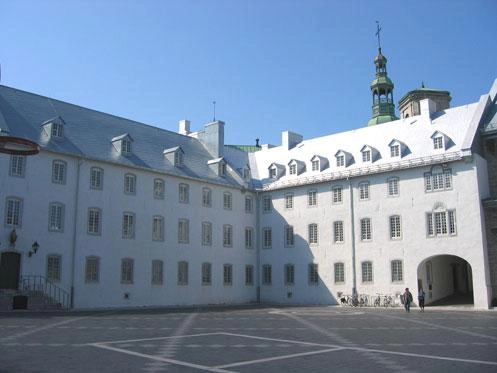
Quebec City’s private school sector ( which receives 60% subsidy from the provincial government for each student enrolled, making private school tuition approximately $3,000-5,000 per year per student rather than the $15,000-25,000 that unsubsidised private schools charge elsewhere in Canada ) is unusually large by Canadian standards, enrolling approximately 20-25% of secondary school students. The major private schools include: the Séminaire de Québec (formerly a classical college, now a secondary and CEGEP institution with a prestige reputation among Quebec City’s professional class), the Collège Saint-Charles-Garnier (Jesuit tradition, highly academic), and several other Catholic-tradition schools whose reputations for academic achievement drive demand that exceeds available spaces. The private school sector’s subsidy creates a two-tier system whose equity implications are debated the subsidy allows middle-class families to access private education, but also drains motivated students and engaged parents from the public system.