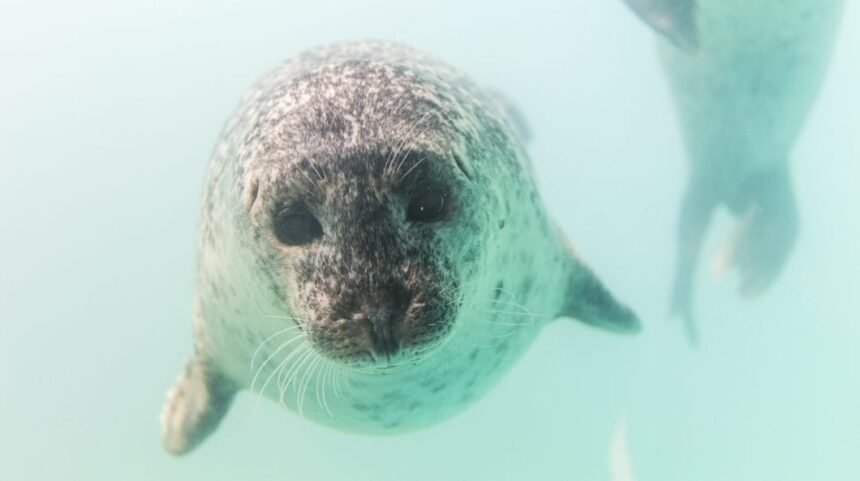
The St. Lawrence River estuary at and downstream from Quebec City supports marine mammal and fish populations of surprising diversity given the proximity of major urban infrastructure: harbour seals (Phoca vitulina) and grey seals (Halichoerus grypus) make seasonal appearances in the Quebec City reach of the river, particularly in late summer and fall when the concentration of fish in the tidal waters near the river’s head of tide creates feeding opportunities. The St. Lawrence eel (anguille, Anguilla rostrata) ( a keystone species of the estuary’s ecological network and one of the most culturally significant food fish in Quebec’s Indigenous and habitant traditions ) migrates through the Quebec City area during its complex catadromous life cycle. Understanding the marine life accessible from Quebec City’s shoreline provides the context for appreciating the ecological richness of a waterway that functions simultaneously as Canada’s most historic commercial waterway and one of its most biologically significant freshwater-marine transition zones.
Seals at Quebec City
Harbour seal sightings at Quebec City ( documented through the Réseau d’observation des mammifères marins (ROMM) sighting database and the occasional social media posts from Promenade Samuel-de-Champlain visitors who observe a round, whiskered head bobbing in the tidal current ) occur most frequently in the September-November period when young-of-year seals following the smelt and capelin aggregations in the upper estuary range upstream to the Quebec City reach. The sightings are occasional rather than predictable; a dedicated seal-watching trip from Quebec City has a low success rate compared to the Tadoussac or Île d’Orléans locations where seals are more reliable. Grey seal sightings near Quebec City are rarer still; the species’ primary distribution in the St. Lawrence is in the lower estuary and the Gulf, with upstream appearances representing the outer range of occasional individuals rather than regular population presence.
The St. Lawrence Eel
The Atlantic eel’s cultural significance in Quebec ( the smoked eel (anguille fumée) that was the Île d’Orléans‘ most commercially important fish product through the 19th and 20th centuries, the eel weirs (fascines) that the island’s fishing families maintained across the tidal shallows for generations, and the eel fishing tradition that persists in attenuated form in the Montmagny region south shore ) makes it one of the most culturally charged fish species in Quebec City’s regional identity. The St. Lawrence eel population has declined dramatically since the 1970s (the combination of habitat loss, dam mortality on the Ottawa and St. Lawrence tributaries, and overharvesting has reduced the population to perhaps 1% of its 1970s levels), and the species is listed as threatened under the Species at Risk Act. The eel weirs of the Île d’Orléans ( the wooden stake traps that the island’s fishermen set in the tidal shallows ) are visible from the Chemin Royal driving circuit and document the continuing (if greatly reduced) eel harvest tradition.
Fish of the Tidal St. Lawrence
The tidal St. Lawrence at Quebec City supports fish populations of unusual diversity for a heavily urbanised river reach: the tidal influence extends the saline and brackish water species’ range upstream to Quebec City, creating a zone where freshwater species (pike, walleye, perch) coexist with the early life stages of anadromous species (Atlantic salmon juveniles, American shad) and the brackish-tolerant species (striped bass, which have recolonised the St. Lawrence following their near-extirpation in the early 20th century). The Parc linéaire de la rivière Saint-Charles provides the most accessible river ecology interpretation for visitors; the Parks Canada interpretation at Parc Cartier-Brébeuf addresses the fish species that Cartier’s 1535-36 wintering party relied upon for survival through the difficult winter a living connection to the ecological conditions that the founding French explorers encountered.