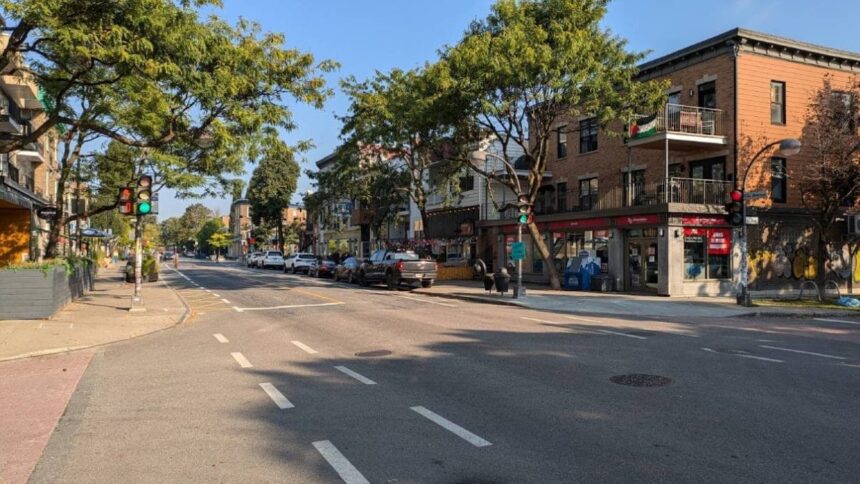
The 1re Avenue of Vieux-Limoilou ( the north-south avenue that runs the full length of the neighbourhood from the Rivière Saint-Charles at the south to the Lairet quartier at the north ) is simultaneously Quebec City’s highest-volume cycling street (by Vélo Québec count data, the most cyclists of any street in the city), the future corridor of the TramCité light rail’s Limoilou stations, and the primary commercial and social spine of the most cycling-intensive neighbourhood in the capital. The avenue’s combination of protected cycling infrastructure, neighbourhood commercial density, and the community character that makes Vieux-Limoilou one of the most socially alive urban quartiers in Quebec City creates a street experience that is the fullest expression of the cycling and walkability values that urban planning progressives in Canada have been advocating for decades.
The Cycling Infrastructure
The 1re Avenue’s protected cycling lane ( installed in phases through the 2010s as part of the Ville de Québec’s inner-city cycling network expansion ) provides a physical separation between cyclists and motor vehicle traffic that the previously unprotected shared-lane configuration could not provide. The lane’s installation was contested (as it required the removal of on-street parking in certain blocks), but the subsequent growth in cycling volume (documented by annual counts that show consistent year-over-year increases) has validated the design investment. The 1re Avenue cycling infrastructure connects at its southern end to the Parc linéaire de la rivière Saint-Charles trail (providing access to the Old Port and the Wendake corridor), and at its northern end to the Lairet and Maizerets quartier trail connections creating a north-south cycling backbone for the entire inner-city zone east of the Saint-Charles River.
The TramCité Future
The TramCité project’s Limoilou corridor ( with stations planned at multiple points along the 1re Avenue and adjacent streets ) will transform the avenue’s transit access when the system opens in 2033. The station positions (currently in detailed design) will be integrated with the existing cycling infrastructure; the TramCité design specifications require secure bicycle parking at each station, enabling the cycling-tram combined modal shift that urban planners identify as the most effective active transportation combination in a city of Quebec City’s density. The 1re Avenue’s evolution from cycling-dominated to cycling-plus-tram will be the most visible expression of the TramCité’s impact on the inner-city mobility landscape a transformation visible from the street level in the station infrastructure that will alter the avenue’s character as comprehensively as the protected cycling lane altered it in the 2010s.
The Food & Social Scene
The 1re Avenue’s commercial character ( the neighbourhood bakeries, the dépanneurs with their craft beer selections, the independent restaurants that have opened along the avenue since the neighbourhood’s revitalization, and the various specialty retailers (the bike shop, the vintage clothing store, the artisan grocery) that serve the cycling-culture demographic ) creates a commercial street of genuine neighbourhood vitality. The Saturday morning Marché Limoilou (operating in the adjacent 3e Avenue, spilling social energy onto the whole neighbourhood grid) is the commercial street’s peak weekly moment; the Tuesday evening local farmers’ market pop-up (when a selection of Marché Limoilou producers sets up in the 1re Avenue corridor) provides mid-week market access. The avenue’s cycling infrastructure makes it accessible to residents who arrive by bike from across the inner-city quartiers a catchment that extends well beyond the immediate Limoilou neighbourhood to the Saint-Roch, Lairet, and even the Old City cyclists who find the 1re Avenue the most direct north-south cycling route through the eastern inner city.