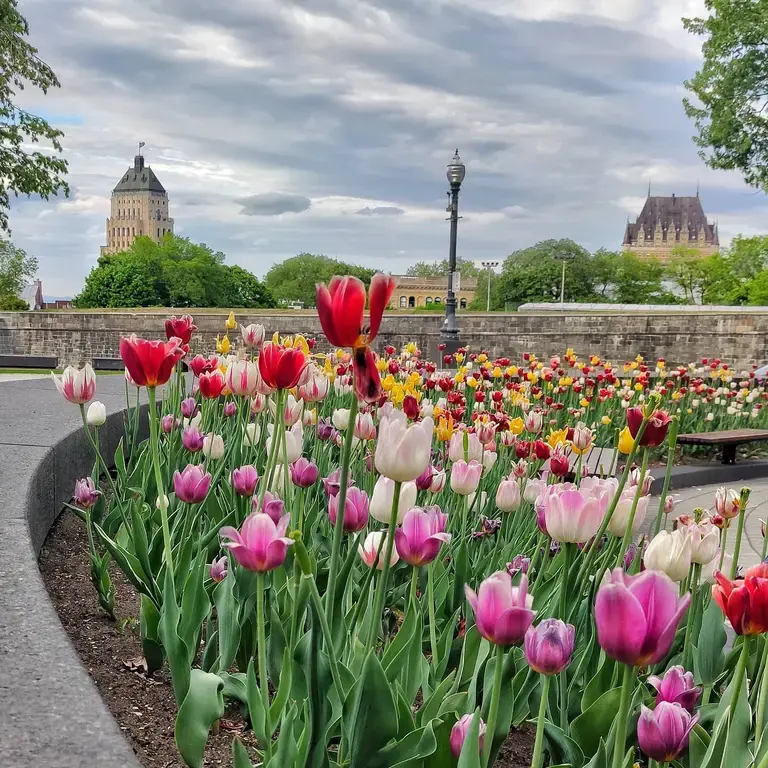
Quebec City’s spring arrives later than most Canadian cities, with genuine warmth (daytime temperatures reliably above 15°C) typically arriving only in mid-May and not firmly establishing until early June. April often produces temperatures hovering around freezing overnight and reaching low teens during the day; a late-season snowfall through the first two weeks of April is common. The consequence for visitors planning May and June trips is a need to pack for variable conditions and to expect that some outdoor programming (the Promenade Samuel-de-Champlain beachfronts, outdoor dining at certain restaurants, the Parc national de la Jacques-Cartier trails) may not yet be in full seasonal mode.
Seasonal character
The specific advantages of a May or early June visit are substantial. Hotel rates through these weeks run 30 to 40 percent below mid-summer peaks. The Old City and Plains of Abraham are substantially less crowded than July and August. The Chutes Montmorency spring runoff produces the most spectacular water volume of the year, particularly through mid-to-late May. Spring migrations at Cap Tourmente produce notable bird-watching opportunities. Restaurant patios open progressively through May, with most fully operational by the last week of the month. Carnaval de Québec has ended but garden and outdoor programming has not yet begun in full summer form.
What it costs
The programming calendar for visitors specifically: mid-May sees the opening of several sugar shacks’ late-season operations at reduced capacity; late May is the earliest reliable date for cycling the Île-d’Orléans loop in comfort; early June’s Grand Prix de Montréal draws Formula 1 fans to the province and overflow accommodation demand can extend to Quebec City’s hotels. The Fête nationale du Québec on June 24 is the first major civic gathering of the season and the last true shoulder-season event before peak summer begins. Restaurant Week Quebec, typically held in the first week of June, offers three-course fixed-price dinners at participating restaurants for $30 to $45; the programme is among the most substantively useful visitor-facing programming in the spring schedule.
Packing for a May-June visit should include a waterproof shell jacket, a layer capable of handling 8-15°C conditions, proper walking shoes for potentially wet cobblestones, and warm outerwear for evenings. Umbrella availability is important; May and early June produce the most rain of any month. Sun protection is worth carrying from mid-May onward as the combination of spring sun and the reflective stone facades of Old Quebec can produce unexpected sunburn exposure. The overall package for spring visits rewards preparation and delivers a substantively different experience than the compressed summer peak.