Samuel de Champlain chose the site of Quebec City for the fur trade. The Kebec narrowing of the St. Lawrence, where the river contracts to roughly one kilometre, allowed Champlain’s July 1608 habitation to control river traffic reaching the interior. For the next 250 years, the beaver pelt (castor) was the single dominant commodity driving New France‘s economy, financing the colony’s survival and shaping the political geography of what is now eastern Canada and the northern United States.
Events and programming
The European demand was not for beaver fur per se but for beaver-felt hats, which required the short under-fur of the animal. The under-fur felted more tightly and shed water better than any other available material, and European hat-makers paid premium prices for beaver pelts from North America where the animals grew thicker coats against the climate. Hudson Bay Company records show beaver pelts in the 1670s trading in London at prices that would be equivalent to roughly $800 to $1,200 per pelt in 2026 dollars. A single voyageur’s annual contribution might be 50 to 100 pelts.
The voyageurs (engagés hired on multi-year contracts by trading firms based in Montreal and Quebec City) formed the operational backbone of the trade. Contracts ran 12 to 36 months, with wages paid partially up front in Quebec and partially on return. The physical demands of the work were extraordinary: paddling 16 hours a day, portaging 90-pound loads around rapids, eating a monotonous pemmican-and-corn diet. Life expectancy for a career voyageur was significantly below the general colonial population; drowning, hernia and winter exposure were the dominant causes of death.
History and origins
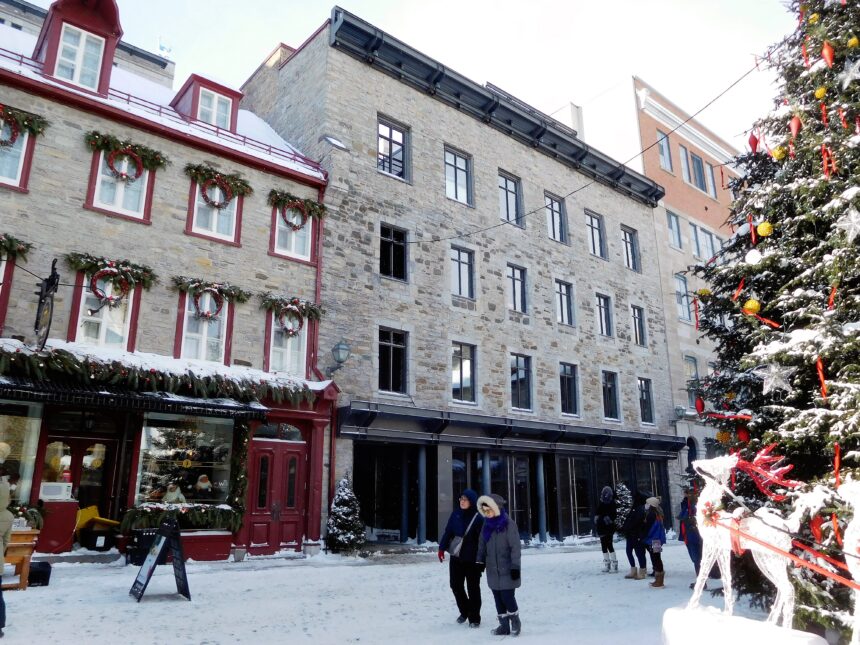
The trade created extensive and enduring kinship networks between French and Canadian traders and Indigenous communities along the Great Lakes, Ottawa River and Lake Winnipeg routes. Many voyageurs formed families with Anishinaabe, Cree and Métis women; the Métis Nation that emerged from these unions became a distinct political and cultural community that shaped the 19th-century history of western Canada and the Red River settlements. The Place Royale area of Lower Town, now the oldest preserved public square in North America, was the municipal centre of this commercial system during the colonial period.
For visitors interested in the fur trade’s Quebec City footprint, several sites remain worth examining. The Musée de la Civilisation at 85 Rue Dalhousie holds significant ethnographic collections. The Place Royale was the trading square where pelts were assessed, taxed and loaded onto France-bound vessels. And the Old Port waterfront preserves traces of the quays from which the voyageurs’ canoes launched westward each May. The beaver remains the symbolic national animal of Canada, formally recognized in 1975, a legacy of 250 years of colonial commerce that Quebec City incubated.