Québec City’s restaurant scene in 2026 has settled. The pandemic-era disruptions that reshaped the city’s dining in 2020 and 2021 have mostly resolved into a new equilibrium, and the current map looks meaningfully different than it did five years ago. Several rooms that defined the city a decade ago have closed. Others have shifted neighbourhoods. A new generation of chefs has emerged from sous-chef roles into their own kitchens.
The pandemic-era graduations
The single most interesting trend of the last five years is the number of cooks who opened small, chef-driven rooms after returning from stages in Copenhagen, Melbourne, and New York. Arvi in Limoilou (Julien Masia), Kirin next door (the Japanese tasting counter), La Planque on Rue Saint-Joseph (reopened under a new kitchen after 2022), and Battuto’s continuing refinement are all part of this cohort.
None of these rooms would have existed in their current form in 2015. The city’s dining scene has caught up with its visitor reputation rather than depending on it.
Limoilou as the quiet new centre
Five years ago, the conventional answer to “where should I eat in Québec City?” was Saint-Roch. The 2026 answer, for residents who care about what is new, is increasingly Limoilou. Arvi, Kirin, Morena’s brunch operation, La Planque’s second location, and a handful of newer rooms on 3e Avenue have pulled the serious dining map eastward.
The neighbourhood is less dense than Saint-Roch and more residential; a Limoilou dinner still involves more planning than a Saint-Roch dinner. That is part of the point.
The Saint-Roch classics, still working
Le Clocher Penché, Bistro B (technically on Cartier in Montcalm but the same register), Le Renard et la Chouette, and Le Sacrilège continue to run at the level that made them classics. None is exciting in the news sense; all four are reliable in the reputation sense.
The neighbourhood’s weaker second tier, the rooms that coasted on location rather than cooking, thinned significantly during 2020-2022. What remains is stronger on average than it was.
The Vieux-Québec recalibration
Inside the walls, the news has been subtraction rather than addition. Restaurant Initiale, which held a serious fine-dining reputation for two decades, closed in September 2019. Laurie Raphaël’s downtown location closed earlier. Coteau at the Auberge Saint-Antoine has absorbed some of the fine-dining demand and continues to cook at a high level. Légende has picked up another share of the boreal-cuisine traffic.
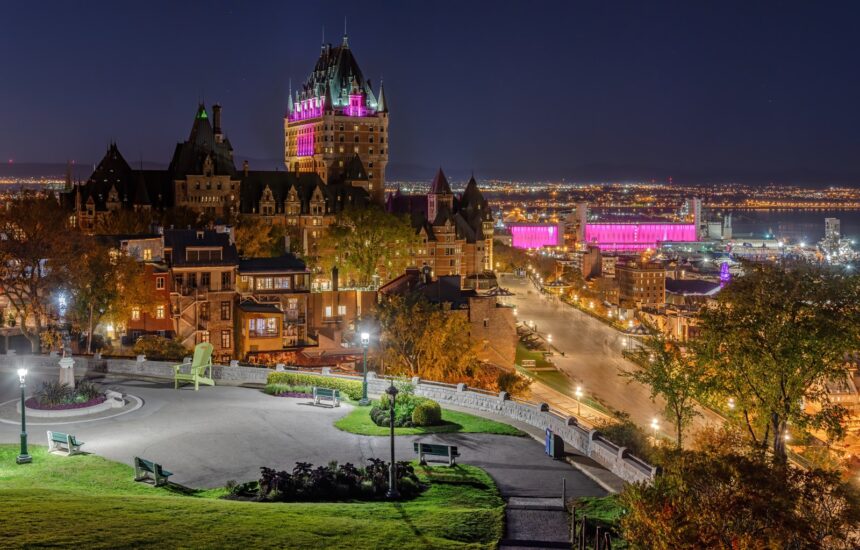
The room to watch inside the walls is Château Frontenac‘s Champlain, which has rebuilt its kitchen twice since 2021 and now runs a more ambitious tasting menu than it has in the last two decades. Worth a booking if you have a special occasion and a large budget.
The coffee scene’s expansion
Specialty coffee is now pervasive in Québec City in a way it was not in 2019. Nektar (the roaster-café on Rue Saint-Jean), Cantook (Rue Saint-Jean and a Saint-Roch location), Saint-Henri Micro-torréfacteur (originally Montréal, now with two Québec City locations), and Brûlerie Faro supply most of the serious cafés in town.
The cumulative effect is that a morning coffee in Québec City in 2026 is at the same level as a morning coffee in Portland, Melbourne, or Copenhagen, rather than the American-diner-level coffee that characterised Canadian cities for decades.
Natural wine and the new drinking culture
Le Moine Échanson, Le Clocher Penché, and Battuto all carry natural-wine programmes that have become deeper since 2020. The provincial SAQ monopoly has slowly expanded its natural-wine section, though it remains limited. Restaurants can import directly through a private importer network that has grown to fill the gap.
This is the single largest change in Québec drinking culture since the microbrewery boom of the 2000s and it has not yet fully worked itself out.
Québécois regional ingredients
The regional-ingredient movement, which started in the Charlevoix and Saguenay decades ago and arrived in Québec City kitchens around 2010, is now mainstream. Sea-buckthorn berries from Île d’Orléans, cold-climate cheese from Charlevoix dairies, lamb from Bas-Saint-Laurent, fiddleheads in spring: these are on menus at Battuto and Le Clocher Penché and, increasingly, at mid-tier rooms.
The older boreal-cuisine register (Chez Boulay, Légende) has meanwhile refined rather than reinvented itself; the menus have become tighter over the last five years.
What to book right now
If you are visiting in 2026, the short list is Battuto (book a month out), Arvi (book online the moment a seat appears), Le Clocher Penché for weekend brunch, and one of Chez Boulay or Coteau for a serious dinner inside the walls. Kirin and La Planque for the second night. If you have a third, any of the neighbourhood bistros will hold.