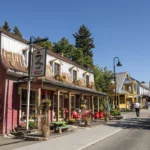
Quebec City is the most francophone large city in Canada by any measure, and this fact is the central piece of background a visitor needs in order to understand everything else about the place. French is not a secondary or ceremonial language here. It is the default language of shops, restaurants, bus drivers, municipal employees, street signage, and every private or public institution without exception. English is widely understood in the tourist core of the Old City, less so as soon as one walks into the surrounding neighbourhoods. For visitors, this is not a problem. For understanding why the city looks and functions the way it does, it is the most important fact.
The numbers behind the impression
According to the most recent Statistics Canada census, roughly 94 to 95 per cent of the population of the Quebec metropolitan area reports French as their mother tongue. About the same proportion uses French at home.
English is the mother tongue of roughly 1.5 per cent of residents, most of whom live in the Sillery and Sainte-Foy neighbourhoods. The remaining balance is spread across other languages, with small but established communities of Spanish, Arabic, Portuguese and Mandarin speakers. The francophone share of the population has been relatively stable across the past three decades, with some erosion in the inner suburbs offset by growth in francophone immigration from France, Belgium, the Maghreb, and parts of sub-Saharan Africa.
The anglophone community, past and present
The anglophone presence in Quebec City dates from the Conquest of 1760, peaked in the nineteenth century during the timber trade, and has been in long demographic decline since the Second World War. At its height in 1861, English-speaking residents made up roughly forty per cent of the city’s population, concentrated in the Upper Town, Sillery and around the port. The collapse of the timber trade and the gradual shift of business activity to Montreal drew the anglophone population progressively westward across the twentieth century. By 1960 the share had fallen below ten per cent, and today the community that remains is small, highly educated, and clustered in a few specific neighbourhoods.
The institutional footprint of the anglophone community is larger than the demographic numbers would suggest. English-language schools operate under the Central Quebec School Board. An English-language hospital, Jeffery Hale, continues to serve as the community’s healthcare anchor. Several Anglican, Presbyterian and United Church congregations maintain active parish life. Voice of English-speaking Quebec, a community association, coordinates cultural and advocacy work. For visitors, these institutions are not particularly visible, but they are what makes English-language life in the city a going concern rather than a historical footnote.
Language law and daily life
Quebec has operated under provincial language legislation since the Charter of the French Language was adopted in 1977. The law, commonly known as Bill 101 in English and Loi 101 in French, establishes French as the official language of the province and governs the use of languages in commerce, government services, public signage and education. Subsequent amendments have tightened various provisions, most recently in 2022, but the basic architecture has been in place for almost fifty years. The practical effect in Quebec City is that business signage is in French, with English either absent or in a smaller secondary position, and that government services are delivered in French by default.
A visitor encounters the law most visibly at storefronts and in restaurants. Menus will be in French, often with an English version available on request. Shop windows display French text prominently, and any English text is usually smaller. Staff in the tourist core routinely switch to English on hearing a visitor’s accent, but the default opening language is French, and a simple bonjour from the visitor usually produces a warmer welcome than an opening English hello.
Practical language advice for visitors
A visitor who speaks no French will manage without serious difficulty inside the walled city, in the major museums, and at most tourist-facing restaurants and hotels. Outside that core, English becomes less reliable. Bus drivers, taxi drivers, convenience-store staff, and employees at chain supermarkets may speak English, but cannot be counted on to. The simplest solution is a small working vocabulary. Bonjour, merci, s’il vous plaît, excusez-moi, parlez-vous anglais: these five phrases are sufficient for most transactions. Locals appreciate the effort and generally respond warmly even when the accent is unmistakably anglophone.
A few specific situations reward more effort. Restaurant reservations by phone work better in French. Pharmacy consultations benefit from basic French vocabulary for common medications and ailments. Emergency services operate primarily in French, although English-speaking dispatchers are available. Reading French menus becomes much easier after the first day, because the vocabulary is limited and tourist-facing restaurants frequently provide English translations alongside the French.
The Quebec accent
A visitor with school French, or who has travelled in France, quickly notices that the Quebec accent differs noticeably from metropolitan French. The vowels are wider, the diphthongs stronger, the vocabulary includes both archaic seventeenth-century French and a layer of anglicisms that a Parisian would not recognise. This takes getting used to. A helpful first step is to slow down one’s own French and to ask, when uncertain, for a phrase to be repeated. Locals are patient with non-native speakers who are clearly trying, and the accent itself becomes easier to parse after two or three days of exposure.
What bilingualism actually means here
Quebec City is not a bilingual city in the sense that Montreal is. It is a French-speaking city with a minority anglophone presence and a broader culture of English comprehension among educated residents. This is different from the bilingual balance of the federal capital at Ottawa, or the more fluid linguistic mix of Montreal, and a visitor who expects Montreal-style bilingualism will be mildly surprised. The francophone character of Quebec City is a feature, not an accident, and respecting it is the single easiest way to have a better visit.