There’s a bridge you cross about 20 minutes east of downtown Québec City — the Pont de l’Île d’Orléans — and something subtle happens on the other side. The highway ends. The landscape softens. The road narrows into a two-lane loop that follows the shoreline of an island that is simultaneously one of the most agriculturally productive corners of Québec and one of the most quietly preserved pieces of French-colonial heritage in North America.
That’s Île d’Orléans. Thirty-four kilometres long, eight kilometres at its widest, and shaped roughly like a giant oval laid in the middle of the St. Lawrence River just downstream of Québec City. Six small villages, twenty-some churches dating from the 1600s and 1700s, and an economy built almost entirely around food production and artisan tourism. Locals call it the jardin de Québec — Québec’s garden. They’re not being poetic. It really is.
A Quick Geographic and Historical Orientation
Île d’Orléans has been continuously settled since the 1660s, when Jean Talon’s colonial administration encouraged French farmers to establish seigneuries on the island. The island’s fertile riverbank soil, protected climate, and strategic position in the St. Lawrence made it an early agricultural success. Many families who settled on Île d’Orléans in the 17th century still have descendants farming the same land four centuries later. That kind of continuity is rare in North America and it shapes the character of the place.
The island is divided into six parish villages, each with its own small town core centered around a historic church:
- Sainte-Pétronille (western tip) — the smallest, closest to the bridge, with river views back toward the Château Frontenac.
- Saint-Laurent (south shore) — maritime history, former shipbuilding centre.
- Saint-Jean (south shore, middle) — many of the island’s most historic houses.
- Saint-François (eastern tip) — agricultural, quiet, best sunrise views.
- Sainte-Famille (north shore) — among the oldest parishes, deeply rural.
- Saint-Pierre (north shore, closest to bridge) — modernized, most commercial.
The single two-lane road, Chemin Royal, loops the entire island at roughly 67 kilometres total. It’s the only way to see the island properly, and the full loop takes anywhere from 2 hours (if you’re just driving through) to a full day (if you stop as often as you should).
The Food: Why Most People Really Come
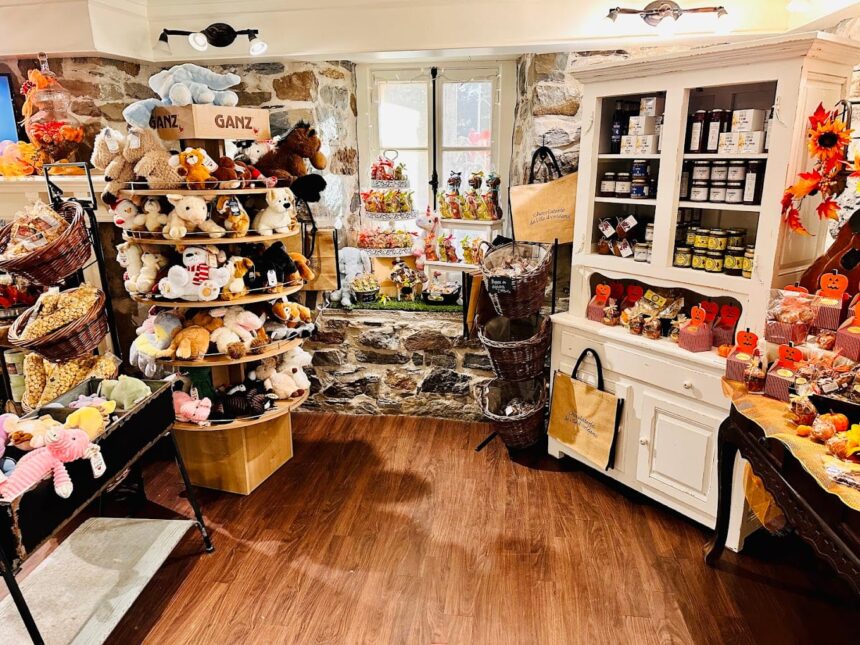
Île d’Orléans is, more than anything else, a food destination. The island produces significant portions of Québec’s strawberries, apples, cassis (black currant), cider, and maple products, plus smaller quantities of everything from honey to wine to chocolate. Nearly all of it is sold directly on the island at farm stands, small shops, or in the restaurants themselves.
The Producers Worth Stopping For
Cassis Monna & Filles (Saint-Pierre) — Canada’s first and best-known black currant specialist. Tastings, a small bistro, and a product line (crèmes, liqueurs, vinegars) that ships across Canada. A classic Île d’Orléans stop.
Domaine Steinbach (Saint-Pierre) — Cider producer with a serious lineup, including ice cider that ranks among the best in the province. Tastings and on-site shop.
Vignoble Isle de Bacchus (Saint-Pierre) — Winery with a wine list tailored to the island’s cool-climate conditions. The vidal whites are the standout.
Chocolaterie de l’Île d’Orléans (Sainte-Pétronille) — Chocolate shop in a gorgeous historic house near the western tip. Handmade, properly crafted, not a kitsch operation.
La Ferme Léonce-Plante (Saint-Laurent) — Strawberry and raspberry farm with pick-your-own in season (roughly June through mid-August). The strawberries are the ones you’ve been waiting your whole life to taste.
Érablière Richard Boily (Saint-Jean) — Maple producer with a small shop and, in March, a working sugar shack experience during the sap run.
Where to Eat a Proper Meal
Auberge la Goéliche (Sainte-Pétronille) — Upscale, with tableside views of the river and the Château Frontenac in the distance. Reservations essential. One of the most memorable dining rooms in the region.
Le Moulin de Saint-Laurent (Saint-Laurent) — In a restored 18th-century mill, riverside terrace, classic Québécois menu executed well. Casual but polished.
Restaurant les Ancêtres (Saint-Pierre) — The long-standing home-style restaurant that has anchored the north shore for decades. Tourtière, pot-en-pot, the full traditional menu. Kid-friendly, group-friendly, no pretensions.
Boulangerie Blouin (Sainte-Famille) — Small bakery with excellent breads, pastries, and quick-lunch options. The best casual food stop on the island.
The Historic and Architectural Side
If you’ve never really looked at 17th- and 18th-century Québécois rural architecture, Île d’Orléans is an open-air museum. The island has over 600 designated heritage buildings, many in active use as private homes. Driving the Chemin Royal, you’ll pass stone farmhouses with the distinctive Québécois steep roofs, wooden barns painted in the traditional red, and village churches whose interiors contain religious art and woodwork from the French colonial era.
Specific stops worth the extra time:
Manoir Mauvide-Genest (Saint-Jean) — A genuine 18th-century seigneurial manor, carefully restored and open as a museum. Gives you a clear picture of how the seigneurial system actually worked.
Église Sainte-Famille — One of the oldest rural churches in Québec (1743), with a remarkable interior that rewards careful looking.
Église Saint-Pierre-de-l’Île-d’Orléans — Built in 1717, one of the oldest continuously operating churches in North America.
La Maison Drouin (Sainte-Famille) — An unrestored 17th-century house, one of the oldest in North America, open as a museum. The interior gives a much more honest picture of early colonial life than more polished restorations.
The Seasonal Rhythms
Spring (May to mid-June) — The island is muddy and quiet until the orchards start to bloom. The apple blossom in late May is spectacular.
Summer (mid-June through August) — Peak season. Everything is open, strawberries come in first (late June), then raspberries and cherries, then the rest of the harvest. Weekends get crowded; midweek is much better.
Fall (September through mid-October) — The best season, honestly. Apples, pumpkins, cassis harvest, and the autumn light over the river is extraordinary. Apple picking at multiple orchards. Cooler temperatures, thinner crowds, all the farm stands still open.
Winter (mid-November through March) — Quiet. Most producers close. A few restaurants remain open. The island is beautiful under snow but most of its pleasures require the farms to be operating, so this is not the main season to visit.
Early spring (mid-March through April) — Sugar shack season. Several Île d’Orléans operators run traditional cabane à sucre meals during the maple run. This is the one reason to visit in early spring.
A Suggested Day on the Island
A realistic, well-paced day for first-time visitors:
9:30 AM: Arrive via the bridge. Take the counter-clockwise route (start with Sainte-Pétronille on the north side).
10:00 AM: Coffee and pastry at Boulangerie Blouin or Café Lune-et-Baron in Sainte-Famille.
11:00 AM: Stop at Cassis Monna & Filles for a tasting and a look at the farm.
12:30 PM: Lunch at Le Moulin de Saint-Laurent or Les Ancêtres.
2:00 PM: Drive the south shore through Saint-Jean. Stop at the Manoir Mauvide-Genest (budget 45 minutes).
3:30 PM: Strawberry/raspberry/apple picking at a farm of your choosing (seasonal).
5:00 PM: Final stop at Chocolaterie de l’Île d’Orléans in Sainte-Pétronille. Buy something to take home.
6:00 PM: Back across the bridge toward Québec City for dinner, or stay for an evening meal at Auberge la Goéliche if you’ve reserved.
Practical Logistics
Getting there: You absolutely need a car. Public transit doesn’t serve the island meaningfully. Drive from downtown Québec City via Autoroute 40 or 440 to the Île d’Orléans bridge, about 20 minutes.
Parking: Most farms, shops, and restaurants have their own parking. It’s rarely an issue except at major attractions on peak summer weekends.
Cash vs. cards: Most establishments accept both, but small farm stands might be cash-only. Have $20-50 in cash just in case.
Biking the island: Road cyclists sometimes do the 67-kilometre loop, but the road has no shoulder, traffic in summer can be heavy, and it’s hilly. Not recommended unless you’re an experienced road cyclist.
Overnight stays: Several small inns and B&Bs operate on the island. Nights are quieter than you’d expect anywhere near Québec City. Worth considering if you want to stretch a single-day trip into a relaxed weekend.
FAQ
Is Île d’Orléans worth a full day or just a half-day?
Full day if you’re interested in food and farms; half-day is enough if you’re just driving the loop for the scenery and a lunch stop.
Do I need to speak French?
Most tourist-oriented producers and restaurants have English service, but the island is genuinely francophone. A few French phrases will be appreciated.
Can I do it in winter?
You can, but most of what makes the island worth visiting (farms, farm stands, most restaurants) is closed. Summer and fall are dramatically better.
Is it good for kids?
Yes. Pick-your-own strawberries, farm animals, and the relaxed rural pace all work well with kids.
Are there hotels on the island?
A small number of inns and B&Bs, yes. No large hotels. Book ahead in summer.
Final Word
Île d’Orléans is one of the few places around Québec City that rewards slowness. If you drive the loop in 90 minutes and call it done, you’ve seen the geography but missed the point. Stop at the farms. Taste things. Talk to the producers. Eat a real meal at a restaurant overlooking the river. The island has been what it is — a quiet, productive, deeply rooted piece of Québec — for almost 400 years, and it reveals itself to people willing to stay for a while. Give it the day it deserves.