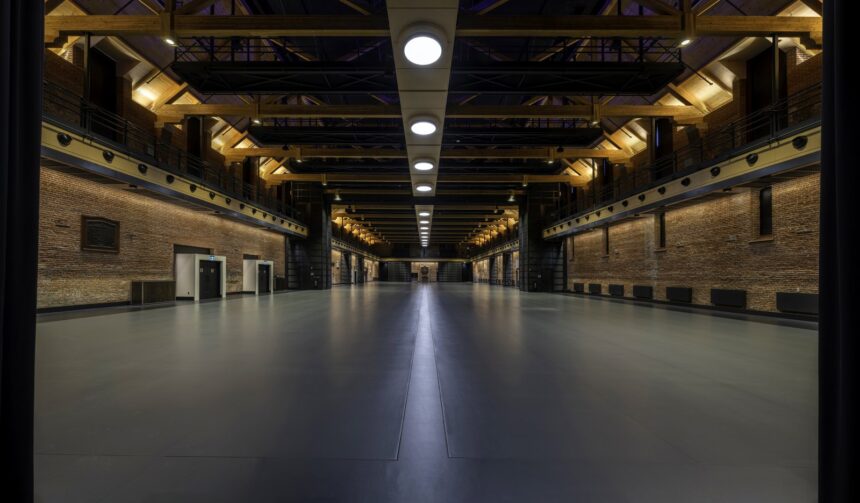
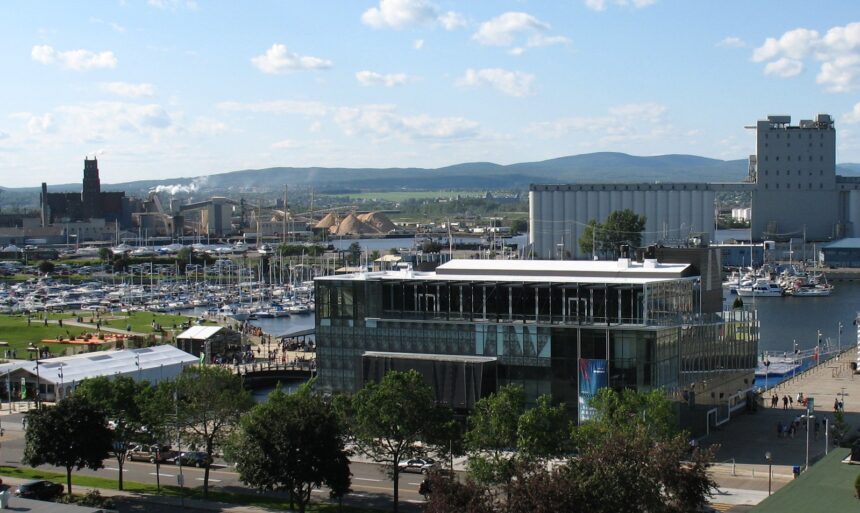
Jean Paul Riopelle (1923-2002) is the most internationally significant visual artist Quebec has produced ( a painter, sculptor, and lithographer whose work from the 1950s through the 1990s placed him among the leading figures of post-war abstract art, with a career centred in Paris that nevertheless remained inseparably connected to the Quebec landscape, the boreal wilderness, and the francophone cultural identity he carried into the international art world. The Espace Riopelle, opening October 7, 2026 at the MNBAQ in Quebec City, will house the world’s largest public collection of his work ) a project the artist himself had envisioned decades before his death.
The Montreal Beginning
Born October 7, 1923 in Montreal, Riopelle studied at the École des beaux-arts de Montréal and came under the influence of Paul-Émile Borduas, the painter and theorist whose 1948 manifesto Refus global ( signed by Riopelle and a group of artists called the Automatistes ) is one of the pivotal documents in Quebec cultural and political history. Refus global rejected the conservative, Church-dominated Quebec society of the Maurice Duplessis era and asserted the primacy of individual creative freedom. Riopelle left for Paris shortly after, where he would spend the bulk of his career, achieving international recognition in the 1950s through solo exhibitions and inclusion in major international surveys of contemporary abstract art.
The Paris Years & International Recognition
In Paris, Riopelle developed the technique most associated with his major work of the 1950s the “mosaic” paintings in which paint was applied with a palette knife in dense, interlocking fragments that create an extraordinary surface texture and colour complexity. These works, shown at the Galerie Pierre Loeb and subsequently purchased by major European and American collections, established his international reputation. He was the first Canadian to win the prestigious UNESCO Grand Prize at the Venice Biennale (1962). His circle in Paris included Joan Miró and other major figures of the European avant-garde.
The Return to Quebec
Riopelle’s relationship with Quebec ( the boreal forest, the river landscape, the wildlife of L’Isle-aux-Grues (where he spent significant time in his later career) ) runs through his work even during the Paris years. His bestiaries (paintings of owls, geese, hares, and other creatures), his prints inspired by the Quebec landscape, and his later mixed-media works reflect an ongoing dialogue with the specific natural world of the St. Lawrence estuary. The MNBAQ acquired the first work by Riopelle in 1956 ( the first museum to do so ) and has maintained a deep institutional connection with his legacy. The Espace Riopelle is the culmination of a relationship between artist and institution that spans 70 years.