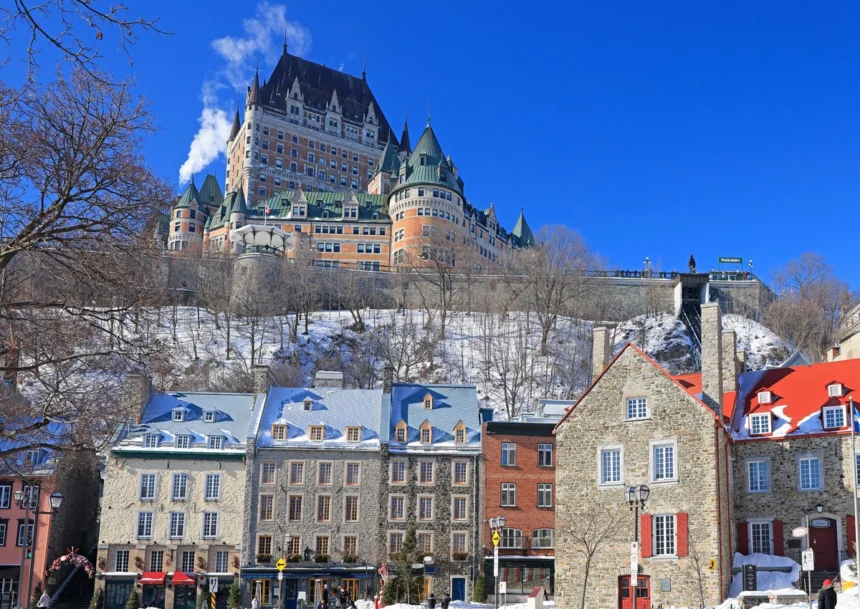
The Vieux-Québec Haute-Ville (the Upper Town of the Old City, enclosed within the fortification walls on the Cap Diamant promontory above the St. Lawrence cliff) is simultaneously the most visited tourist destination in Canada east of the Rockies and home to approximately 5,000 permanent residents who navigate the tensions between the heritage tourism economy that dominates the neighbourhood’s commercial and physical landscape and the daily residential life that they maintain within the walls. The Haute-Ville’s permanent residents (government workers who value the walk to the Colline Parlementaire, heritage enthusiasts who accept the tourist noise as the cost of living in Canada’s most historically significant neighbourhood, and long-term families whose roots in the Old City predate the tourism economy’s dominance) constitute the human layer beneath the visitor infrastructure that the Old City presents to the world.
Daily Life Within the Walls
Daily life for the Haute-Ville’s permanent residents requires specific strategies for navigating the tourist economy’s dominance of the neighbourhood’s retail and service infrastructure. The neighbourhood’s supermarket (the IGA on the Rue Saint-Jean, accessible through the Porte Saint-Jean) serves the resident population’s grocery needs; the specialist food retail of the Rue Saint-Jean’s inner-city commercial zone (the fromagerie, the boulangerie, and the various food specialty shops that serve both residents and tourists) provides the daily provisioning that residents rely on without requiring trips to the outer arrondissements’ larger grocery stores. The neighbourhood’s pharmacies, medical clinics, and professional services (accountants, lawyers, architects) reflect the mixed resident-tourist character of the Haute-Ville’s commercial life: establishments that can sustain themselves on tourist volume in summer while serving the resident population year-round.
The Resident Community
The Haute-Ville’s resident community (organised through the conseil de quartier Vieux-Québec–Cap-Blanc–Colline Parlementaire, which represents the interests of the approximately 7,000 residents in the broader heritage district (including the Cap-Blanc and Colline Parlementaire zones adjacent to the Old City)) is among the most politically engaged of Quebec City’s neighbourhood councils. The issues that most animate the Haute-Ville’s resident community: the management of tourist volume (particularly the horse-drawn carriage traffic on the cobblestone streets, the noise from the terrasse bar season on the Rue Saint-Jean, and the pedestrian density on peak summer weekends), the accessibility of housing (the conversion of residential properties to tourist accommodations (hotels, B&Bs, and short-term rentals) progressively reduces the housing available to long-term residents), and the preservation of the neighbourhood-serving retail that sustains daily life (the risk that tourist-oriented retail completely displaces the neighbourhood-serving shops and services that residents need).
The Cost of Living Heritage
The property premium attached to Old City addresses (the highest in Quebec City for both ownership and rental) reflects the combination of heritage character, location convenience (walkable to the Colline Parlementaire employment, the Grand Théâtre, and the inner-city retail of the Saint-Jean-Baptiste faubourg), and the status attached to living in UNESCO World Heritage surroundings. A one-bedroom apartment within the Old City walls commands approximately $1,400-$2,200/month; the heritage property ownership market (with restored stone condominiums reaching $700,000-$1.5M+) is the most expensive residential market in Quebec City outside the Sillery villa district. The irony: the heritage preservation that makes the neighbourhood globally significant progressively prices out the diversity of residents whose daily presence sustains the neighbourhood’s living character rather than its museum-piece function.