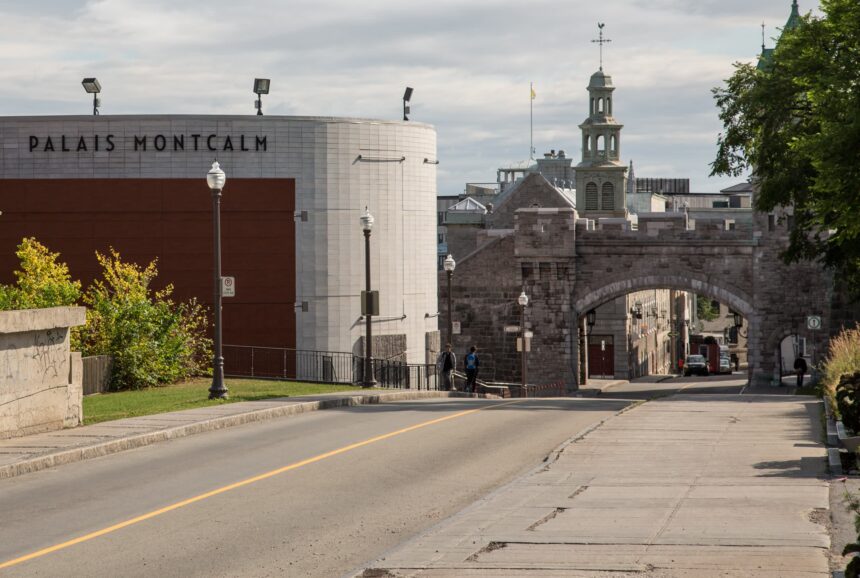
Quebec City is a photographer’s city in a way that few North American destinations can claim the combination of extraordinary architecture, dramatic topography, four distinct seasons, and a quality of light that varies dramatically through the day and year creates an environment where virtually every composition offers something of value. The challenge is not finding good subjects; it is prioritising among an abundance of them.
The Château from the Lévis Ferry
The definitive Quebec City photograph ( the view that captures the city’s full grandeur ) is taken from the water, specifically from the upper deck of the Lévis ferry as it crosses the St. Lawrence. The composition that reveals itself during the 12-minute crossing shows the Old City in its full cliff-face elevation: the fortifications, the Château Frontenac, the cathedral spires, the Lower Town buildings at the water’s edge, all simultaneously visible in a panorama that no land-based position can replicate. The golden hour before sunset is the optimal time for this shot; the light falls directly on the west-facing façade of the Château.
Winter: The Sugarloaf at Montmorency
The winter photograph that most surprises people who don’t know Quebec City is the pain de sucre (sugarloaf) at the base of Montmorency Falls an ice cone that can reach 30 metres in height, built by the freezing spray of the 83-metre falls. Photographed in early morning light with the falls behind it partially frozen, the sugarloaf creates an otherworldly landscape image that has no equivalent elsewhere in Canada. The best position for this shot is the panoramic staircase platform midway down the cliff.
Autumn: The Jacques-Cartier Valley
The aerial foliage views from the plateau lookouts above the Jacques-Cartier Valley, 40 minutes north of the city, provide the finest autumn photography accessible from Quebec City. The elevation of the plateau (some viewpoints exceed 600 metres) creates a perspective on the valley’s foliage ( which typically peaks in mid-to-late September ) that is unlike anything available at ground level. The combination of the valley depth, the river threading through the colour, and the boreal forest on the plateau edges creates compositions of genuine grandeur.
The Old City at Night
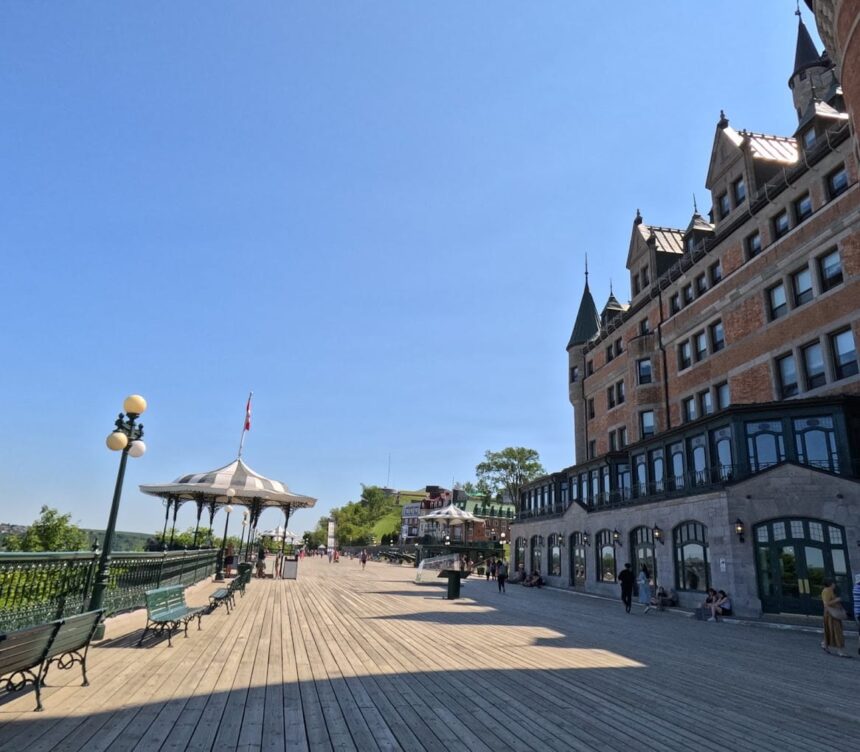
The Old City’s illumination ( the Château Frontenac, the ramparts, the Lower Town buildings ) makes for exceptional night photography, particularly after a winter snowfall when the snow reflects and amplifies the artificial light. The Dufferin Terrace at 9-10pm, after the day-tripper crowds have thinned, provides the cleanest compositions of the Château’s illuminated facade. A tripod is essential; exposures of several seconds are typically required to balance the building light with the blue-black of the winter sky.