The Sépaq annual card is the access pass to Québec’s national parks, issued by the Société des établissements de plein air du Québec. It is genuinely good value for anyone who gets out of the city more than a few times a year, and it is routinely described as covering more than it does. This page sets out what the published fares actually say.
What it costs
Sépaq publishes one adult rate, in force since 1 May 2026 and quoted with taxes included: $93 a year for the card covering every national park in Québec, or $51.50 for a card tied to a single park. A day pass to one park is $10.30. There is no senior rate, no youth rate and no family card — the grid has one adult category, eighteen and over.
The card runs for 12 months from an activation date you choose when you buy it, not for a calendar year, so a card bought in October can be set to start in May. It is issued electronically in the holder’s name.
Children are the part most people get wrong, and in their favour. Visitors aged seventeen and under enter the national parks free. They still need an access authorisation, and an accompanying adult’s annual card serves as theirs, which means one adult card covers the children who come along at no extra charge.
The arithmetic is easy to check. Nine day passes cost $92.70, so the all-parks card pays for itself on the tenth visit of the year. Five day passes cost exactly the price of the single-park card, so that one pays off on the sixth. If you expect two or three park days a year, buy the day passes; if you expect ten, or if you have a favourite park and go often, the card is the cheaper arrangement. There is no tier in between.
One real benefit the card’s reputation understates: the access fee replaces parking charges inside the parks. The published exceptions are the supervised beach parking at Yamaska, Oka and Mont-Orford, the parking at Île-Bonaventure-et-du-Rocher-Percé, and territories a minister has entrusted to a third party.
What the card does not cover
Three things are commonly assumed to be included and are not.
The Aquarium du Québec in Sainte-Foy is a tourist establishment, not a national park. An annual card holder gets 15 percent off adult daily admission — a discount, not entry. The Aquarium sells its own annual membership separately, on its own April-to-March calendar.
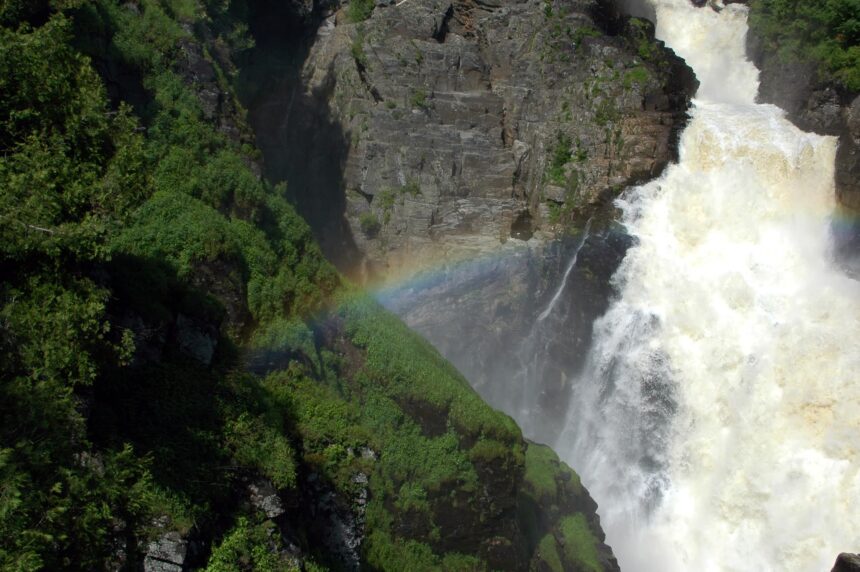
The Parc de la Chute-Montmorency is likewise a tourist establishment with its own ticketing: daily access, the cable car and the zipline are each sold on their own. The falls drop 83 metres and the site carries a via ferrata and a suspension bridge across the top, but none of it comes with the parks card.
Wildlife reserves are a separate network again. The Réserve faunique des Laurentides, which the road to Saguenay crosses, charges its own daily access fee of $22.36 per person. Fishing and hunting there are priced separately on top of that.
The parks within reach of Québec City
Only one national park is genuinely close. Parc national de la Jacques-Cartier sits forty minutes north along Route 175, 670 square kilometres of glacial valley with kayaking, hiking and camping along the river floor. It is the park the card earns itself on for most people living here.
After that the network thins out around the capital. Les Grands-Jardins and the Hautes-Gorges-de-la-Rivière-Malbaie in Charlevoix are the next ones east, and Parc national Frontenac lies south toward the Appalachian foothills, with lakes and portage camping. A correction worth making, because the mistake is easy to repeat: Parc national de la Yamaska is not a day trip from Québec City. It sits at Roxton Pond in the Eastern Townships, seven kilometres from Granby and roughly 250 kilometres from here — closer to Montréal than to Québec.
The farther parks
For weekends, the network reaches genuinely extraordinary places. Parc national du Bic on the lower St. Lawrence has seals, coastal hiking and long evening light. Parc national de la Gaspésie holds Mount Jacques-Cartier’s tundra plateau and a woodland caribou herd. Parc national du Mont-Mégantic runs the ASTROLab and sits in the first International Dark-Sky Reserve established anywhere in the world; the card gets 15 percent off the ASTROLab’s own admission. Parc national de la Mauricie, to the west, has the best canoe camping in central Québec.
The card covers park entry on all of these. Camping and accommodation are booked and paid separately through Sépaq’s reservation system, and the access fee applies on top of a stay, not instead of it. Fares change on 1 May, so check the current grid before buying.