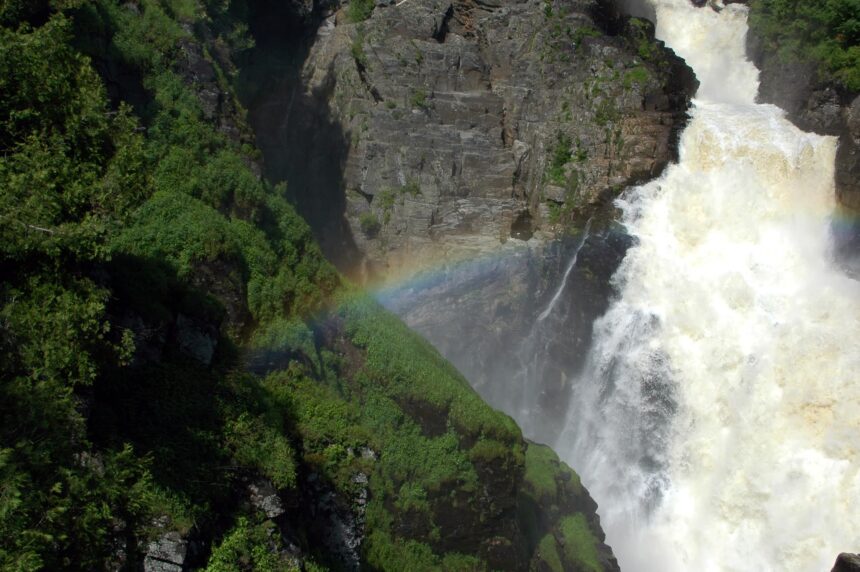
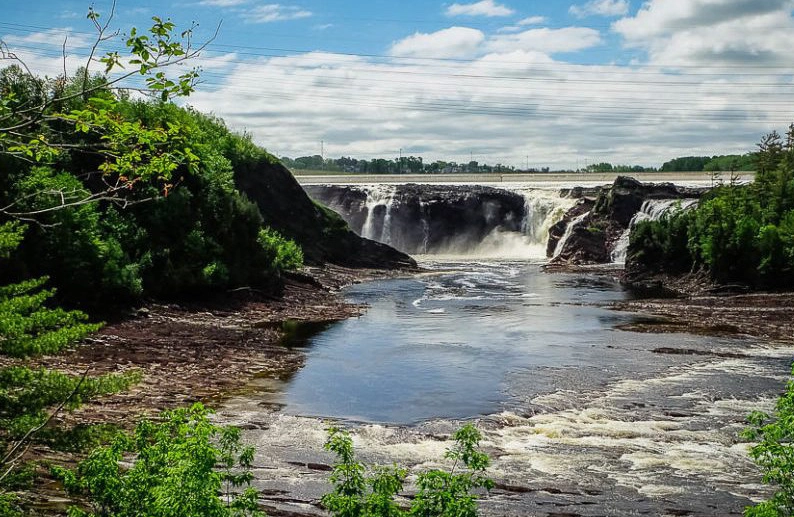
Québec City sits at an unusual geographic hinge. The St. Lawrence narrows here, the Laurentian plateau begins a few kilometres north, and the south shore opens onto rolling farmland that runs all the way to the American border. Within a two-hour drive in any direction you can be on a ferry crossing a tidal river, at the base of a 272-metre waterfall, inside a cider orchard, or eating lunch in a First Nations community. This guide covers the six day trips I send visitors on most often, with notes on when to go and what to skip.
- Île d’Orléans: forty minutes, a thousand years of farming
- Lévis: the view you came for, from the other side
- Montmorency Falls and the Beaupré coast
- Charlevoix: the day trip that wants to be a weekend
- Mont-Sainte-Anne and the northern mountains
- Wendake: the Huron-Wendat nation, fifteen minutes from downtown
- Portneuf and the western approach
- Distances at a glance
- Choosing which trip to take
- Which day trip suits your day
Île d’Orléans: forty minutes, a thousand years of farming
The bridge to Île d’Orléans leaves from Montmorency, about twenty minutes east of downtown. The island is twenty-eight kilometres long and circled by a single road, Chemin Royal, which takes roughly ninety minutes to drive without stopping. You will stop.
Strawberries peak in late June. Apples and cider houses come into their own from September through mid-October, when the orchards are crowded on weekends and almost empty on weekday mornings. Cassis Monna et Filles produces blackcurrant liqueur and wine on the north shore of the island; their tasting room is open most of the year. In winter, the same loop is quieter, the horizon wider, and a handful of sugar shacks open in March.
Budget a full day if you want to eat lunch on the island. Budget half a day if you are skipping restaurants and just driving the loop.
Lévis: the view you came for, from the other side
The most underused day trip is also the shortest. The Québec-Lévis ferry runs year-round from the Vieux-Port, takes about twelve minutes, and costs less than a coffee. On the Lévis side, the boardwalk along Chemin du Fleuve gives you the postcard view of the Château Frontenac from the angle every photographer wants.
The Terrasse de Lévis, a few streets inland, was built during the Depression as a make-work project and delivers a wider panorama of the old city, the river, and the Laurentians. Fort Numéro-Un-de-la-Pointe-de-Lévy, part of the Parks Canada network, is open in summer and explains why the British built three forts here in the 1860s to defend against a potential American invasion.
This is the only day trip on this list that does not require a car.
Montmorency Falls and the Beaupré coast
Montmorency Falls is fifteen minutes from downtown and taller than Niagara by about thirty metres, though narrower. The cable car and the suspension bridge across the top of the falls are worth the admission fee if you have not been before; in winter, the base of the falls forms a sugarloaf cone of ice that local climbers sometimes scale.
Continue east along Route 138 and you reach the Beaupré coast: Sainte-Anne-de-Beaupré basilica, the Sept-Chutes hydroelectric site, and Canyon Sainte-Anne, where three suspension bridges cross a seventy-metre gorge. All three can be combined into one long day if you leave early.
Charlevoix: the day trip that wants to be a weekend
Charlevoix begins where the Beaupré coast ends, about seventy kilometres north-east of the city. The drive from Québec City to Baie-Saint-Paul takes roughly ninety minutes along Route 138 and twists through a meteor crater that geologists identified in 1965 by the shape of the surrounding hills.
Baie-Saint-Paul itself is a gallery town with a long art-colony tradition; the Musée d’art contemporain there is small, well-curated, and usually quiet. If you have time, continue another fifty kilometres to La Malbaie and the Fairmont Le Manoir Richelieu, where the hotel terrace looks down on the estuary. Whale-watching cruises leave from Tadoussac, which is a full two hours beyond Baie-Saint-Paul and should be treated as an overnight rather than a day trip.
Le Massif de Charlevoix, the ski hill with the longest vertical drop east of the Rockies, is covered in a separate guide; in summer, the mountain operates a via ferrata and a downhill luge.
Mont-Sainte-Anne and the northern mountains
Mont-Sainte-Anne is forty minutes from downtown and the closest full-size ski resort. It runs about seventy trails in winter, a gondola that operates year-round, and what Vélo Québec has described as one of the most extensive downhill mountain-bike networks in North America. In autumn, the gondola gives you a colour panorama that reaches back to Île d’Orléans and across to the Laurentians.
Parc national de la Jacques-Cartier sits forty minutes north of the city in the Laurentian highlands. The park’s glacial valley holds a kayakable river, a well-marked canyon trail, and reliable snowshoeing conditions from December through March. The visitor centre rents equipment and sells day passes; winter hours are shorter, so check before you go.
These two sites are usually paired with an overnight rather than combined. Pick one per day.
Wendake: the Huron-Wendat nation, fifteen minutes from downtown
Wendake is an urban reserve of about 2,000 residents on the north edge of Québec City, fifteen minutes from the old town by car. Onhwa’ Lumina, a multimedia night walk through the forest, opened in 2021 and has become the most-visited new attraction in the region. The Hôtel-Musée Premières Nations runs guided tours of a reconstructed longhouse and a small ethnographic museum.
Restaurant La Traite, inside the hotel, serves Indigenous cuisine that is neither museum-piece nor fusion gimmick. Reserve in advance on weekends.
Visit with respect. This is a working community, not a heritage site, and ordinary residential streets sit next to the tourist zone.
Portneuf and the western approach
Most visitors head east. The Portneuf region, west of the city along Route 138 and the 40, is the quiet alternative: cider roads, the Duchesnay forest station, the village of Deschambault on a cliff above the St. Lawrence, and the Canyon des Portes-de-l’Enfer, a newer hiking site that has not yet made it into most guidebooks.
Portneuf rewards a slow day. You will not see crowds. You will see farms, river towns, and the sort of Québec countryside that existed before the tour buses discovered it.
Distances at a glance
| Destination | From Québec City | Worth knowing |
|---|---|---|
| Montmorency Falls | ~12 minutes | 83 m high — about 30 m taller than Niagara; run by Sépaq |
| Île d’Orléans | ~20 minutes | 67 km perimeter circuit, six parishes; bridge opened 6 July 1935 |
| Wendake | ~15 minutes | Huron-Wendat nation, inside the metropolitan area |
| Mont-Sainte-Anne | ~40 minutes | The nearest major alpine skiing |
| Baie-Saint-Paul (Charlevoix) | ~90 minutes, 100 km | Galleries and the Route des Saveurs |
| Le Massif de Charlevoix | ~80–110 minutes | 770 m vertical dropping toward the river |
| Tadoussac and the Saguenay | ~2 hours | Whale watching; a long day, better as an overnight |
Choosing which trip to take
If you have one day and no car, take the ferry to Lévis. If you have one day with a car, take Île d’Orléans in summer or Mont-Sainte-Anne in winter. If you have two days, pair Charlevoix with an overnight in Baie-Saint-Paul or La Malbaie. If you have been to the region before, Portneuf and Wendake reward a second visit.
Weather matters. The drives along 138 through Charlevoix are not difficult in winter but demand full attention; black ice forms on the coastal stretches between Beauport and Beaupré on cold mornings. Summer weekends in Île d’Orléans produce the worst traffic of any of these destinations. Weekdays in shoulder season are the sweet spot for all six.
Which day trip suits your day
| Destination | Time needed | Car needed? | Best season | Suits |
|---|---|---|---|---|
| Montmorency Falls | Half day | No — bus or tour | All year; spectacular frozen in winter | Short stays, first visits, families |
| Île d’Orléans | Full day | Yes, realistically | June (strawberries) to October (apples) | Food-focused trips, slow days |
| Wendake | Half day | Helpful, not essential | All year | Anyone interested in Huron-Wendat history |
| Lévis | Two hours | No — the ferry | All year, clearest in autumn | Photographers, tight budgets |
| Mont-Sainte-Anne | Full day | Yes | Winter for ski, summer for biking | Skiers, hikers |
| Charlevoix | Long day, better overnight | Yes | Autumn colour; winter for Le Massif | Return visitors, drivers |