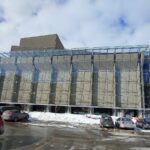
Every quartier in Québec City has one. The centre communautaire is not a concept that translates cleanly into English; it is neither a community centre in the recreational sense, nor a community association in the advocacy sense. The fifty-two centres communautaires scattered across the agglomeration combine adult-education classes, food pantries, legal aid clinics, francisation courses for new immigrants, youth programmes, and senior-citizen lunch services under one roof. They are funded by a combination of municipal subsidies, provincial grants through the Secrétariat à l’action communautaire autonome, and modest private donations. For a visitor, they are largely invisible. For residents, they form the connective tissue of neighbourhood life.
The model’s origins
The centre communautaire model in Québec descends from the 1960s Quiet Revolution. As the Catholic Church withdrew from its century-long role administering social services, the provincial government needed an alternative network to fill the gap. The community-action movement of the late 1960s and 1970s built that network from the ground up, and by the 1990s had been formally recognised in the provincial policy framework that still governs funding today. Québec City’s network grew in parallel with Montréal’s, though with a smaller scale and a distinctively suburban distribution that reflects the capital’s more residential quartiers. The model has been studied internationally, notably by French urban researchers and Belgian social-service administrators, but rarely replicated in practice outside Québec’s particular institutional context.
The programming
A typical centre runs fifteen to twenty distinct programmes simultaneously. The Patro Roc-Amadour in Limoilou, one of the oldest in the city, coordinates swim lessons for roughly 3,800 children annually, after-school care for 900, a senior-citizen day programme serving 200, a weekly food-distribution service reaching 450 households, francisation classes with 120 students per term, and volunteer-run legal clinics in family and housing law. These programmes operate with a paid staff of 42 supplemented by roughly 280 volunteers. Other centres operate at smaller scale. The Centre Monseigneur-Marcoux in Saint-Malo runs a comparable menu with twelve paid staff and a budget under 1.5 million dollars annually.
Funding and fragility
The centres operate on thin margins. Provincial funding through the action-communautaire framework has not tracked inflation since 2014, leaving most centres with real-dollar budgets smaller than a decade ago. Municipal contributions fill some of the gap, but the city’s financial contribution has also been squeezed by competing priorities. The 2023 provincial budget restored 40 million dollars in sector-wide funding across Québec, of which roughly 3.5 million reached the capital region. Centre directors describe the situation as structurally underfunded rather than acutely in crisis. The fragility is not visible on a quiet Tuesday afternoon; it becomes visible when a centre announces a reduced programme after a budget cycle fails to deliver increases.
The network by quartier
Vieux-Limoilou has the Patro Roc-Amadour and the Centre communautaire Monseigneur-Marcoux. Saint-Roch has the Centre multiethnique and the Centre Durocher. Saint-Jean-Baptiste has the Comité populaire Saint-Jean-Baptiste’s centre on Rue Saint-Jean. Montcalm has the Maison de la culture Frontenac and a smaller francisation-focused centre on Grande Allée. Charlesbourg and Sainte-Foy each host three centres oriented toward senior-citizen programming. The borough of Beauport, with its more dispersed population, operates four smaller centres coordinated through a single administrative office. The full list is maintained online by the city’s service communautaire division, with contact information updated quarterly.
Why it matters for visitors
Most visitors will never walk into a centre communautaire. Those who stay longer, attend language classes, or volunteer for a neighbourhood association will encounter them within days. The centres also occasionally host events open to the general public: concerts in the Patro Roc-Amadour’s auditorium, lectures at the Centre Durocher in Saint-Roch, community markets in the Centre Frontenac’s parking lot on summer Saturdays. For residents considering a long-term move to the city, a visit to the nearest centre communautaire provides a direct read on the neighbourhood’s demographics, concerns, and available support services. The model is a genuine civic asset, and its quiet presence in every quartier does more to shape daily life here than the tourism-focused institutions ever will.