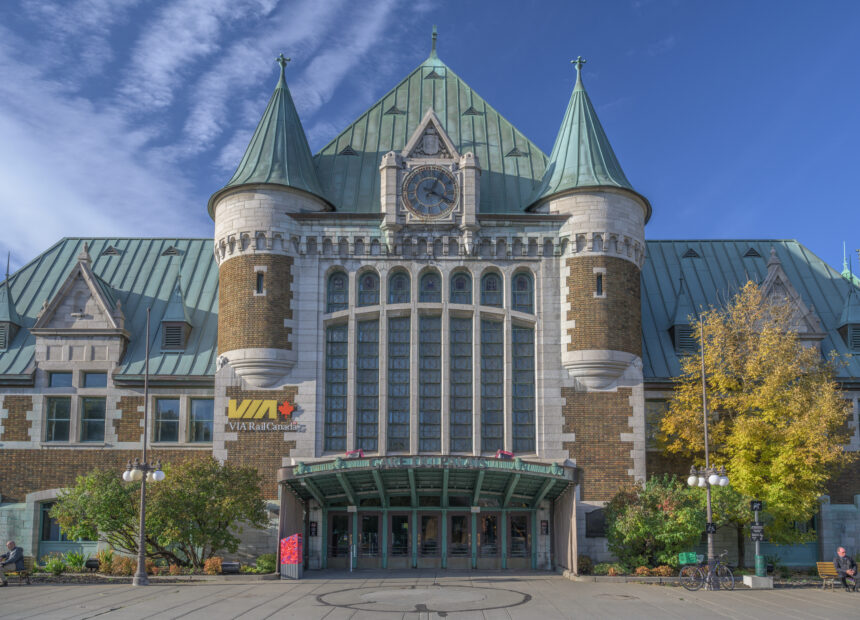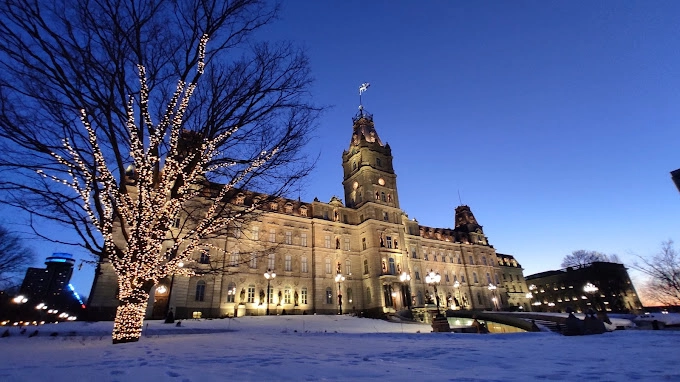



Québec City’s skyline tells the story in stages. The stone facades of the walled city reflect the work of the nineteenth-century Baillairgé dynasty. The concrete-framed government buildings along Grande Allée date from the postwar provincial expansion under Duplessis and Lesage. The glass-skinned residential towers along the Saint-Charles mark the twenty-first-century boom. Behind each layer sits the construction industry that built it, a sector that today employs roughly 20,000 residents of the agglomeration across roughly 1,500 registered contractors. The industry shapes the city more directly than any other sector, and the rules under which it operates are worth understanding for anyone tracking the urban fabric’s slow evolution.
The Commission de la construction du Québec
Québec’s construction sector is governed by a mandatory regulatory body unlike any comparable jurisdiction in North America. The CCQ, created in 1987, administers the mandatory apprenticeship system, tracks hours worked across every union local, and manages both the benefits funds and the sector-wide collective agreement. Any commercial construction site in the province must operate under CCQ rules. Residential construction under a certain scale is partially exempt, though larger residential projects fall under the same regime. The system produces a notably more trained workforce than its unregulated counterparts in the rest of Canada, and the mandatory apprenticeship programme ensures that roughly 5,000 new tradespeople enter the sector each year through CCQ-certified paths.
The cyclical pattern
Construction is among the most cyclical industries in the provincial economy. Employment in the Québec City construction sector peaked at 24,500 during the Beauport Expos development boom of 2006-2008, dropped to 17,200 during the 2014-2015 resource downturn, and recovered to roughly 21,000 during the 2018-2022 residential expansion. Current employment sits near 20,000, roughly two-thirds of which is commercial and institutional work. The pattern matters because it shapes household income across a significant share of the region. The broader economic impact runs larger than the direct employment numbers: for every direct construction job the CCQ estimates a further 1.4 jobs elsewhere in the supply chain.
The major active projects
Several large projects define the current construction calendar. The ongoing Phase 3 redevelopment of the Chaudière-Est port district carries approximately 850 workers on site at peak. The Centre hospitalier de l’Université Laval expansion continues through 2027 with a workforce of 1,200. The new tramway, if it proceeds through its revised alignment approved in 2024, is expected to employ 3,500 at its construction peak in 2027-2028. Residential towers in the Sainte-Foy and Saint-Roch sectors add another 2,400 active workers across roughly thirty sites. The cumulative effect on the city’s industrial rhythm is substantial, with crane visibility across nearly every quadrant of the urban area.
Skills shortages and training pipelines
The industry faces a genuine shortage of trained workers. Demographic retirement in the baby-boom cohort, a general drift of young Québécois toward university pathways rather than trades, and the relative difficulty of the work have combined to produce vacancy rates running 7 to 9 percent across nearly all trades. The CCQ’s response has included paid apprenticeship programmes starting at 18 dollars an hour in the first year and rising to 30 dollars by year four, English-language pilot programmes to attract anglophone workers from the Maritimes, and targeted recruitment among new Canadian immigrants with pre-existing trade certifications from their home countries. The programmes are producing results, though the gap has not closed.
Visible on the street
Most Québec City residents interact with the construction sector through its visible consequences: closed streets, detours, the orange cones that dominate the summer streetscape every year. The annual peak of roadwork coincides with the short building season from May through October, during which the industry effectively triples its urban footprint. Residents grumble, predictably, though the seasonal compression reflects the genuine constraint imposed by the city’s winter climate. A commercial concrete pour below minus ten Celsius requires additives and heating that raise costs by thirty percent. Most contractors concentrate their work in the warm months accordingly. The tradeoff is the traffic of August and the clean streets of December, a pattern residents have broadly accepted as the cost of living in a northern city that continues to renew itself at scale.